

Tilt sensor for structures
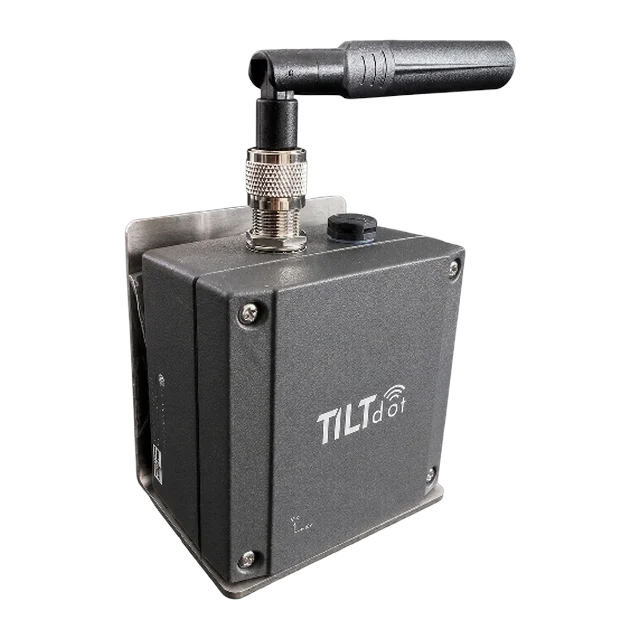
The tilt sensor (tiltmeter) monitors tilt and settlement on structures wirelessly and in real time. It detects the smallest angular changes and reports safety-relevant changes before they become critical.
- Angular change from 0.001°
- Gateway built into the sensor
- Automatic alerting
Why the tilt sensor
Detecting movement before it becomes critical
Settlement and tilt can significantly affect structural stability. What matters is that a change is detected early and reliably, not only at the next inspection.
Highest precision
Angular changes from 0.001°. This makes movements visible that are barely detectable with conventional surveying during ongoing operation.
Tilt and settlement
Uneven settlement is captured by the tilt sensing. For even vertical settlement, the sensor can be extended with a distance laser, keeping both movement types in one system.
Gateway in the sensor
The gateway is built into the sensor. It transmits its measured values wirelessly and directly to the data platform, with no additional device at the structure.
Temperature-compensated
Reliable measurements even at extreme ambient temperatures from minus 40 °C to plus 85 °C.
Robust and retrofittable
Battery or solar powered and flexibly positionable, even without existing infrastructure. Retrofittable on existing structures and modularly expandable.
Proactive alerting
Every measured value is checked against warning and alarm thresholds. If exceeded, the system automatically triggers a notification.
Technical data
Specifications at a glance
- Measured quantities
- Tilt and settlement
- Tilt measurement
- Angular changes from ±0.001°
- Settlement detection
- down to 0.1 mm, optionally via built-in distance laser
- Temperature compensation
- minus 40 °C to plus 85 °C
- Measuring principle
- tilt sensing, combinable with laser distance measurement
- Data transmission
- wireless via the built-in gateway, direct to the data platform
- Power supply
- battery or solar, for flexible positioning
- Expandability
- modularly expandable with additional sensors
- Retrofitting
- retrofittable on existing structures
Option for the sensor
Distance laser for vertical settlement
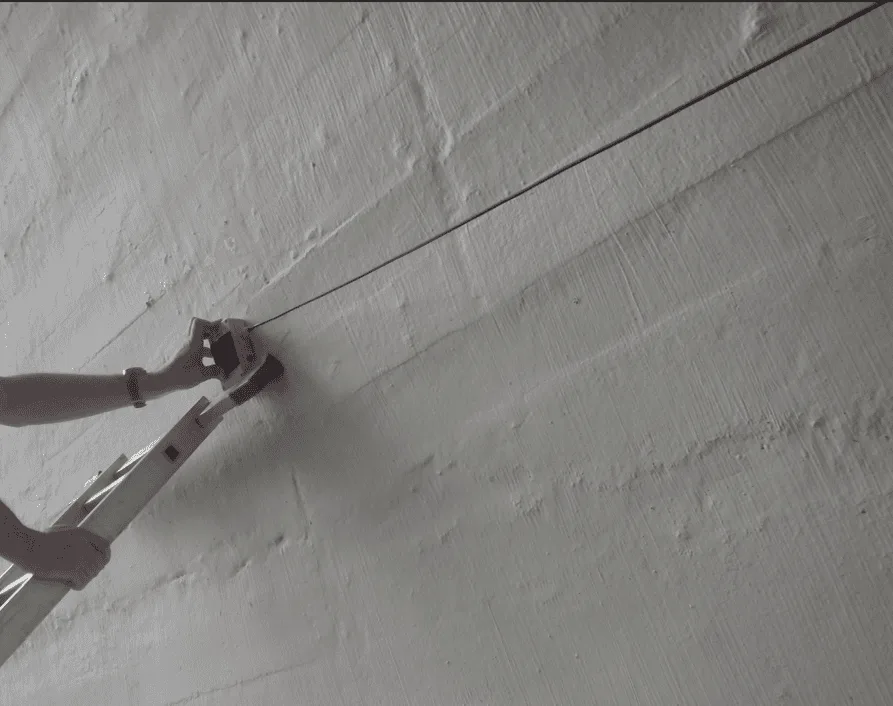
The sensor above measures the angular change. Even vertical settlement does not show up in this way. For this case, a distance laser can be integrated into the sensor, resolving settlement down to 0.1 mm. Whether the extension makes sense depends on the structure, which we clarify during the concept stage.
Operating principle
Tilt and settlement in one system
Not every movement looks the same. Uneven settlement shows up as an angular change, even vertical settlement does not. Where both are needed, the sensor can be extended with a distance laser. From the tilt data, the platform derives further values, such as camber and twist.
- 01
Measuring
The tilt sensing captures the angular change at the defined measuring interval, an optional distance laser adds the vertical settlement.
- 02
Transmitting
The gateway sits inside the sensor. The values go from there wirelessly and directly to the data platform.
- 03
Alerting
Every value is checked against warning and alarm thresholds. If exceeded, the system reports automatically.
Two operating modes
At a set interval or live, every second
How often readings are taken and transmitted depends on the task: movements that develop over days, or movements that occur within seconds.
Standard
Wireless at a set interval
The sensor measures at the set interval, runs on battery or solar power and transmits wirelessly to the platform via its integrated gateway, without any additional device on the structure. The right choice for tilt and settlement that develop over hours, days and months.
Live
Tilt Sensor Live on the live gateway
For construction phases in which values change within seconds, such as the incremental launching of a bridge: the Tilt Sensor Live measures at up to 10 Hz and is connected by cable to the live gateway, which transmits the readings via LTE to the platform. Up to four sensors share one gateway. Limits are checked continuously and alarms go out immediately.
To the Tilt Sensor LiveSimulation
When a structure starts to move
As long as the tilt stays within range, the platform reports nothing. Simulate an increasing tilt: once the alarm threshold is exceeded, the status changes and an automatic alert is triggered.
Demonstration only
Proven in use
On bridges, railway sleepers and temporary bridges
Incremental launching on the Bramke Bridge
A live tilt sensor sat on every pier head. Transmitted every second via the live gateway, it showed the pier head deflection during every launch and raised an alarm when a limit was exceeded.
Learn moreRailway sleepers
When monitoring railway sleepers, the sensing detected the smallest angular changes and met the strict requirements of DB guideline 804, Deutsche Bahn’s internal track monitoring directive.
Learn moreExisting bridges
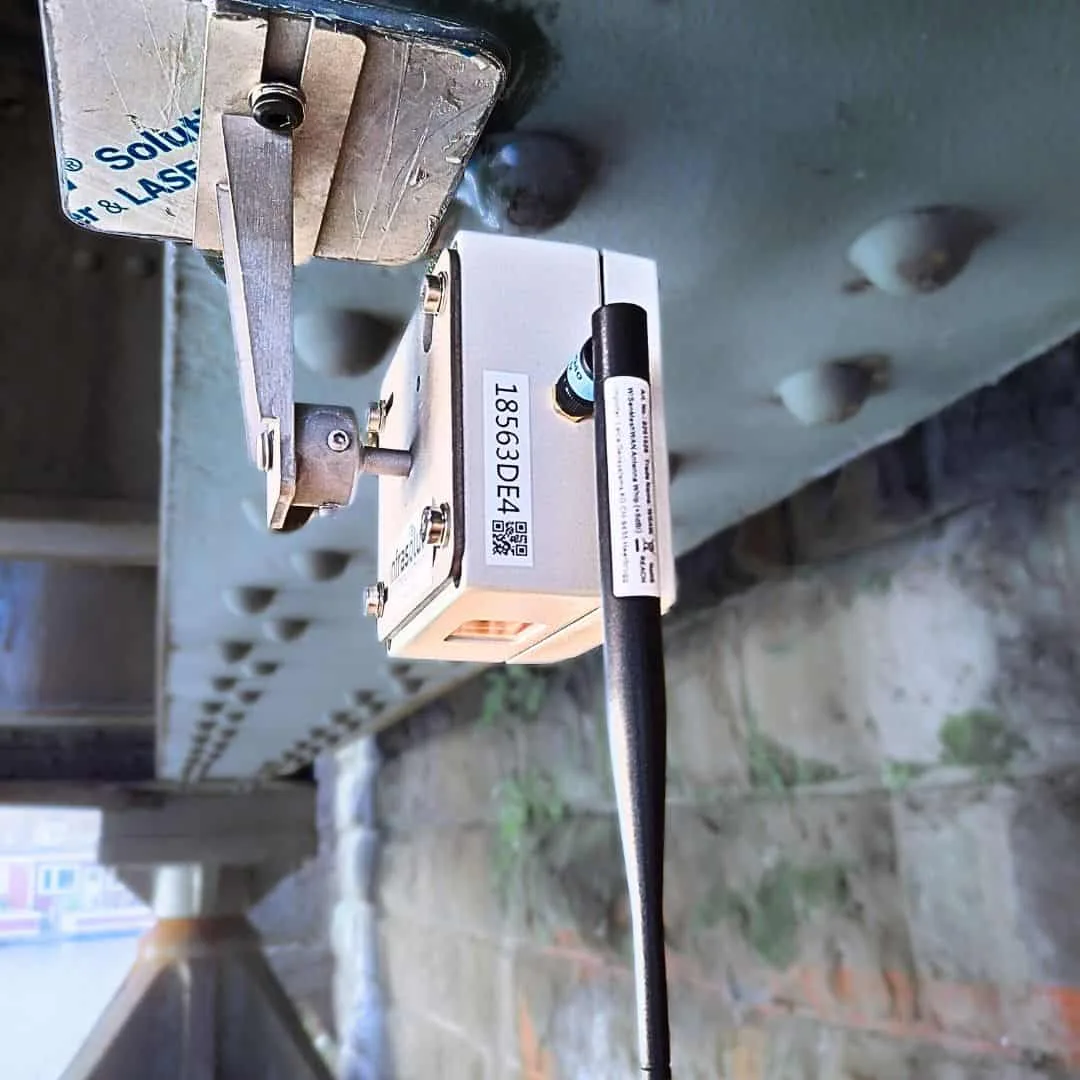
On existing bridges, tilt sensors with a built-in laser distance measurement were used to continuously monitor settlement during adjacent construction and piling works.
Learn moreThe value of continuity
Changes become visible not only at the next inspection, but the moment they occur. That gives time for an orderly response.
A single point of contact
From the monitoring concept to alerting
The sensor is one building block, not an end in itself. On request, Infrasolute takes care of concept, installation, operation and ongoing monitoring as a complete solution, not separate parts.
- 01
Concept
We clarify where and how many sensors make sense and which thresholds apply.
Learn more - 02
Installation
On request, we mount the sensors professionally and commission everything.
Learn more - 03
Maintenance and operation
We keep the data platform, alerting and maintenance operational.
Learn more - 04
Monitoring and alerting
We report threshold breaches automatically, around the clock.
Learn more
Matching solutions
The sensor as part of a solution
The tilt sensor unfolds its value together with the right monitoring concept.
Tilt monitoring
The matching application: continuous monitoring of tilt and settlement with alerting.
View solution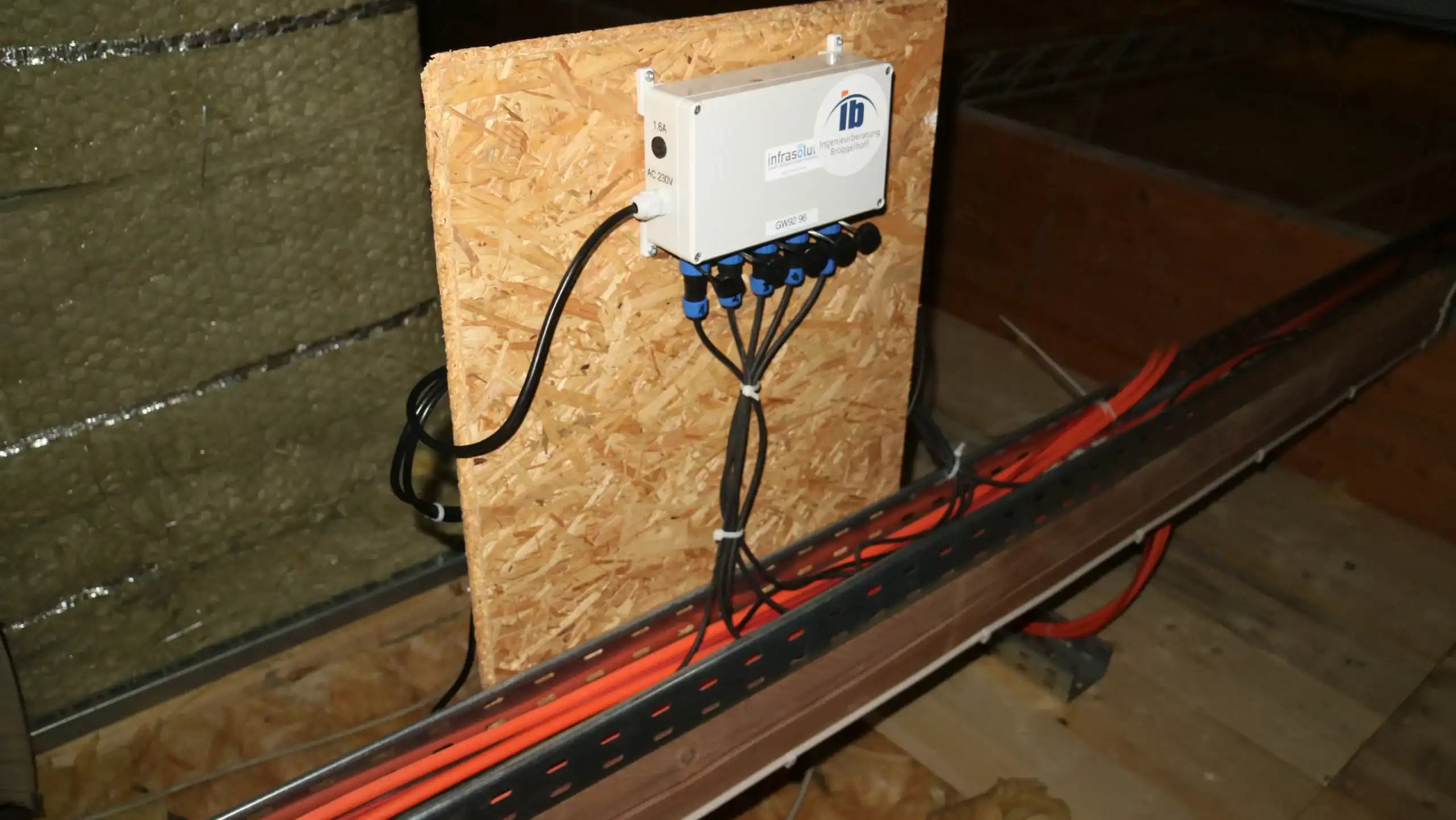
Roof and structural load monitoring
Laser-based deflection measurement on hall roofs with early warning of overload.
View solution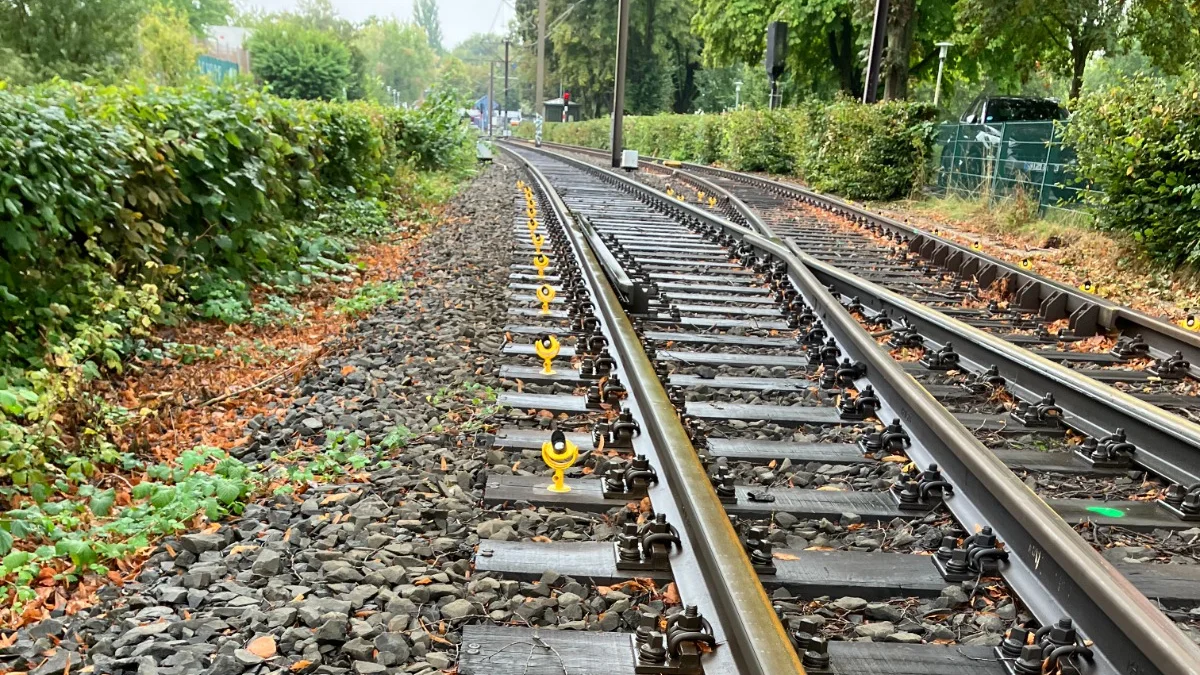
Track monitoring
Standards-compliant geo-monitoring for track geometry, settlement and deformation during construction work.
View solutionInfrasolute platform
All readings on the Infrasolute platform
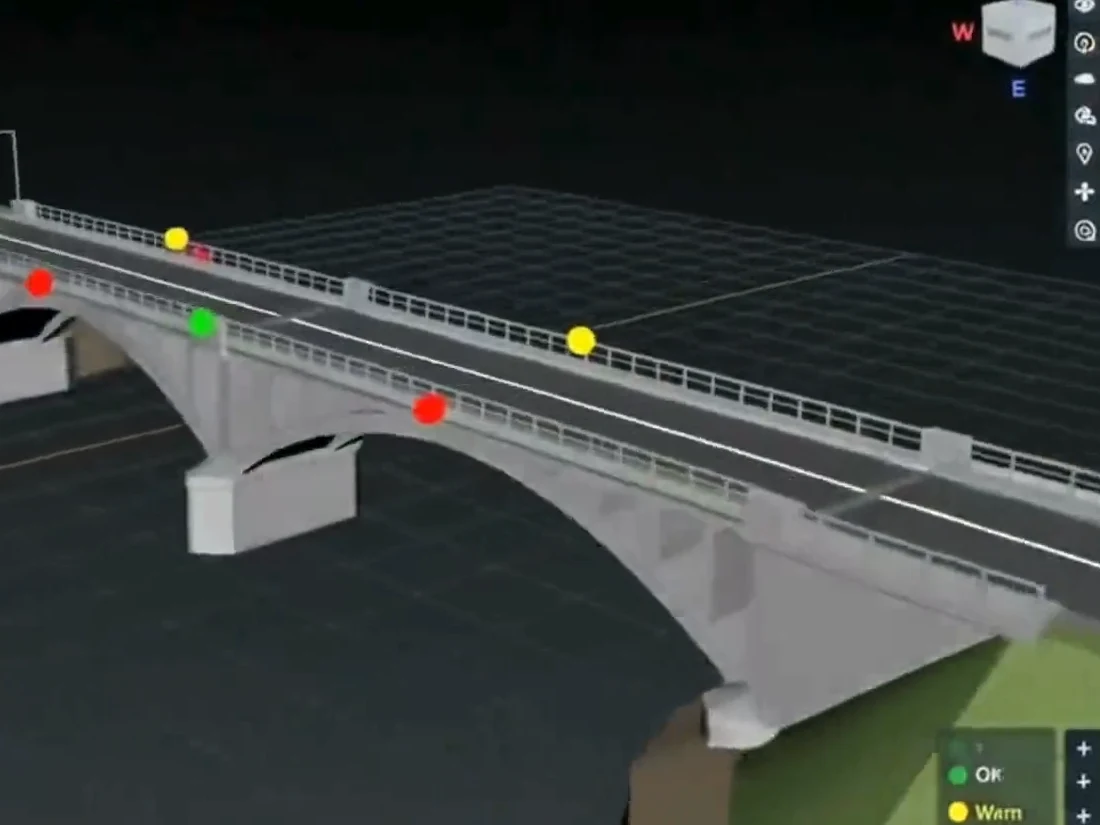
The sensors transmit their readings to the platform. There they are continuously checked against your limit values, evaluated with AI and documented, accessible in the browser around the clock.
Platform modules
Which movement do you want to measure?
Tell us about the structure and the question at hand. We will recommend measuring points, measuring interval and the right threshold.
 Roman Koch

Frequently asked questions
How accurate is the tilt sensor?
Can the sensor detect both tilt and settlement?
How is the measurement data transmitted?
Is the sensor also suitable for railway applications?
Can the sensor be retrofitted on existing structures?
Do I get an alert for critical changes?
Project inquiry
Request the tilt sensor
If you want to monitor a structure for tilt or settlement, tell us about the task. We will recommend the right sensors and the right number of measuring points and get back to you shortly.
[email protected]