

Predictive maintenance for structures: maintain before damage becomes expensive
Continuous measurements show where a structure is changing, long before damage becomes visible. This allows measures to be planned on the basis of actual condition, targeted and at the right time.
- Condition, not cycle
- Detect changes early
- Plan measures in a targeted way
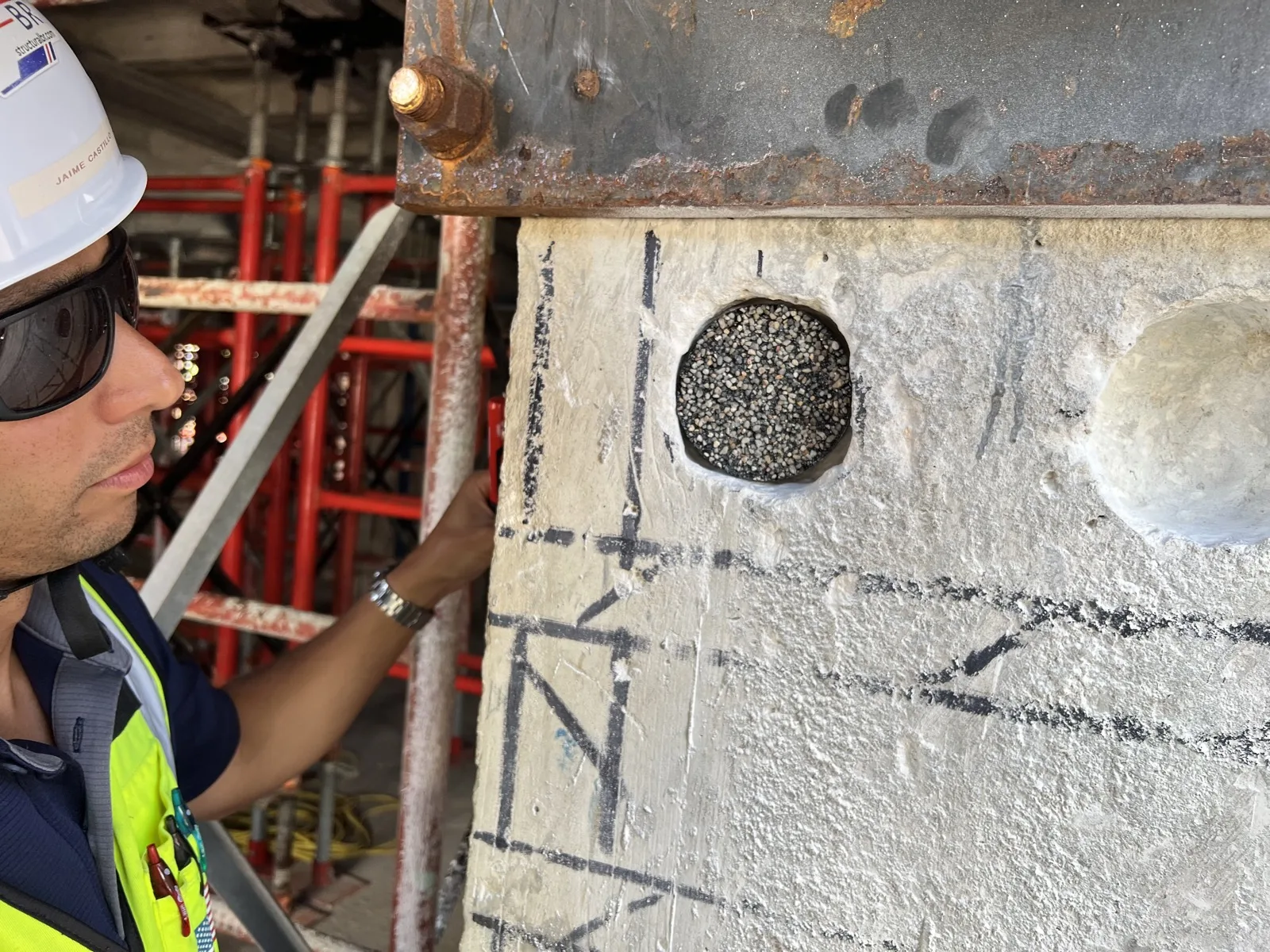
What is predictive maintenance for structures?
Predictive maintenance aligns maintenance and repair with the measured condition of a structure rather than a fixed schedule. Sensors continuously record cracks, moisture, tilt or vibration; the data platform detects changes early. Measures are planned when the data justifies them, as a complement to the mandatory structural inspection.
What predictive maintenance delivers
Act when the data justifies it
Repairing too early costs money; too late costs more. Measured data helps to find the right moment.
Detect changes early
The warning threshold triggers closer observation before there is any acute need for action.
Measures by condition
Repairs are planned where the monitoring data shows a need for action, not across the whole portfolio.
Avoid unplanned closures
Seeing changes early means interventions can be planned rather than reacted to at short notice.
Prove the effect
After a measure, the data series shows whether it works. This makes success verifiable.
Spend budget in a targeted way
Condition statements per structure help direct maintenance budgets to where they are needed.
Complements the inspection
Between two inspections the sensors provide the data that an inspection alone cannot provide.
How maintenance becomes predictive
From reading to planned measure
Predictive maintenance starts with the question of which change on the structure should trigger a measure.
- 01
Define critical points
In the monitoring concept we determine the components and quantities where damage shows first.
- 02
Measure permanently
The sensors record values around the clock; the platform checks them against warning and alarm thresholds.
- 03
Detect change
Anomalies in the trend become visible early, and AI analytics puts them into context.
- 04
Plan the measure
Based on the data and the engineering assessment, you plan the measure at the right time.
For whom
For engineering and budget
For engineers and maintenance teams
- Condition data between two inspections
- Warning and alarm thresholds per component
- Data series as evidence of the effect of a measure
- Inclusion of existing inspection findings
For operators and asset managers
- Measures by condition rather than by cycle
- Fewer short-notice interventions, more predictability
- Targeted use of maintenance budgets
- Securing the availability of structures
Important: Predictive maintenance complements the mandatory inspections; it does not replace them. Savings depend on the structure and its initial condition; we only quantify them where reliable reference data is available.
Read on
What makes predictive maintenance possible
The data comes from monitoring, the priorities from the overview, the estimate from the forecast.
Plan maintenance by condition
Together we clarify which changes on your structures should trigger a measure, and how this can be measured.
 Roman Koch

Frequently asked questions: Predictive Maintenance
What is the difference between predictive maintenance and scheduled maintenance?
Which measured quantities are suitable for predictive maintenance?
Does predictive maintenance replace the structural inspection?
How much can be saved?
Project inquiry
Request a platform demo
Tell us about your structures, known damage and your maintenance planning. We will show where monitoring data can improve planning.
+49 6742 8599600 DE +41 41 670 00 11 CH [email protected]