

Structural health monitoring: measure your structure's condition continuously
Capture cracks, moisture, corrosion, tilt, vibration and movement with wireless sensors, evaluate them in one portal and be alerted instantly at thresholds. For new builds and for existing structures.
- DIN 1076
- DIN 4150
- RIL 883.8100A01
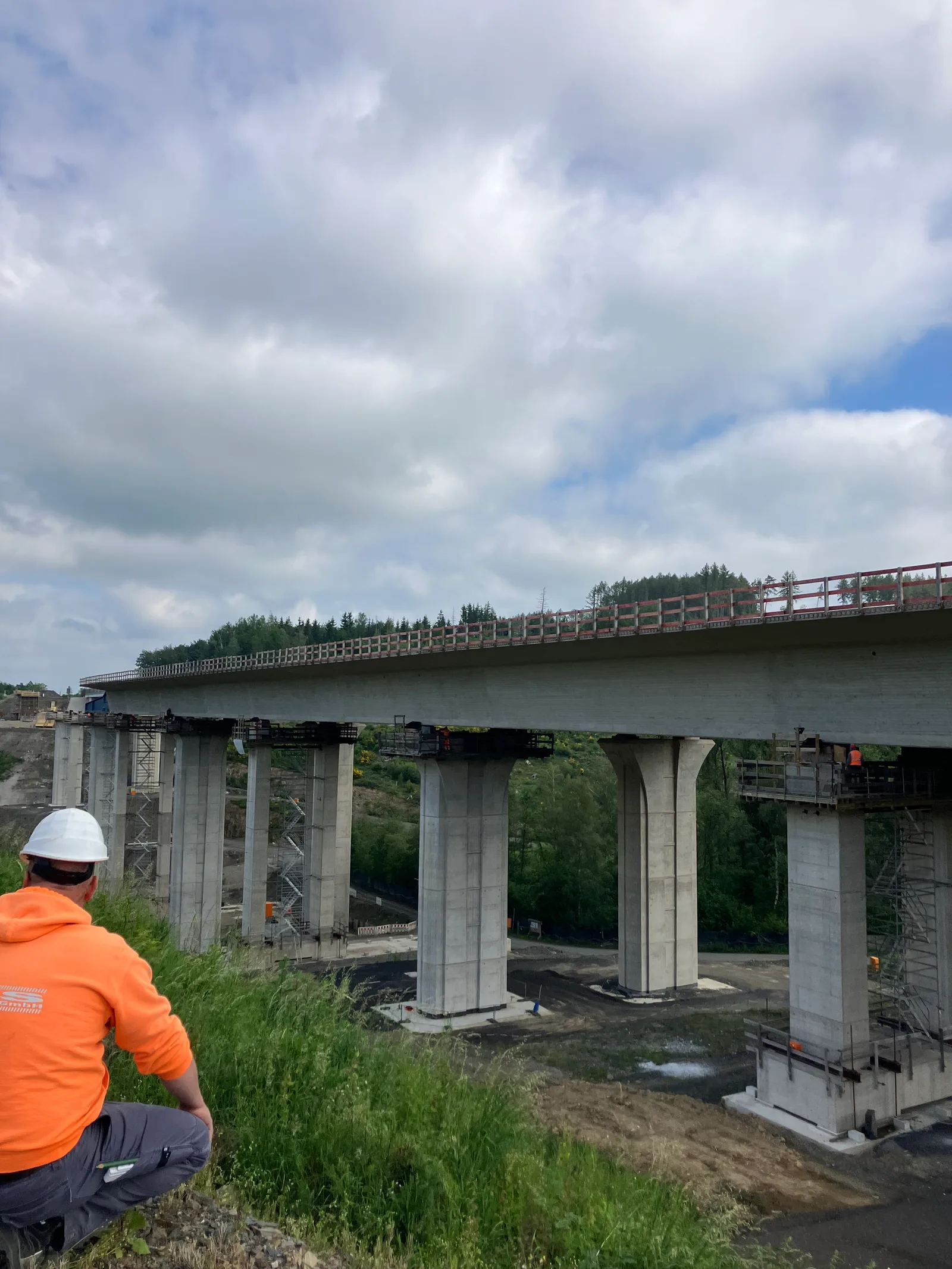
Your benefits
Six years is a long time for a structure
Between two main inspections, what determines the condition happens. Whoever knows the trend decides earlier and with better arguments.
Enquire nowThe trend instead of a snapshot
The structural inspection provides one picture every six years. Monitoring captures the development in between and shows whether something is changing, how fast and in what context.
All measured variables in one place
Cracks, moisture, corrosion, tilt, vibration and movement run into the same portal. Instead of isolated readings without context, a picture of the whole structure emerges.
Retrofittable on existing structures
The sensors are wireless and need no continuous cabling. They can be cast into new builds and retrofitted to existing structures, without scaffolding just for the instrumentation.
Decisions backed by measurement data
Closure, remaining service life, refurbishment timing and inspection effort are decisions with money behind them. A measurement series backs them more reliably than an assumption in an expert report.
Inspection and monitoring
Inspection assesses, monitoring observes
Structural inspection to DIN 1076 is the expert assessment on site, at fixed intervals. Monitoring runs in between and makes visible what changes in the meantime. Together they give a complete picture.
Structural inspection
Main inspection every six years, a simpler inspection in between. Assessment by the inspection engineer, hands-on and documented.
Monitoring
Readings around the clock, with thresholds and automatic notification. Shows development and speed instead of a single state.
From objective to monitoring concept
Four steps before the first sensor sits
- 01
Clarify the objective
What should the measurement answer? Condition surveys during construction work, remaining service life of an ageing structure or observing a known defect lead to different concepts.
- 02
Define the measured variables
The damage pattern determines what is measured: crack width, moisture, corrosion, tilt, vibration, movement at a bearing or a combination of these.
- 03
Plan the measuring points
We identify the critical points on the structure and the number of sensors. A baseline measurement fixes the starting condition to which all further readings refer.
- 04
Set thresholds and the alert path
Every measured variable gets warning and alarm limits and a group of recipients. This clarifies in advance who is informed at which value and what happens then.
Explore measuring points
Where a structure is measured
Each point has its own question and therefore its own measured variable. Choose a point and see what is captured there and which solution stands behind it.
Measured variable
Crack width
Displacement transducers continuously record the change in crack width. It becomes visible whether a crack is dormant or active, and how it responds to temperature and traffic.
To crack monitoringMeasured variable
Moisture and corrosion
Passive sensors in the concrete measure moisture and corrosion progress at the reinforcement before spalling becomes visible at the surface.
To moisture & corrosion monitoringMeasured variable
Tilt and settlement
Tilt sensors record the inclination and settlement of piers, abutments and retaining walls over time, even to the millimetre range.
To tilt monitoringMeasured variable
Bearing movement
Displacement at the bearing and the structure temperature together show whether the bearing still accommodates the thermal expansion of the superstructure.
To bridge bearing monitoringMeasured variable
Vibration
During demolition, piling or blasting nearby, the sensors measure the peak particle velocity against the limits of DIN 4150.
To construction vibration monitoringAll measured variables
Seventeen solutions under one roof
Which of these come together depends on the question. Often it is two or three that explain each other.
-
Crack monitoring
Crack width changes from 0.003 mm, with an alert when a threshold is exceeded.
Learn more -
Tilt and settlement monitoring
Tilting, settlement and change in position of structure and foundation.
Learn more -
Concrete monitoring
The condition of concrete structures, from moisture to stress corrosion cracking.
Learn more -
Moisture and corrosion monitoring
Capillary moisture, chloride front and corrosion risk hidden within the concrete.
Learn more -
Construction vibration monitoring
Construction-related measurement to DIN 4150 with automatic alerting.
Learn more -
Vibration monitoring
Peak particle velocity and natural frequency tracked over years.
Learn more -
Leak monitoring
Water leaks located in seconds via leak detection cable.
Learn more -
Roof and structural load monitoring
Deflection of long-span roofs and snow load.
Learn more -
Track monitoring
Track geometry and settlement to RIL 883.8100A01 during construction work.
Learn more -
Groundwater monitoring
Groundwater level and pore water pressure in the ground, with vibrating-wire piezometers.
Learn more -
Water level monitoring
Fill levels in manholes, wells and watercourses, captured wirelessly.
Learn more -
Stress corrosion cracking
Strand fracture in prestressing steel detected via deflection.
Learn more -
Deformation monitoring
Deformation of railings, guardrails, catch fences and retaining walls.
Learn more -
Bridge bearing monitoring
Movement at the bearing checked against the temperature trend.
Learn more -
Manhole and access monitoring
Cover and door openings are reported the same moment.
Learn more -
Traffic load monitoring
Strain, deformation and vibration under real traffic.
Learn more -
Concrete maturity monitoring
Temperature, maturity and strength in the fresh component, during the construction phase.
Learn more
The applicable standard depends on the measured variable. Vibrations are checked against the limits of DIN 4150, structural inspections to DIN 1076, construction work on the track to RIL 883.8100A01. We assign this within the monitoring concept.
Single source
One point of contact for the entire monitoring
From the free concept through installation to ongoing evaluation in the online portal, we accompany you through the whole project, as a complete solution, not isolated parts.
- 01
Concept
We assess the structure, derive measured variables and measuring points and set thresholds, matched to the objective and the applicable standards.
Learn more - 02
Installation
On request, we mount the sensors, set up gateways and commission the monitoring with a baseline measurement.
Learn more - 03
Maintenance and operation
We keep the sensors operational, check function and adjust thresholds when usage or the structure changes.
Learn more - 04
Monitoring and alerting
We continuously watch the measurement series and report every threshold exceedance to the responsible party.
Learn more
Matching sensors
The devices behind the measured variables
Structural health monitoring means combining several measured variables on one structure. These are the devices that most often come together.
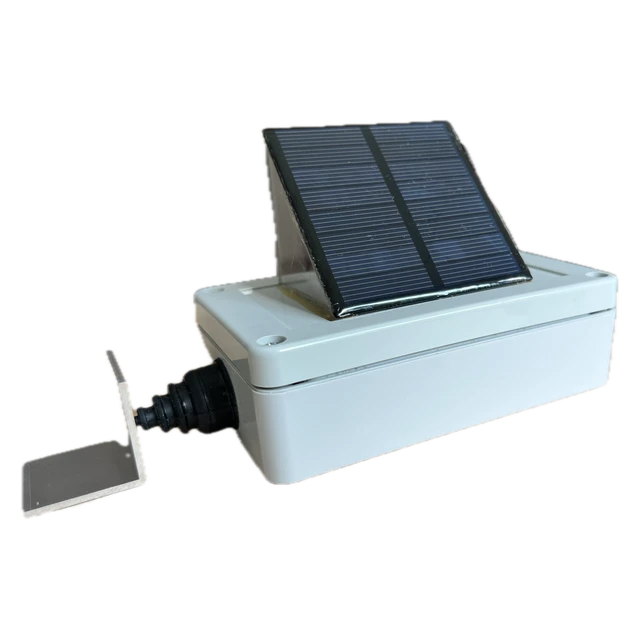 ProductsCrack sensorCrack width with 0.003 mm resolution, available with solar, long-life battery or mains power.
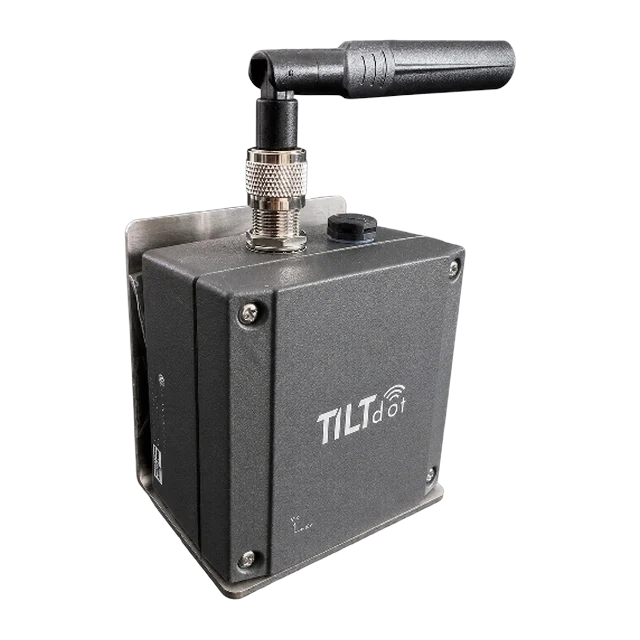 ProductsTilt sensorTilt and settlement of load-bearing components from 0.001°, gateway integrated.
 ProductsMoisture sensor CorroDec 2GMoisture directly in the concrete, passive and without its own power supply.
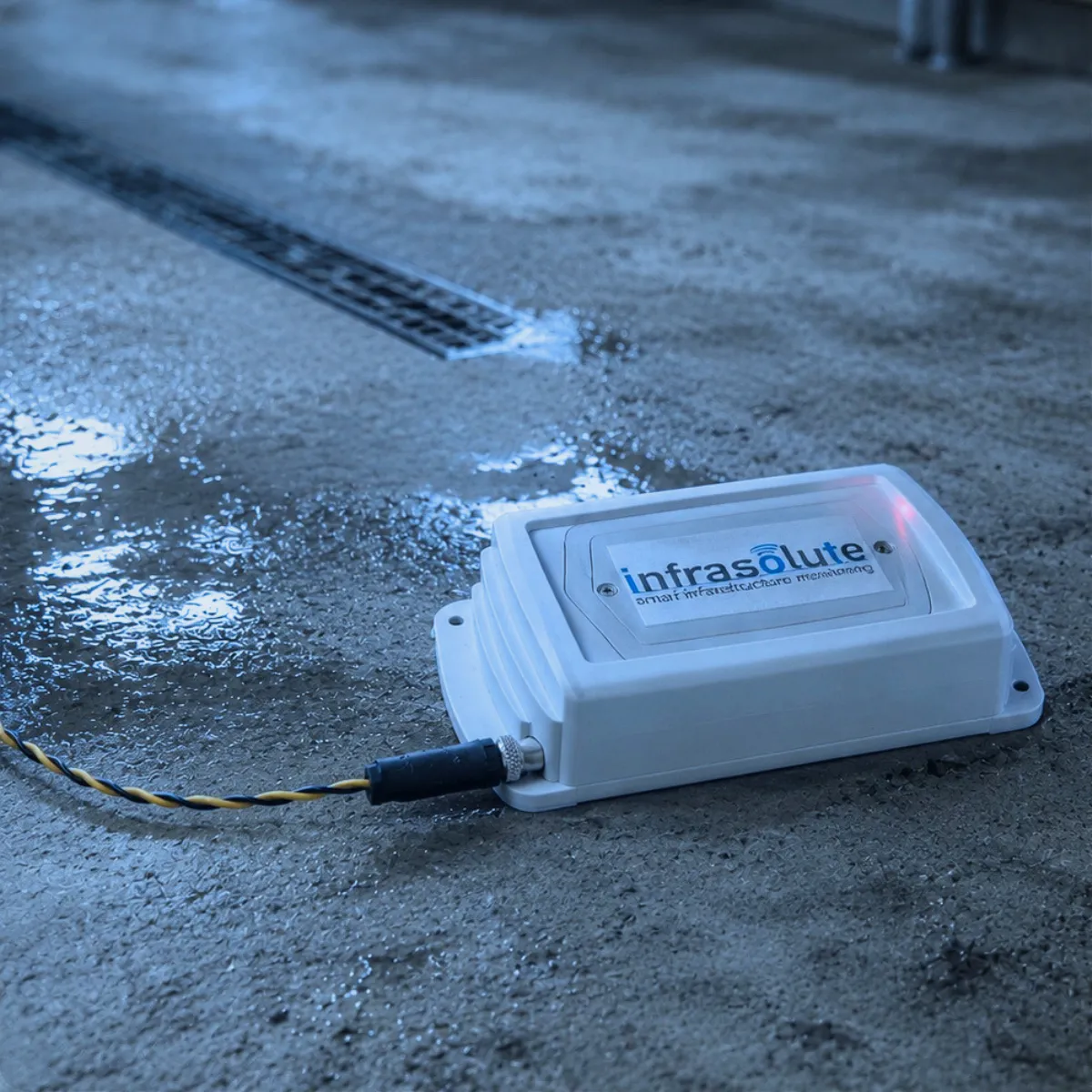 ProductsLeak detection cableReports water contact along the entire installed length, up to 40 m.
Typical use cases
When an assumption becomes too costly
Closure, refurbishment and replacement builds are decisions involving large sums. A measurement series shifts them from an estimate to the data.
- Accompany ageing structures through to the planned replacement build
- Condition surveys at neighbouring buildings during construction work
- Observe known damage between two main inspections
- Support remaining service life with measurement data instead of assumptions
- Keep structures with restricted accessibility permanently in view
- Provide evidence towards clients, authorities and insurers
For operators
Maintenance by condition instead of by calendar
Whoever knows the trend brings measures forward where they are needed, and defers them where the measurement series stays calm. That is the basis for reliable refurbishment planning.
For engineers and inspection engineers
Data for the structure file
The measurement series are historised and exportable and are available at the next inspection. The assessment remains with the inspection engineer, the data basis is better.
To the architects & engineers industry pageStructural health monitoring for your structure
Tell us about the structure and the question at hand. We propose measured variables, measuring points and thresholds, the concept is free of charge.
 Roman Koch
Data platform
All readings on one platform
The sensors transmit their readings wirelessly to the data platform, where they are evaluated, documented and continuously checked against your thresholds.
- AI-assisted data analysis
- User-focused reporting
- Continuous evaluation
- Warning and alarm thresholds
- Alerts by email and text message
- Remote access around the clock
- AI-assisted data analysis Condition within limits
- User-focused reporting Report ready
- Alerting Thresholds monitored
Frequently asked questions about structural health monitoring
What is structural health monitoring?
Does monitoring replace structural inspection to DIN 1076?
Which measured variables can be monitored?
Can an existing structure be retrofitted?
How do the measurement data reach me?
What does structural health monitoring cost?
Project inquiry
Let's talk about your structure
Tell us about your structure, objective and the known finding. You will receive a reliable initial assessment shortly, including suitable measured variables and sensors.
+49 6742 8599600 DE +41 41 670 00 11 CH [email protected]