

Vibration sensor SHAKEdot
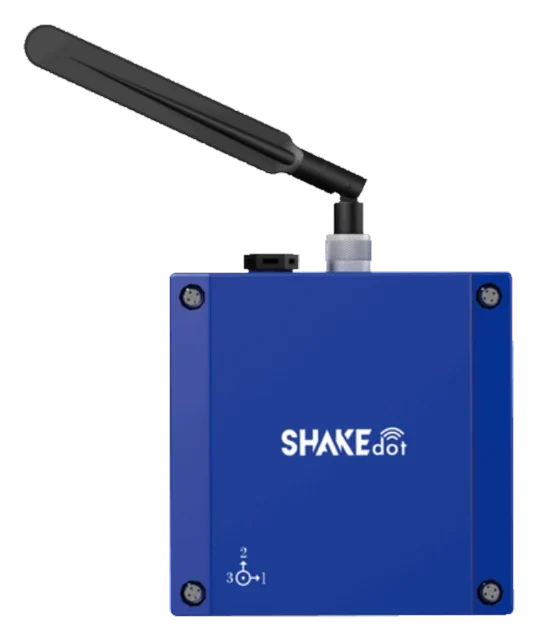
The SHAKEdot measures vibration on three axes directly at the structure and transmits it without cabling and without a construction power supply. It runs self-sufficiently for up to six months and reports a threshold breach the moment it occurs.
- 3-axis MEMS sensor
- LTE-M & NB-IoT
- Up to 6 months self-sufficient
Why the SHAKEdot
Measuring where no cable reaches
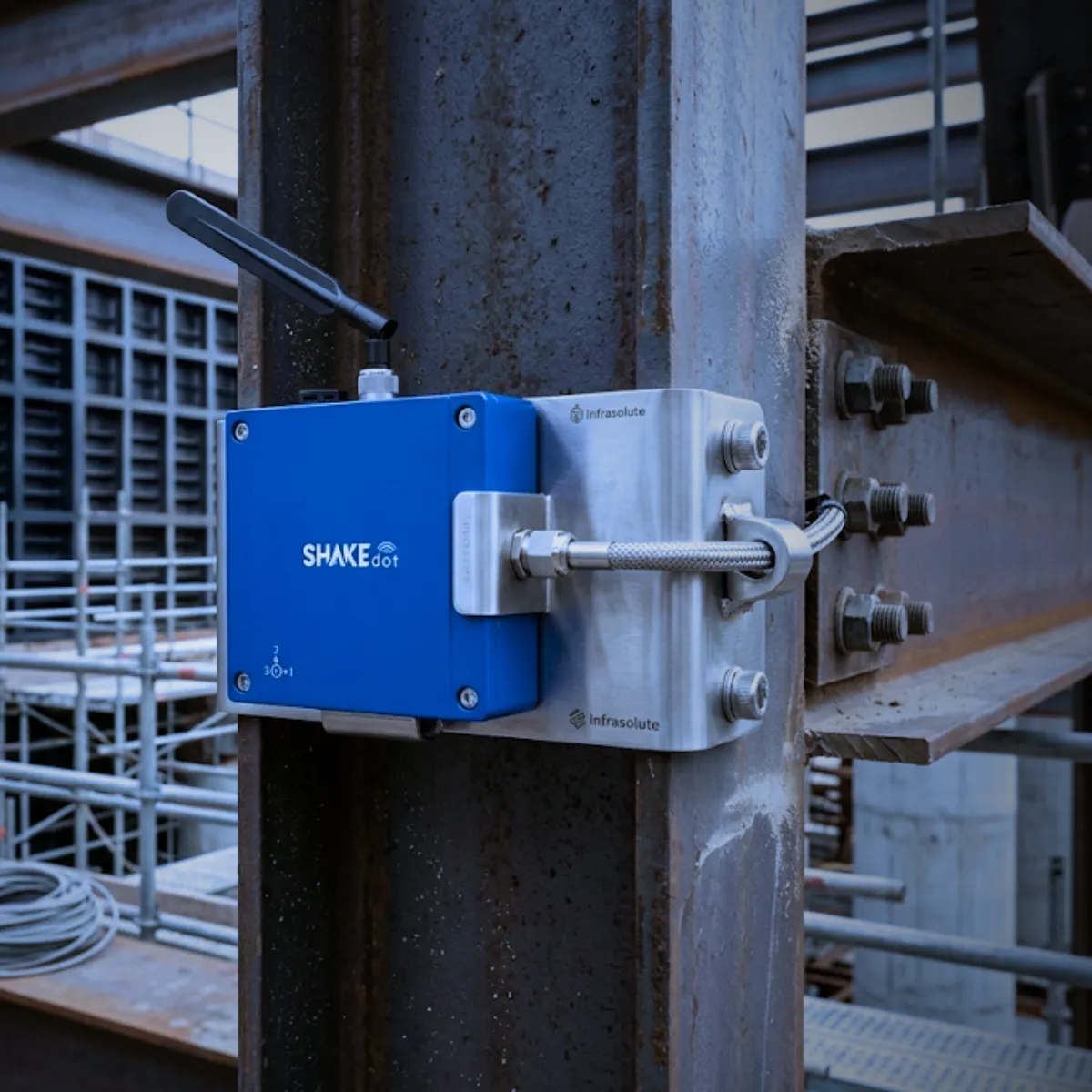
Classic measuring systems need cabling, a power supply and configuration on site. The SHAKEdot brings both with it and can be placed where the vibration arrives, not where a cable happens to run.
No cabling
Transmission runs entirely wirelessly via LTE-M and NB-IoT. Even third-party neighbouring buildings can be included without any structural intervention.
Self-sufficient operation
No external power supply needed. The battery lasts up to six months, so the sensor survives an entire construction phase.
Fast installation
Plug and play, without elaborate configuration on site. The sensor is ready to use as soon as it is in place.
Remote access
Measured values and status information are retrievable remotely at any time. No one needs to drive to the site for a look.
Event-based measurement
The sensor records when something happens, instead of filling a continuous curve. This saves battery and data volume and keeps the analysis lean.
Assessed to standards
The characteristic values follow DIN 4150-3 and BS 7385-2 for the structure and ISO 2631-2 for people inside the building.
Technical data
Specifications at a glance
- Measured quantity
- Peak particle velocity, three axes
- Sensor
- 3-axis MEMS, ±2 g
- Frequency range
- DC to 500 Hz
- Sampling rate
- 250 Hz
- Measuring range
- PPV 0 to 60 mm/s
- Data transmission
- LTE-M and NB-IoT, MQTT interface
- Memory
- 32 GB internal
- Power supply
- battery, runtime up to 6 months
- Form factor
- 100 × 100 × 60 mm
- Measuring mode
- event-based, with built-in temperature measurement
Operating principle
From piling blow to notification
The sensor sits on the component and waits. Only when a vibration exceeds the recording threshold does it record the event on all three axes. The characteristic values required by the standards are formed from the event and checked against the threshold for the specific building.
- 01
Capturing the event
The 3-axis MEMS sensor samples at 250 Hz and records as soon as the threshold is exceeded. Between events it stays in standby.
- 02
Forming characteristic values
The maximum peak particle velocity is derived as PPV from the three axes. For the effect on people in the building, the MTVV per ISO 2631-2 is added.
- 03
Transmitting and alerting
The values go via LTE-M or NB-IoT into the platform. If the project-specific threshold is exceeded, alerting triggers automatically, by email, SMS or interface.
Simulation
Three axes, one value
A vibration has a direction. The sensor therefore measures on all three spatial axes and derives the maximum peak particle velocity, the PPV. Trigger a piling blow and see which axis carries it.
Demonstration only
Applications
Where the SHAKEdot measures
A single point of contact
From the monitoring concept to alerting
The sensor is one building block, not an end in itself. On request, Infrasolute takes care of concept, installation, operation and ongoing monitoring as a complete solution, not separate parts.
- 01
Concept and planning
We clarify the boundary conditions, set measuring points and derive the thresholds from the building class of the neighbourhood.
Learn more - 02
Installation
Professional mounting, system testing and setup of the data transmission, without running cables and without a construction power supply.
Learn more - 03
Maintenance and operation
We keep sensors and transmission operational and adjust thresholds when the construction schedule changes.
Learn more - 04
Monitoring and alerting
Ongoing monitoring, alarm management and automated reporting over the entire construction period.
Learn more
Matching solutions
The sensor as part of a solution
Whether construction-phase over weeks or permanent over years, the device is the same, the question decides the concept.
Construction vibration monitoring (DIN 4150)
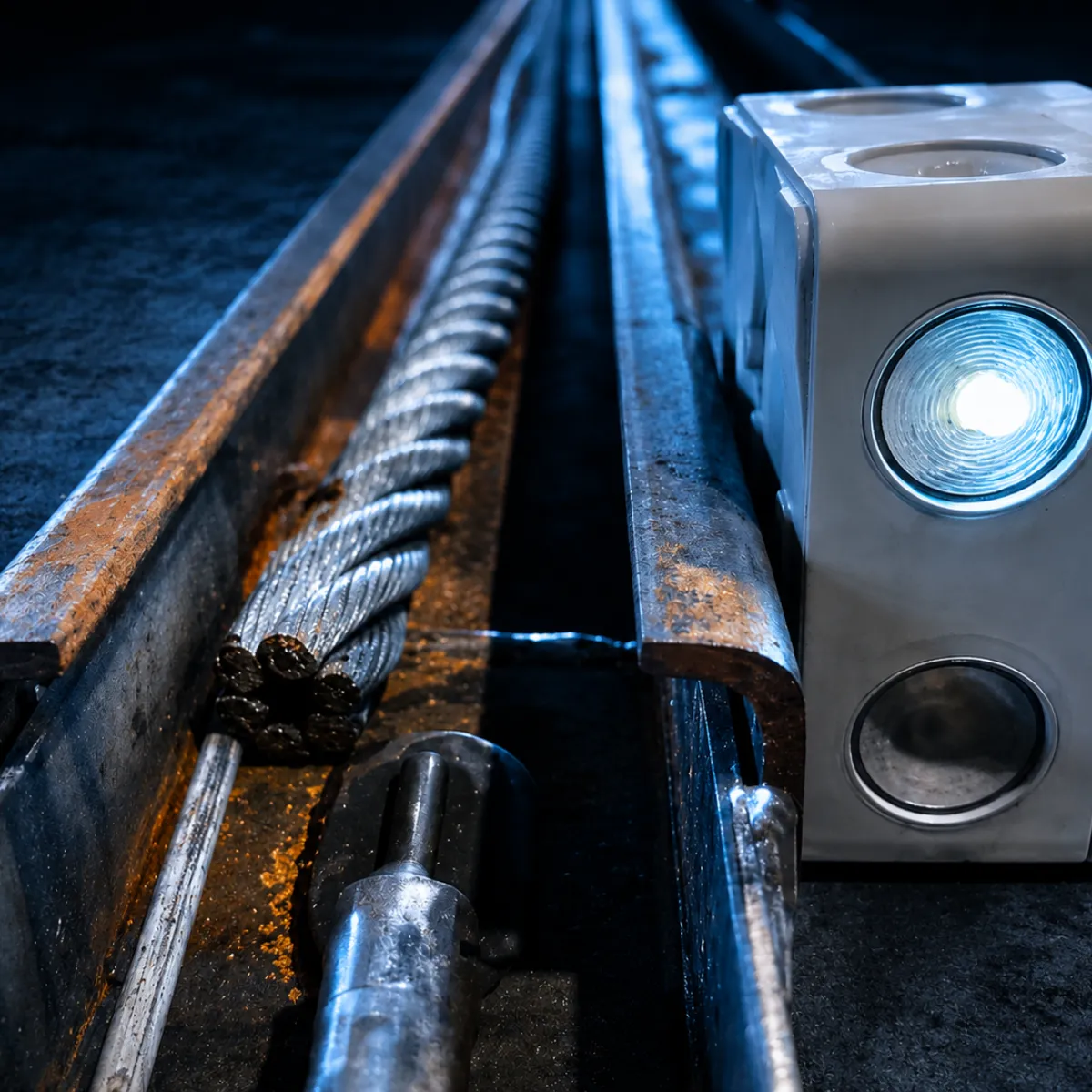
The construction-phase application: thresholds by building class, condition surveys and automatic alerting for piling, demolition and blasting.
View solution Vibration monitoring
The long-term application: peak particle velocity and natural frequency tracked over years, with trend analysis and alerting on deviation.
View solution
Structural health monitoring
The overview across all measured quantities, when vibration is only one of several questions on the structure.
View solutionWhich vibration do you want to document?
Tell us about the construction measure and the neighbourhood. We will derive measuring points and thresholds and tell you how many sensors are needed.
 Benedikt Seuss
Data platform
All readings on one platform
The sensors transmit their readings wirelessly to the data platform, where they are evaluated, documented and continuously checked against your thresholds.
- AI-assisted data analysis
- User-focused reporting
- Continuous evaluation
- Warning and alarm thresholds
- Alerts by email and text message
- Remote access around the clock
- AI-assisted data analysis Condition within limits
- User-focused reporting Report ready
- Alerting Thresholds monitored
Frequently asked questions
What is the difference between vibration monitoring and construction vibration measurement?
Which standards are applied?
How does the alerting work?
Can the measurement data be used as evidence?
Is the system also suitable for small construction sites?
How long does the battery last?
Project inquiry
Request the vibration sensor
If you want to monitor vibration during construction or permanently, tell us about the task. We will recommend measuring points and thresholds and get back to you shortly.
+49 6742 8599600 DE +41 41 670 00 11 CH [email protected]