

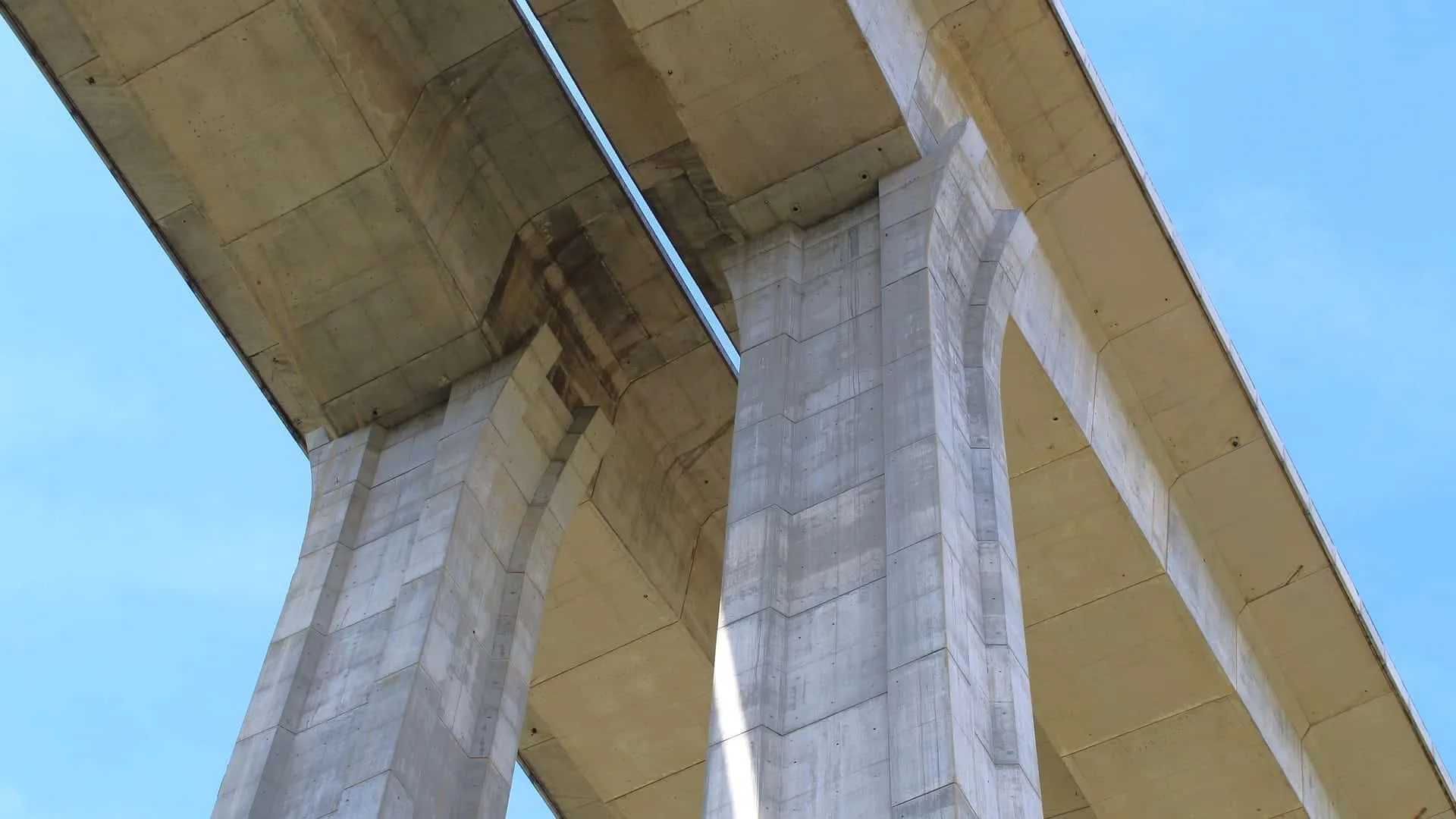
Monitor structures instead of refurbishing everything immediately.
Bridges, retaining walls, school and hall roofs, parking structures and shafts: wireless monitoring continuously records the condition and turns tight budgets into the right measures at the right time.
Benefits for public budgets
Why monitoring makes sense for municipalities and utilities
When budgets are tight, not every structure can be refurbished immediately. Continuous monitoring creates clarity about the condition and turns a tight budget into the right measures at the right time.
Request a quoteSpend the budget where it counts
Not every ageing structure needs immediate refurbishment. Continuous measurement data shows which structure genuinely needs action, and which can still be responsibly observed further.
Meet your duty of care
As an operator you bear responsibility for structural safety. Permanent monitoring documents the condition traceably and complements the periodic inspection with continuous values.
Prioritise measures cleanly
Instead of acting by gut feeling or only after visible damage, you prioritise across all structures based on objective data. That eases maintenance planning across several budget years.
A sensible complement to DIN 1076
The recurring structural inspection to DIN 1076 remains in place. Between inspection dates, monitoring delivers continuous values, so changes can be detected and assessed early.
Tight budgets, clear priorities
Immediate refurbishment for every structure would blow any budget. With wireless monitoring, you keep the whole portfolio in view, detect critical developments early and bring forward the one measure that genuinely cannot wait.
-
Everything in view
Every included structure transmits continuously, not only at the inspection date.
-
Early warning instead of firefighting
You react before a movement turns into a closure or an emergency measure.
-
Traceably prioritised
The order of measures can be justified with data, even to the council and the regulator.
Municipal structure portfolio
Example illustration
-
Road bridge
DIN 1076
-
Retaining wall on a slope
Tilt & movement
-
School gymnasium
Roof load & structure
-
Drinking water shaft
Supply & access
-
Administration car park
Concrete condition
Switch the scenario: reactively, the critical retaining wall is only noticed when it is almost too late. With monitoring, all structures are in view and the movement is reported early.
Areas of application
From the bridge to the shaft
Municipalities and utilities operate a broad structure portfolio. Our wireless sensors cover the critical areas with a uniform platform.
Municipal bridges and retaining walls
With growing traffic and increasing heavy loads on the road, older bridges in particular are heavily stressed. Wireless sensors permanently monitor cracks, concrete moisture, tilt and movement, and detect shifts early on retaining walls and slope roads, entirely without mains power.
Go to bridge monitoring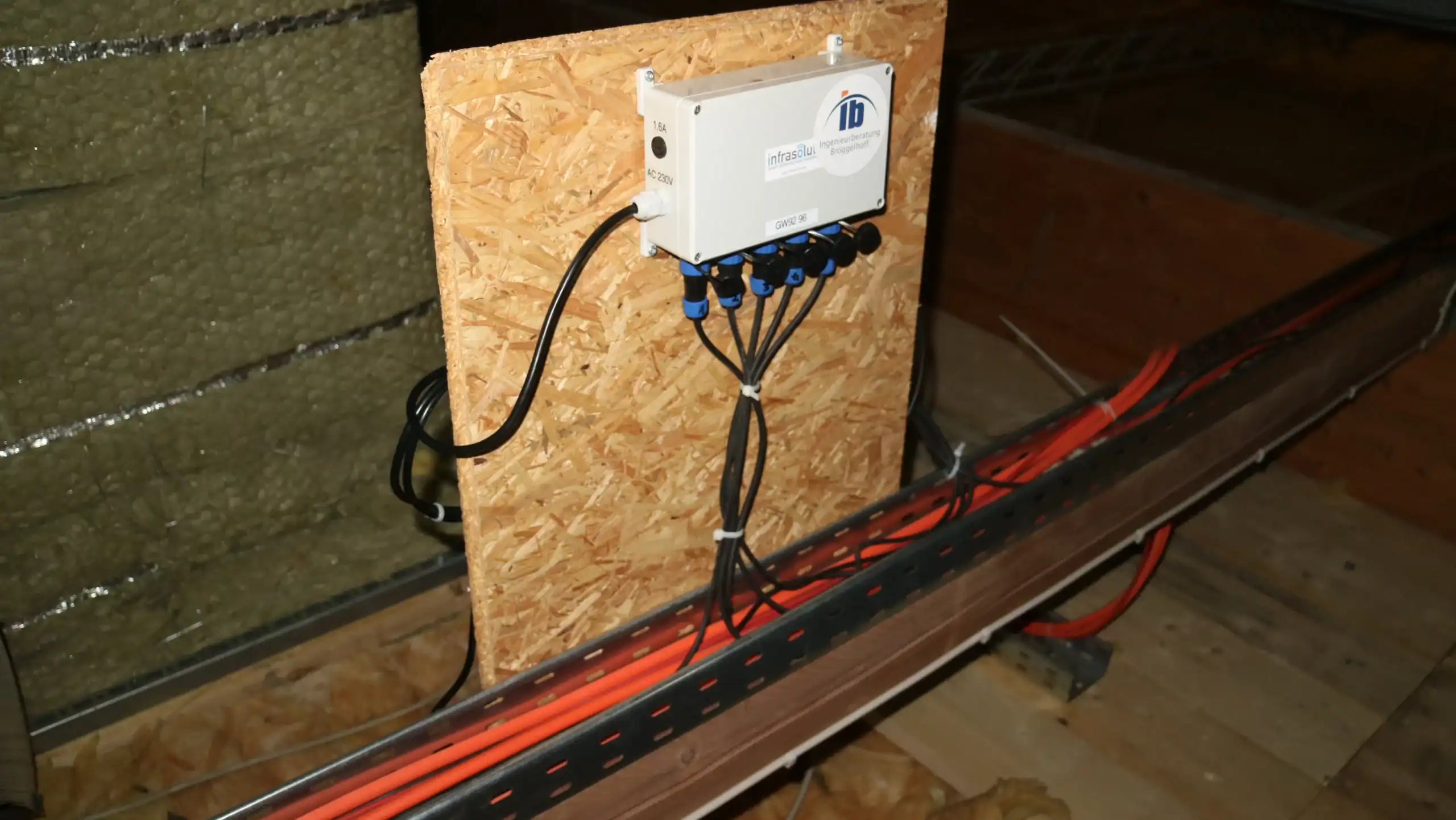
Roof load and structure at schools and halls
Wide-span roofs of gymnasiums, schools and event halls respond sensitively to snow load and ageing structures. Tilt and crack monitoring continuously keeps critical points in view, so an overload announces itself before it becomes dangerous.
Go to tilt monitoring
Swimming pools and the sealing layer
In an indoor or outdoor pool, the joint between tile and concrete decides watertightness. Water ingress there stays invisible for a long time and ends up as a major refurbishment with closure. Sensors in the joint mortar report it while the repair is still localised.
Go to swimming pools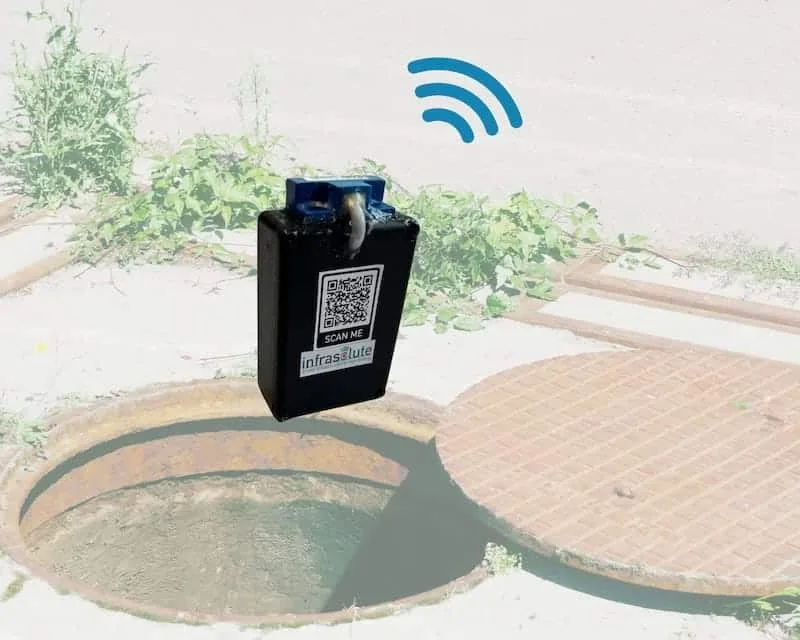
Shafts and utility infrastructure
Manhole covers at drinking water reservoirs, sewers and cable shafts are often unsecured and freely accessible. A sensor reports every opening, before anyone works on the structure.
Go to manhole & access monitoringEverything from a single source
One point of contact for the whole monitoring
From the measurement concept to ongoing operation, you get a complete solution, not separate parts. This keeps responsibility for your structure portfolio bundled in one place.
Concept
Together with you, we define which structures are included, which measuring quantities and thresholds are relevant, and how it all fits into your maintenance planning.
Learn moreInstallation
Wireless sensors are fitted without cabling and without mains power and commissioned with a documented baseline measurement.
Learn moreMaintenance and operation
We keep sensors and gateways running, check data quality and take care of technical operation over the whole term.
Learn moreMonitoring and alerting
Readings come together continuously in the platform; when thresholds are exceeded, your responsible staff are alerted automatically.
Learn more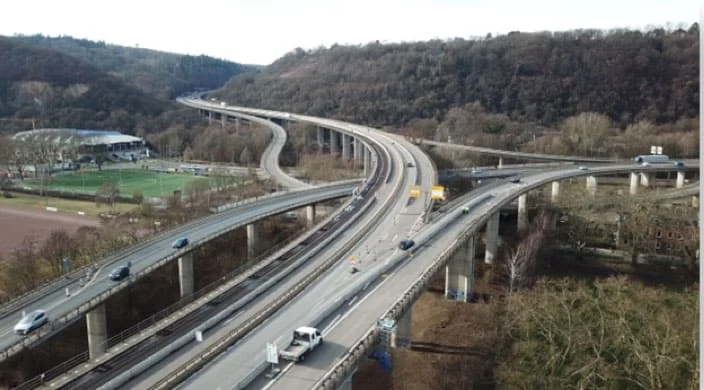
S\u00fcdbr\u00fccke Koblenz for the Landesbetrieb Mobilit\u00e4t highway authority
On a heavily trafficked section of the southern bypass, wireless, energy-free sensors monitor moisture and corrosion in the concrete. The data is available to the Landesbetrieb Mobilit\u00e4t online at any time via NB-IoT, entirely without intervention in the structure. This created a sensor-supported early-warning system that enables measures at the right time.
View referenceProject in numbers
- Client
- Landesbetrieb Mobilität Rheinland-Pfalz
- Task
- Online monitoring of moisture and corrosion during refurbishment
- Sensors
- Wireless, energy-free moisture and corrosion sensors
- Data transmission
- 7 gateways, NB-IoT over 5G
- Structure area
- approx. 93,000 m²
Matching sensors
This sensor technology runs in the municipal portfolio
Shafts, bridges and retaining walls can be monitored with the same devices, the values flow into the same platform.
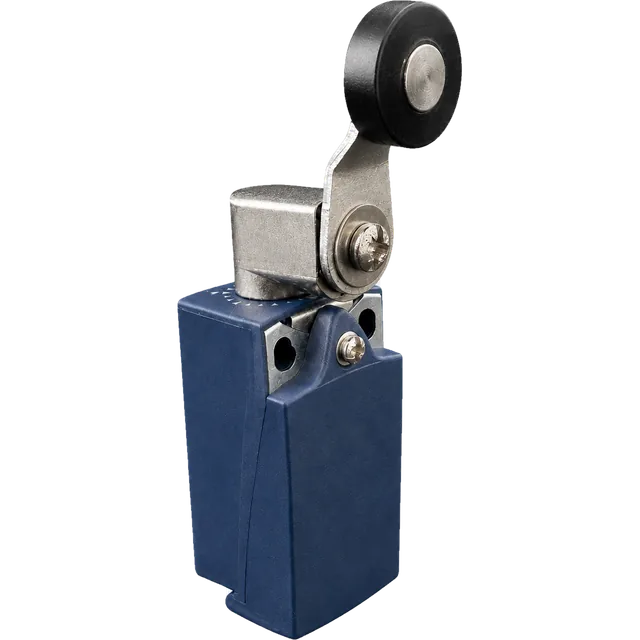 ProductsManhole sensorReports the opening of manhole covers and doors via NB-IoT, with long-life battery.
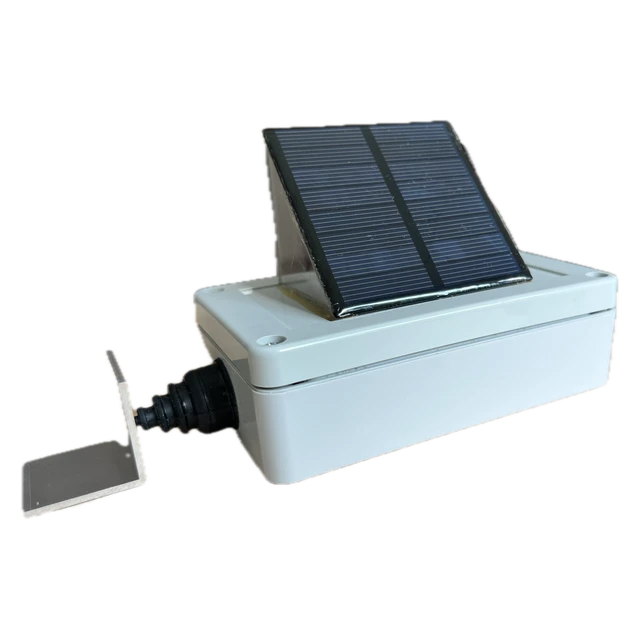 ProductsCrack sensorCrack width with 0.003 mm resolution, available with solar, long-life battery or mains power.
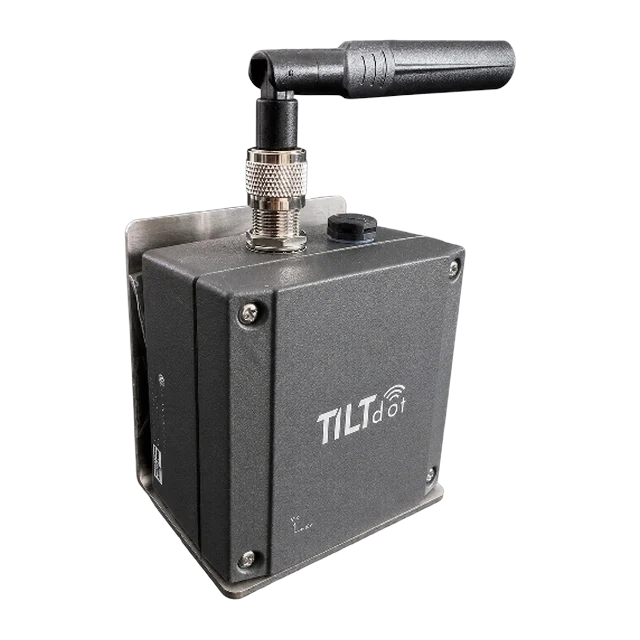 ProductsTilt sensorTilt and settlement of load-bearing components from 0.001°, gateway integrated.
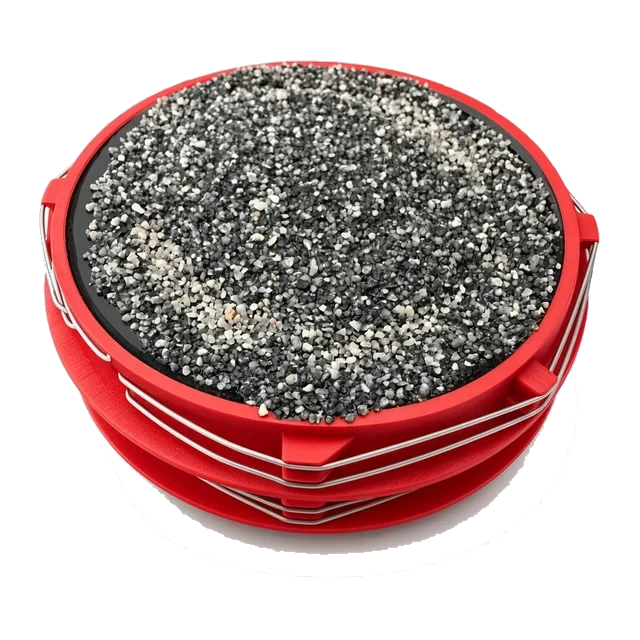 ProductsCorrosion sensor CorroDec 2GTwo-stage wire monitoring in concrete: shows whether the corrosion front has reached a defined depth.
Data platform
All readings on one platform
The sensors transmit their readings wirelessly to the data platform, where they are evaluated, documented and continuously checked against your thresholds.
- AI-assisted data analysis
- User-focused reporting
- Continuous evaluation
- Warning and alarm thresholds
- Alerts by email and text message
- Remote access around the clock
- AI-assisted data analysis Condition within limits
- User-focused reporting Report ready
- Alerting Thresholds monitored
Monitoring for your municipal structures
Bridge, retaining wall, hall roof or shaft: tell us which structures you need to keep in view. We help prioritise refurbishment with data.
 Roman Koch
Basis for decisions
What you can decide in the municipal portfolio
When the budget is smaller than the refurbishment backlog, the key decision is not whether, but in what order.
- 01
Set the order within the portfolio
Condition data for several structures turns a list into a ranking. The budget goes where it has the greatest effect.
- 02
Close a town road or a bridge
A closure hits the town directly. It can be justified with a documented trend, or avoided with one.
- 03
Schedule or postpone a replacement build
In the budget, the replacement of a structure must be planned years in advance. The measured condition says whether the plan holds.
- 04
Justify spending to the council and the regulator
Spending public money must be justified. A documented condition trend is a stronger justification than a report from the year before last.
- 05
Set the right inspection and control effort
Municipal structures are often looked after by few people. Monitoring shows where a site visit is genuinely needed.
Frequently asked questions from municipalities and utilities
Does monitoring replace structural inspection to DIN 1076?
How does monitoring help with tight budgets?
Which municipal structures can be monitored?
Do the sensors need a power or data connection on site?
How is the data provided?
Can we start small and expand later?
Project inquiry
Prioritise your structure portfolio with data
Tell us which structures you want to keep in view. You will receive a solid initial assessment shortly, including suitable measuring quantities and sensors.
+49 6742 8599600 DE +41 41 670 00 11 CH [email protected]