

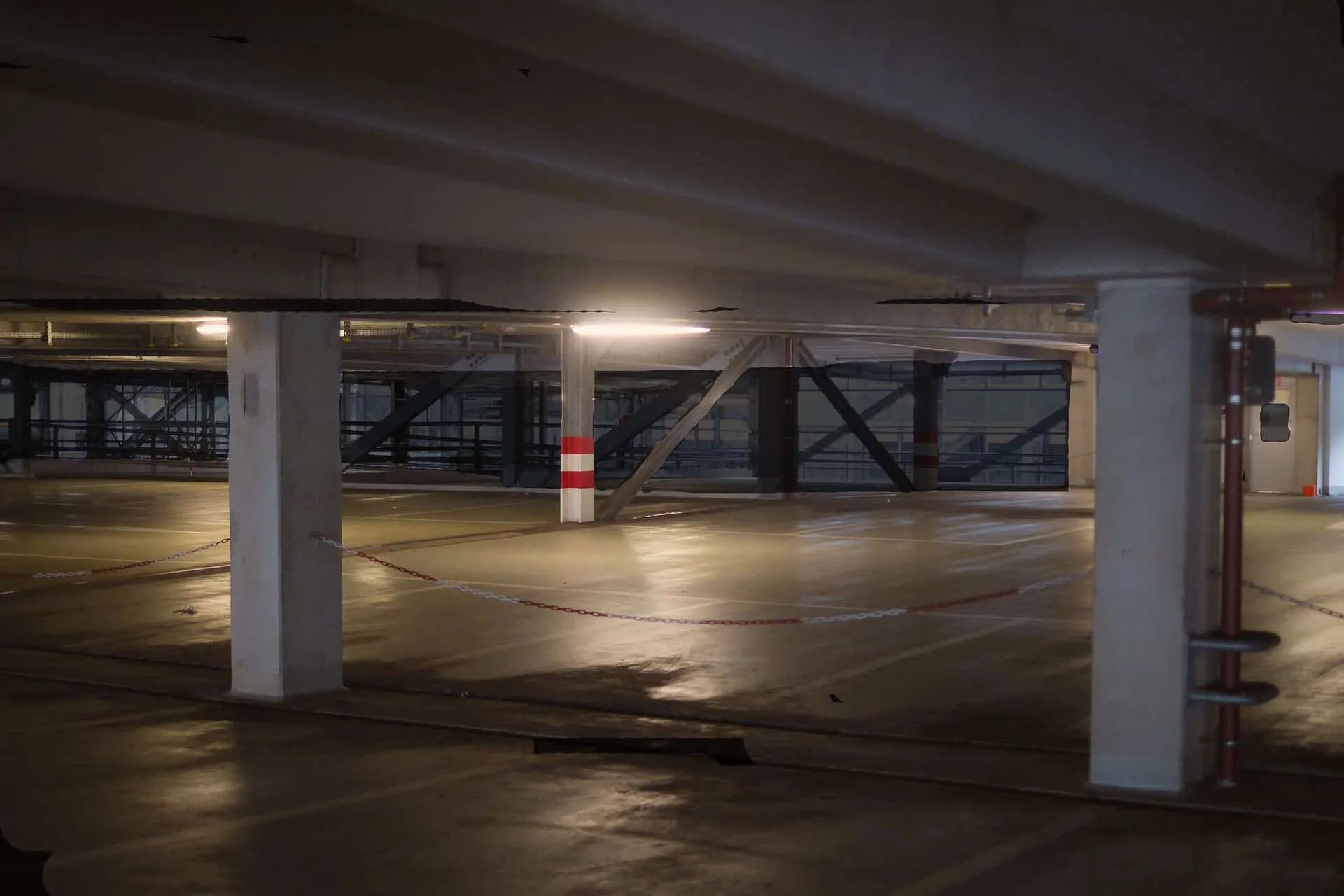
Car park monitoring that makes chloride damage visible early.
De-icing salt, moisture and exhaust fumes wear down parking structures permanently and attack the reinforced concrete. Sensor-based monitoring lets you detect chloride ingress, reinforcement corrosion and cracks early, plan refurbishment precisely and secure the service life.
Benefits for parking structures
Your benefit as an operator, manager or owner
De-icing salt, moisture and exhaust fumes wear down car parks and multi-storey garages permanently. Sensor-based monitoring makes chloride damage, reinforcement corrosion and cracks visible early and steers refurbishment and operation on real data.
Request a quoteDetect chloride damage early
De-icing salt from winter operation drives chlorides into the concrete and attacks the reinforcement. Moisture and corrosion sensors make this process visible long before concrete spalling occurs.
Plan refurbishment precisely
Instead of refurbishing across the whole area, the measurement data shows you where and when intervention is needed. This lowers the cost of concrete repair and shortens closure times for users.
Build in prevention from new build
Sensors installed already during new construction monitor condition from day one, secure build quality and later enable targeted instead of blanket refurbishment.
Keep hard-to-reach areas in view
Covered roof seals, drainage low points and maintenance shafts can hardly be checked manually. Sensors monitor exactly these critical points automatically.
Live scenario
How chlorides attack the concrete, invisible until the damage appears
The cross-section shows how chloride-laden water penetrates from the deck surface into the concrete and approaches the reinforcement. Start the simulation and watch when moisture and corrosion sensors respond, long before the concrete spalls.
Schematic illustration, not measured data
Chloride front
StablePenetration depth in the concrete
0 mm
Threshold 40 mm (reinforcement)
Moisture
StableMoisture at the drainage low point
0 %
Threshold 90%
Corrosion signal
StableAttack on the reinforcement
0 %
Threshold 100%
If the chloride front reaches the reinforcement, the system alerts automatically instead of waiting for the next inspection.
What we monitor
The critical parameters in parking structures
From moisture and corrosion in the concrete to crack widths on ramps, slabs and columns to deformation, each measuring task with the matching sensor technology, concentrated on the areas with the highest damage risk.
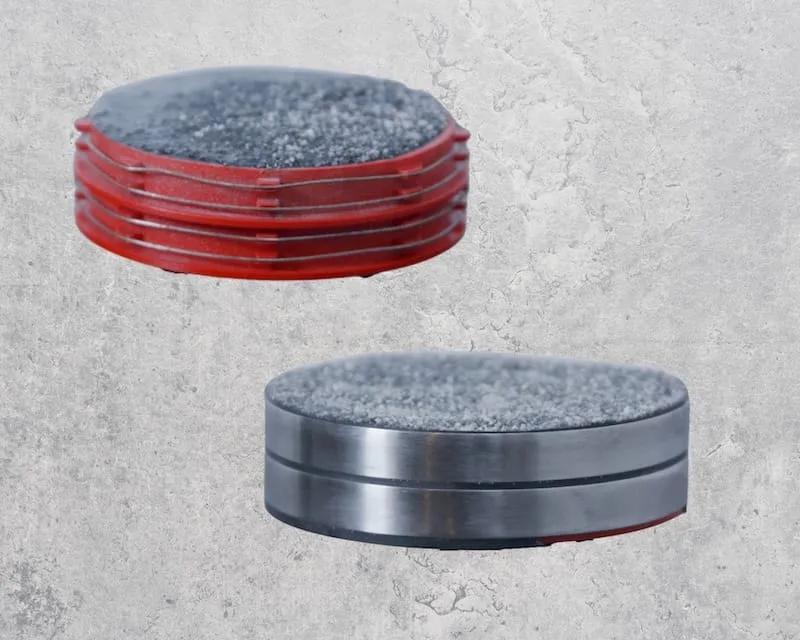
Concrete & reinforcement
Moisture and corrosion monitoring
Moisture and corrosion sensors sit where water collects: at the drainage low point of the slab, at the drainage joints of the ramps, and in load-bearing columns. They make chloride ingress and the attack on the reinforcement visible before the concrete spalls.
To concrete monitoring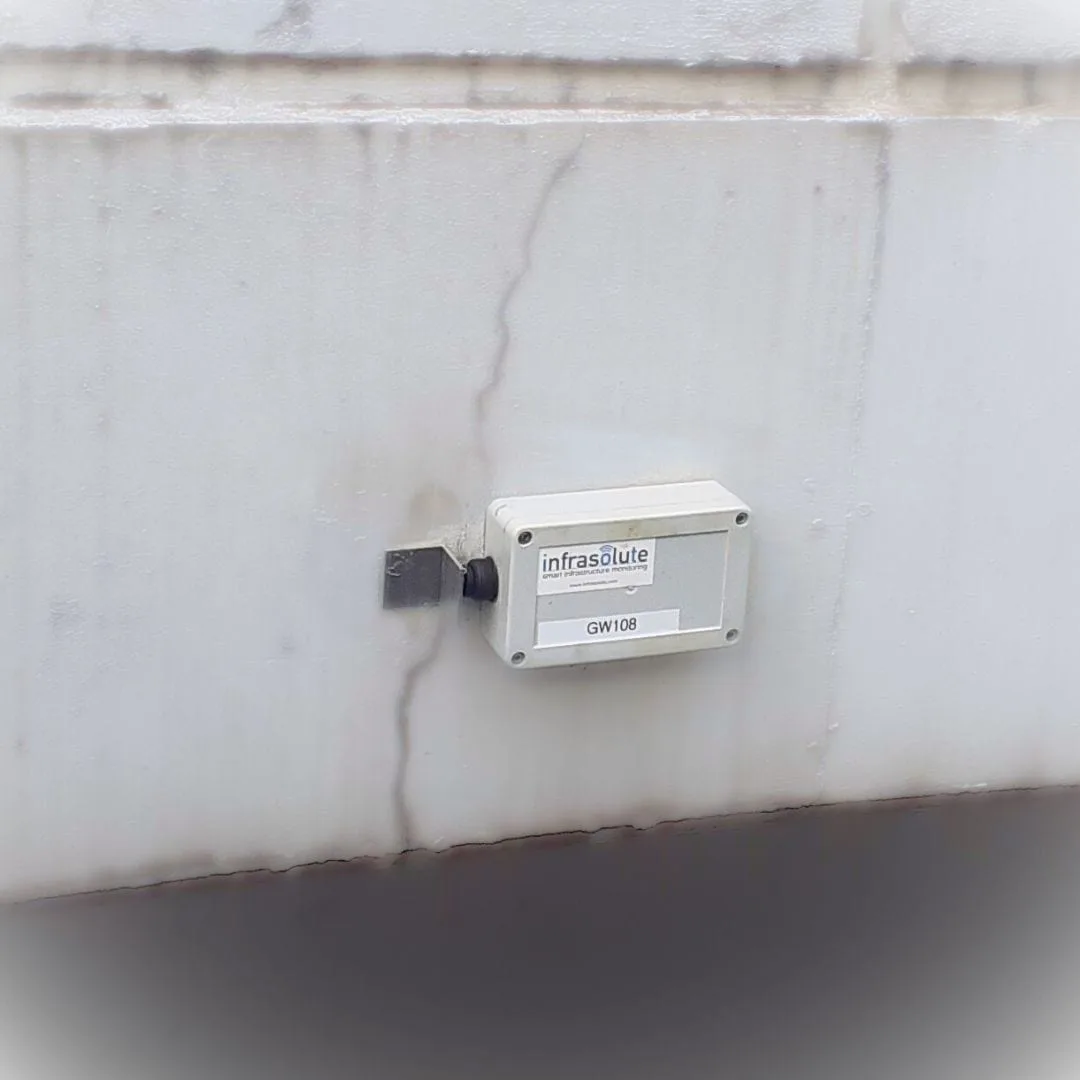
Ramps, slabs & columns
Crack monitoring on load-bearing components
On ramps, slabs and columns, displacement transducers continuously capture crack width changes. This way you notice when fine cracks in the concrete surface grow and chloride-laden water penetrates critical zones, instead of only noticing it on inspection.
To crack monitoring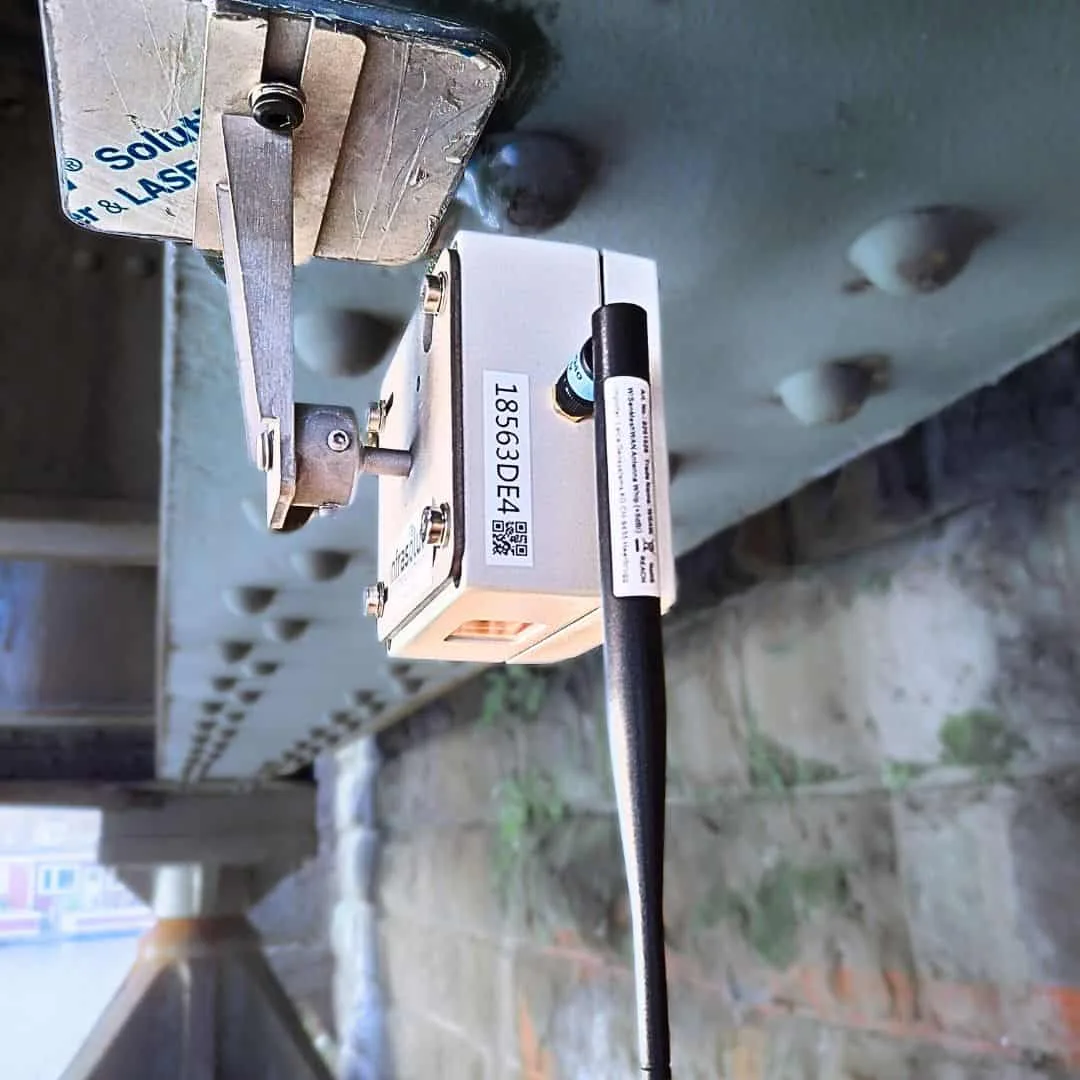
Deformation & position
Tilt monitoring for deformation
Where deformation of the load-bearing structure is relevant, tilt monitoring adds to the picture. Together with moisture, corrosion and crack data, a reliable condition history is built for maintenance planning and evidence towards surveyors and insurers.
To tilt monitoringEverything from a single source
From the monitoring concept to ongoing operation
You do not coordinate separate trades. Concept, installation, maintenance and the ongoing monitoring of your parking structure come from a single point of contact, in new builds and existing structures alike.
Concept
We define the critical measuring points, at drainage low points, ramps, columns and covered roof seals, select the sensor technology and define warning and alarm thresholds.
Learn moreInstallation
The wireless sensor technology is installed throughout the structure without cable runs, in new builds or retrofitted in existing structures, without permanently interrupting operation.
Learn moreMaintenance and operation
We keep the system operational and deliver reliable data. Retrieving moisture readings allows inspection intervals to be steered by condition instead of a rigid calendar.
Learn moreMonitoring and alerting
Moisture, corrosion progress and crack widths flow into a central evaluation and become comparable over time. The system alerts automatically if a threshold is exceeded.
Learn moreFrom practice
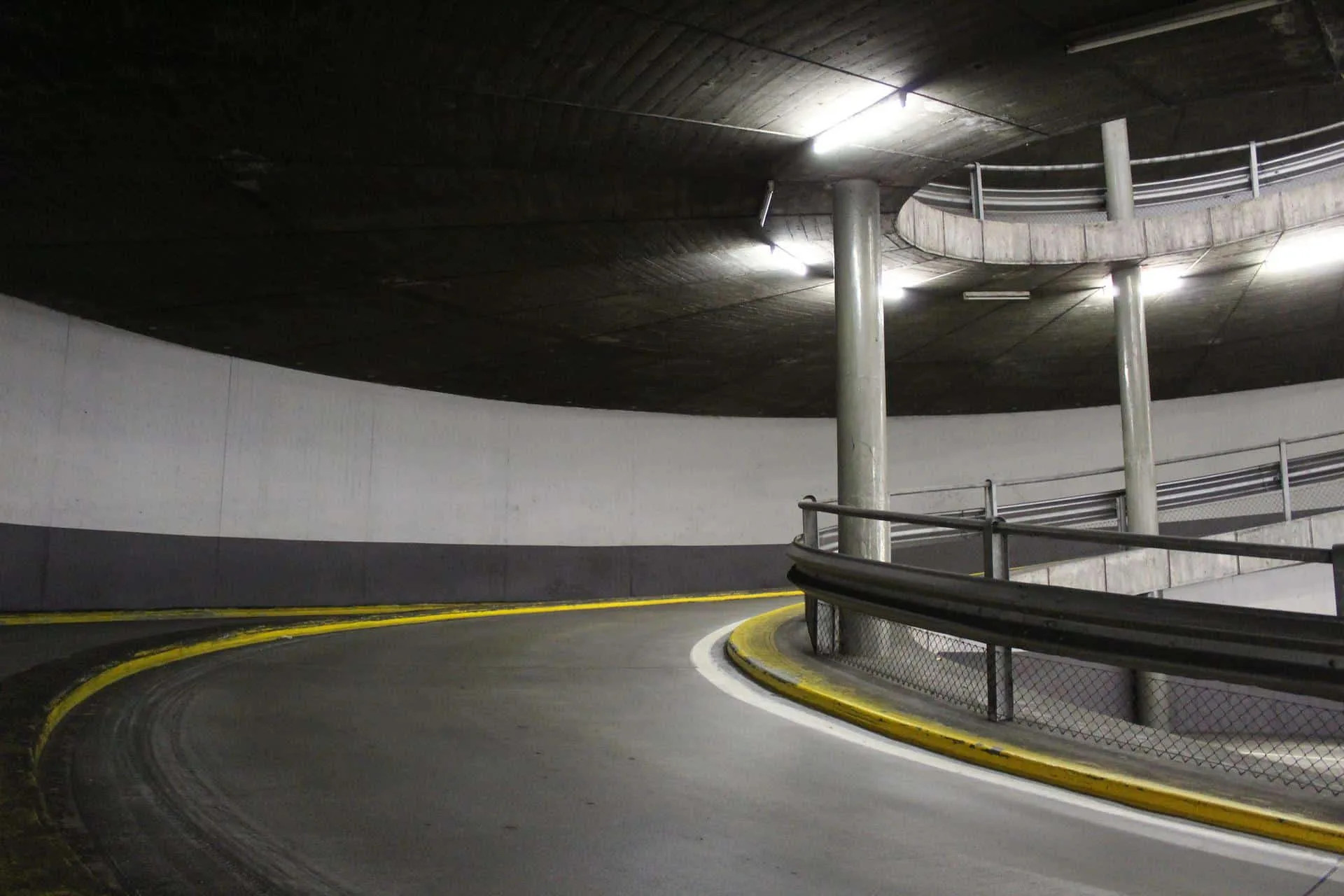
Prevention from day one at a new-build car park
Starting point
Refurbishing existing car parks is expensive, because damage is usually well advanced by the time it becomes visible. The city administration wanted to avoid this from the outset with the new building.
Implementation
Moisture and corrosion sensors with CorroDec 2G were installed already during the construction phase. Readout is manual via handheld reader or fully automatic via remote readout.
Result
The structure condition is traceable from the VOB acceptance onward, without expensive retrofitting. Later refurbishments can be steered precisely instead of applied across the board.
At a glance
- Sensors installed already during the construction phase
- Corrosion monitoring with CorroDec 2G
- Remote readout or handheld reader
- Condition documented from the acceptance inspection
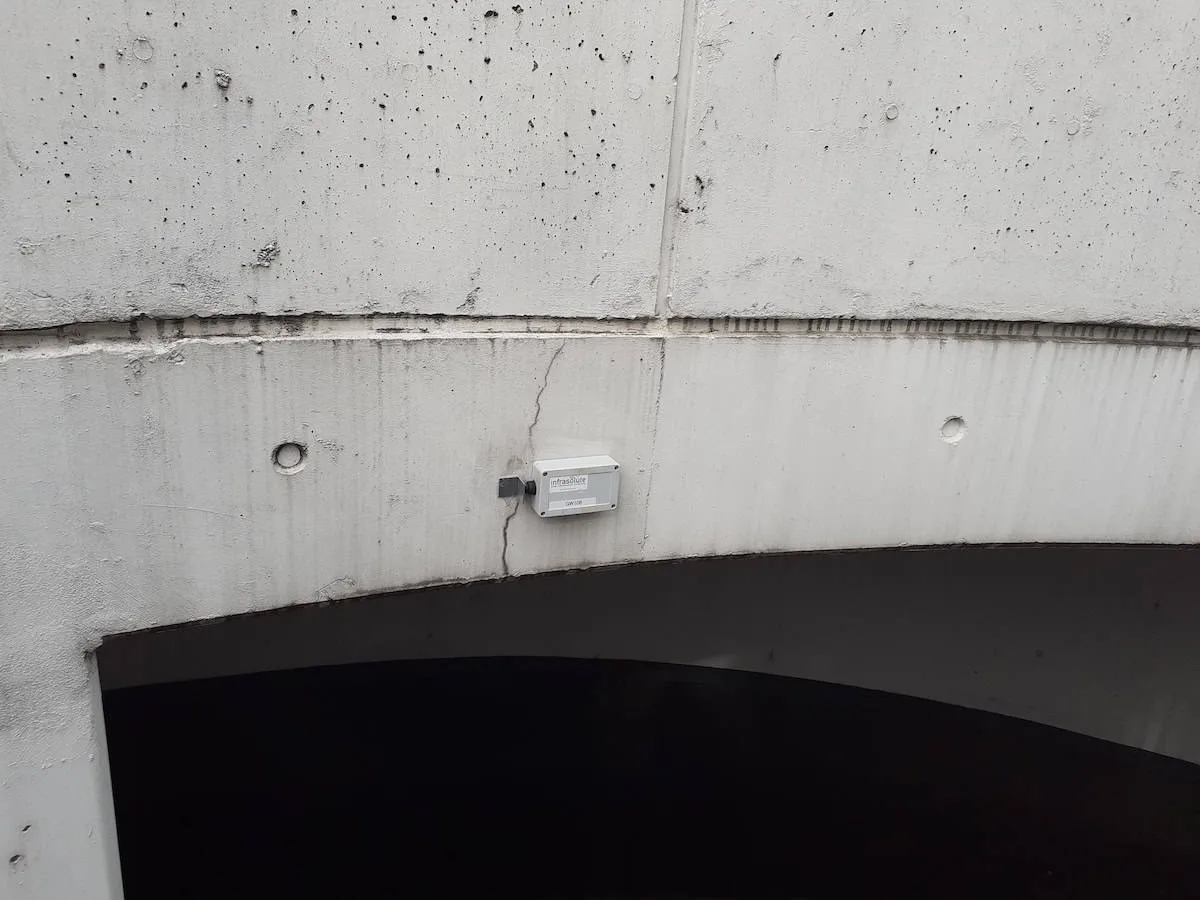
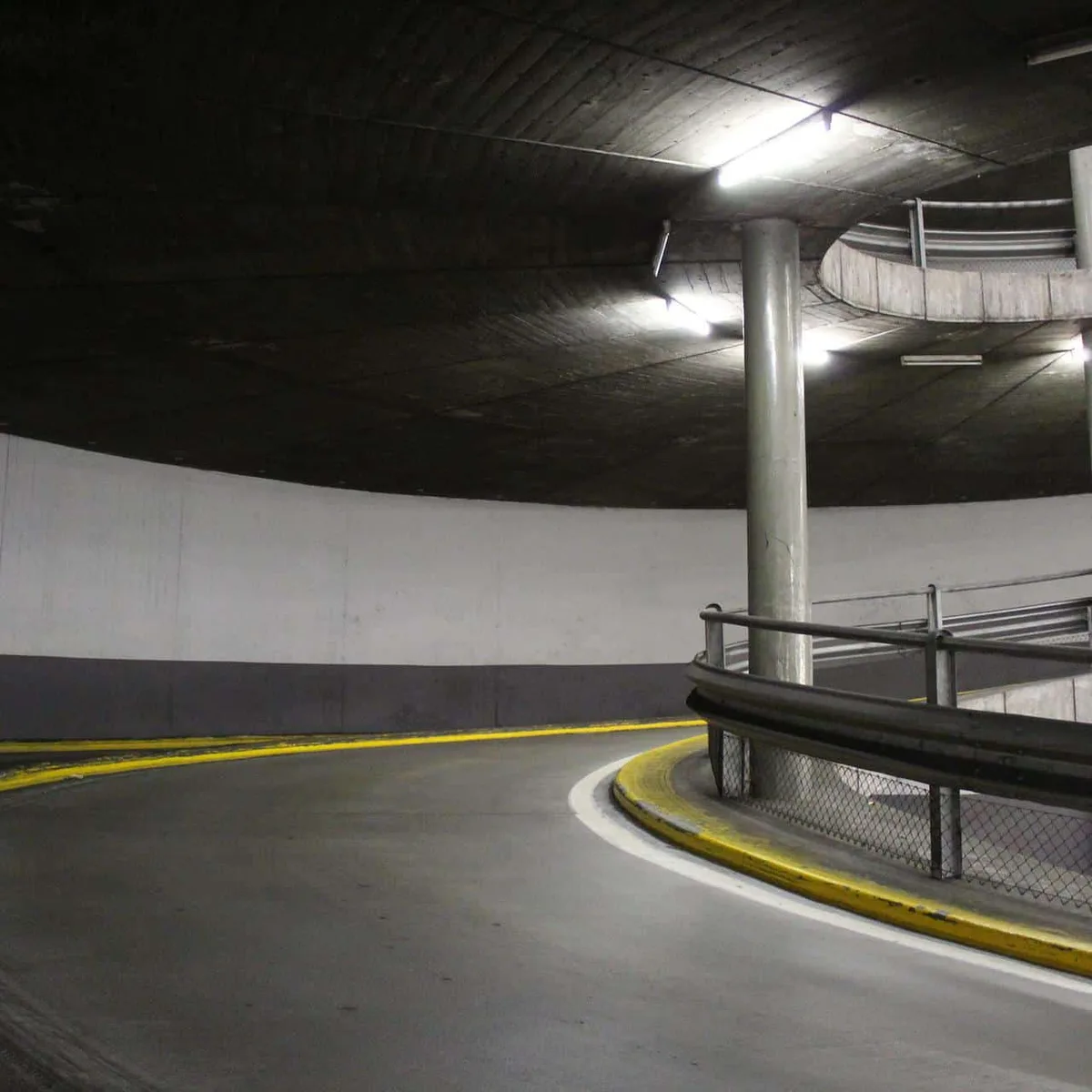
Underground car park Boppard
Concrete monitoring on a parking structure for an objective assessment of structure condition over time, wireless and without cabling effort.
More projects
More parking structure projects
Matching sensors
This sensor technology is installed in the parking structure
Chloride load and corrosion are the main focus here, plus crack width and tilt of components.
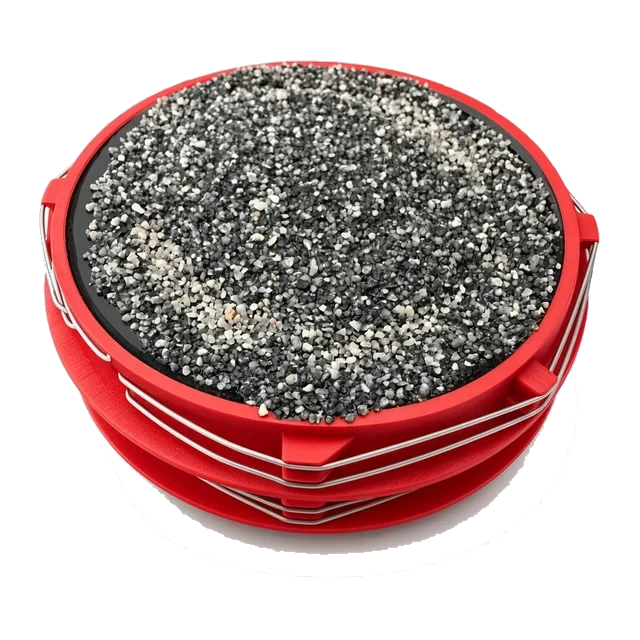 ProductsCorrosion sensor CorroDec 2GTwo-stage wire monitoring in the concrete: shows whether the corrosion front has reached a defined depth.
 ProductsMoisture sensor CorroDec 2GPassive RFID sensor for moisture directly in the concrete, energy-free and long-lasting.
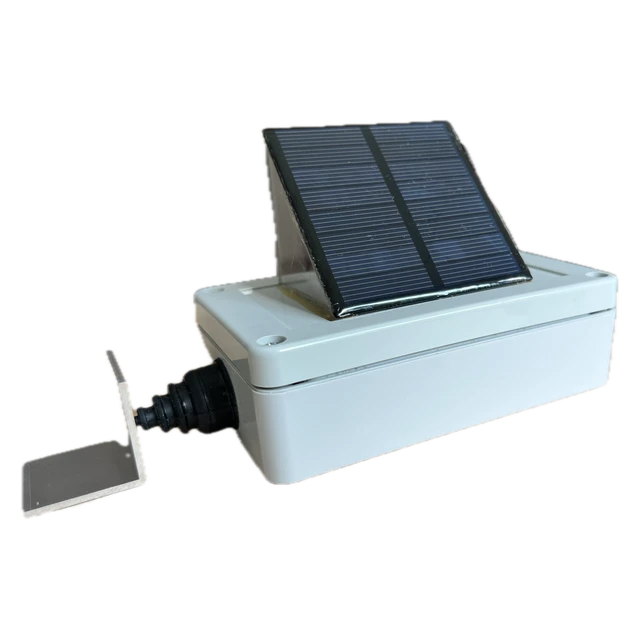 ProductsCrack sensorCrack width with 0.003 mm resolution, available as solar, long-life battery or mains power.
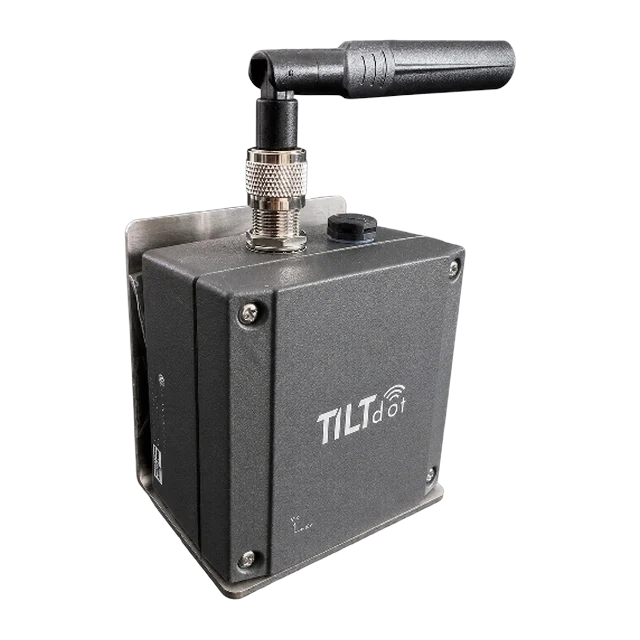 ProductsTilt sensorTilt and settlement of load-bearing components from 0.001°, gateway integrated.
Data platform
All readings on one platform
The sensors transmit their readings wirelessly to the data platform, where they are evaluated, documented and continuously checked against your thresholds.
- AI-assisted data analysis
- User-focused reporting
- Continuous evaluation
- Warning and alarm thresholds
- Alerts by email and text message
- Remote access around the clock
- AI-assisted data analysis Condition within limits
- User-focused reporting Report ready
- Alerting Thresholds monitored
Monitoring for your car park
New build with prevention from day one or existing structure with a known damage pattern: tell us which structure is involved. We will propose the measuring points.
 Peter Nater
Basis for decisions
What you can decide about the car park
A car park needs to earn money while it is being refurbished. Most decisions therefore revolve around how much operation remains possible and what that costs.
- 01
Close a level or keep it in operation
A documented condition history shows whether a slab bay remains safe to drive on. This determines how many parking spaces stay in use during a measure.
- 02
Refurbish during operation or close completely
Refurbishing section by section is more expensive during construction but cheaper in lost revenue. Without condition data, this calculation cannot be made.
- 03
Limit chloride refurbishment to the right area
Moisture and corrosion readings show where chloride ingress is actually critical. Blanket concrete repair becomes the exception instead of the rule.
- 04
Justify the maintenance reserve
Owner associations and managers must document expenses. A documented history is a more reliable basis than a visual inspection.
- 05
Demonstrate the duty of traffic safety
Whoever operates a car park is liable for its condition. Continuous monitoring documents that the condition was known and observed.
Frequently asked questions about car park monitoring
Why is car park monitoring especially important for underground car parks?
How does sensor-based monitoring of underground car parks work?
Is monitoring worthwhile during the refurbishment of a car park?
Can sensors be installed already during the construction of a new car park?
Which areas of an underground car park should be monitored?
How does car park monitoring help reduce refurbishment costs?
Project inquiry
Keep an eye on your parking structure
You operate or manage a car park or underground garage and want to keep the condition permanently in view or plan an upcoming refurbishment on data. Tell us about your structure, you will receive a reliable initial assessment shortly, with suitable measuring points and sensor technology.
+49 6742 8599600 DE +41 41 670 00 11 CH [email protected]