

Stress corrosion cracking detected through deflection
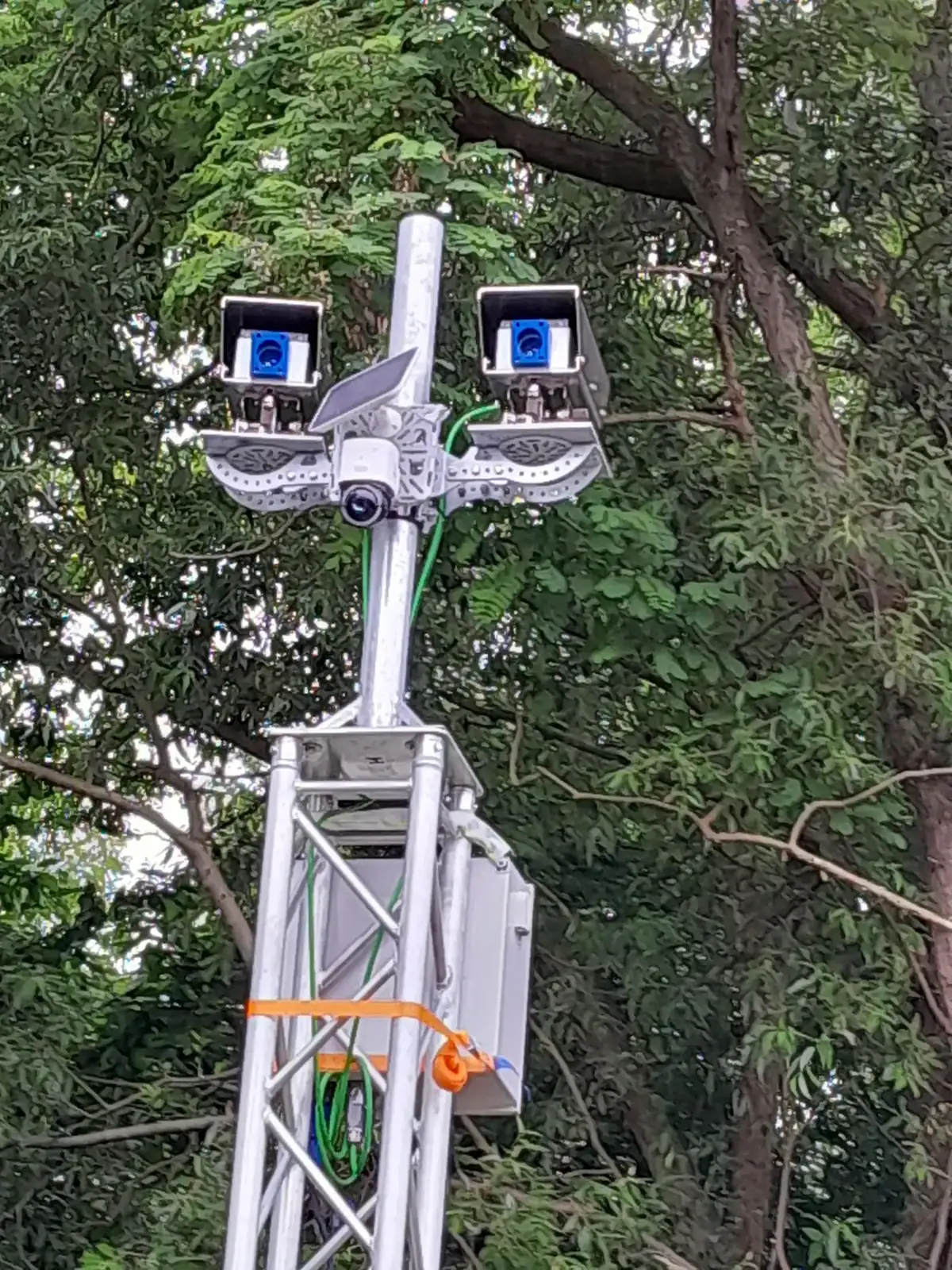
If a prestressing strand breaks, the load distribution changes and the structure deflects measurably more. Laser-based deflection monitoring captures this change to sub-millimetre accuracy, permanently and without intervention in the structure.
Your benefits
The detour via deflection
What cannot be observed still leaves a trace. For the prestressing steel, that trace is the geometry of the superstructure.
Request a quoteMeasuring the quantity that actually changes
Nothing can be observed directly on the prestressing steel itself, it sits in the duct inside the concrete. What can be measured is what its failure triggers: the deflection of the superstructure. That is exactly what the monitoring targets.
Sub-millimetre accuracy
Laser sensors capture the vertical deflection of girders and deck slabs with high resolution. This means even a change of a few millimetres is detected.
Non-destructive and contactless
No intervention in the structure, no direct access to the prestressing steels required. The structure remains untouched and in operation.
Self-sufficient and low maintenance
Operation via solar power and wireless communication. This makes monitoring practical even on structures that are difficult to access.
The problem
The damage proceeds inside the component
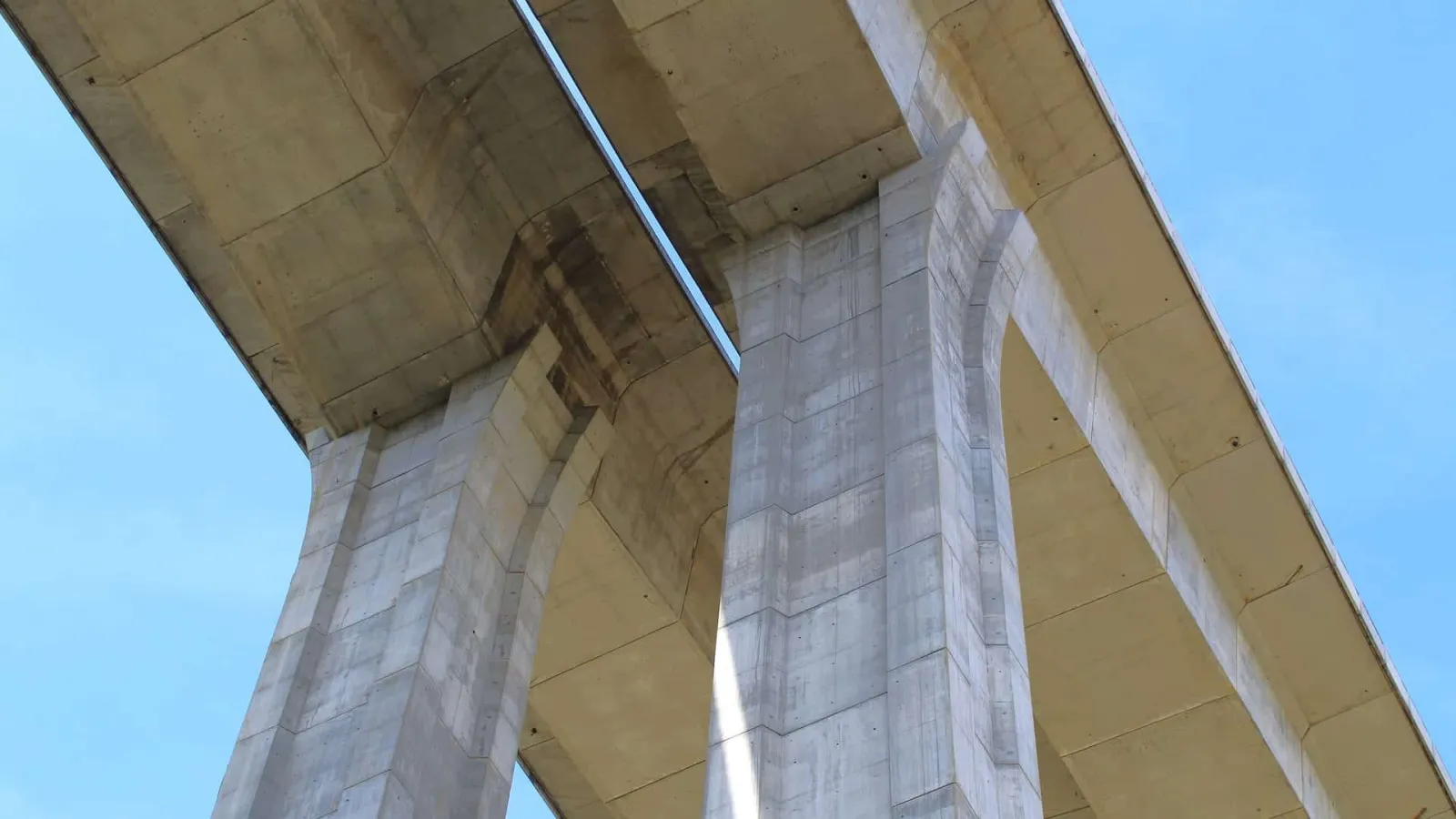
Stress corrosion cracking results from the combination of permanent tensile stress and a corrosive medium such as chloride or moisture. The process plays out inside the component.
How the damage mechanism proceeds-
Affected are primarily prestressing steels in prestressed concrete bridges, which are susceptible to microscopic cracks due to high prestress and environmental exposure.
-
Over months or years, these cracks grow unnoticed until individual tendon strands break suddenly. The damage is not visible from the outside or on superficial inspection.
-
When a prestressing strand breaks, the load distribution changes. The deflection increases measurably, often by only a few millimetres, but clearly detectable with modern sensor technology.
How it works
Four steps from baseline measurement to report
A bridge deflects during operation anyway, depending on traffic and temperature. What matters is therefore not the single value but the deviation from the documented starting condition.
- 01
Determine measuring points
We identify the points where a strand failure first shows as deflection. These are typically the mid-span areas and the areas with high prestress.
- 02
Record the baseline measurement
The starting condition is documented. All later readings refer to this, otherwise a change could not be separated from the starting position.
- 03
Capture deflection continuously
The laser measuring technology measures the vertical position continuously. The values go into the data portal, are historised and set against the structure temperature.
- 04
Check threshold and report
If the geometry changes beyond the agreed threshold, the system alerts automatically. The course of events remains preserved as documentation.
Where measurements are taken
Not everywhere, but where it shows first
A strand failure does not affect the whole structure equally. The measuring points sit at the locations where the prestress is highest and the response is clearest.
- Mid-span areas of single-span and multi-span girders
- Areas with high prestress
- Connection points of girder and deck slab
- Structures exposed to salt, chloride and moisture
Everything from a single source
One point of contact for the entire monitoring
From assessing the structure through installation to ongoing evaluation in the online portal, we accompany you through the entire project.
- 01
Concept
We assess the structure, determine the measuring points for deflection and agree warning and alarm limits.
Learn more - 02
Installation
On request, we fit the laser measuring technology, set up the transmission and commission the monitoring with a baseline measurement.
Learn more - 03
Maintenance and operation
We keep the measuring technology operational, check its function and adjust thresholds if something changes at the structure.
Learn more - 04
Monitoring and alerting
We observe the trend continuously and report any threshold exceedance to the responsible party.
Learn more
Typical applications
When the question is: will the structure still hold?
Stress corrosion cracking is not a suspicion that a single inspection can resolve. It needs observation over time.
- Prestressed concrete bridges with a known suspicion of stress corrosion cracking
- Structures from construction periods with prestressing steels now assessed as critical
- Bridges under regular de-icing salt exposure
- Ageing structures that remain in operation until a replacement is built
- Structures with limited accessibility for recurring inspections
Monitoring the cause too
Moisture and chloride in concrete
Stress corrosion cracking needs two conditions: permanent tensile stress and a corrosive medium. The second can be measured directly in the concrete, before it takes effect.
To moisture & corrosion monitoringMeasuring in combination
Together with crack and tilt
Deflection is one measured quantity among several. Crack width on the superstructure and tilt of the structure together with it build a picture that no single quantity can deliver.
To structural health monitoringMatching sensors
The devices behind the monitoring
Chloride, moisture and crack width are the quantities where the damage shows. These are the devices behind them.
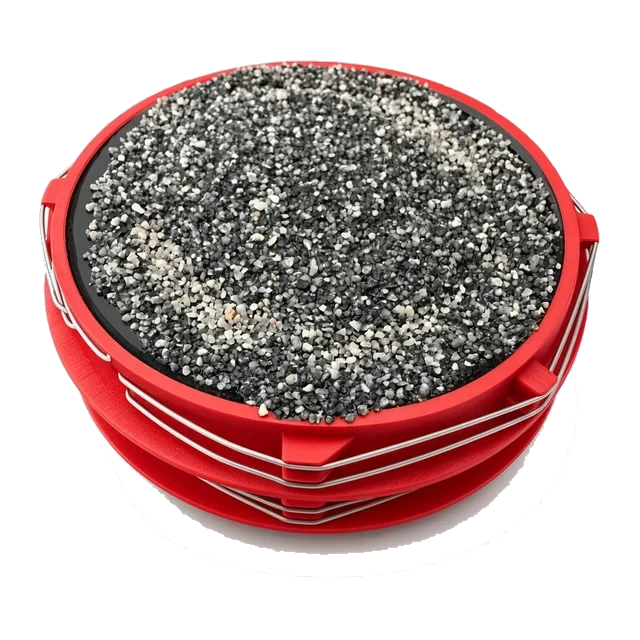 ProductsCorrosion sensor CorroDec 2GTwo-level wire monitoring in concrete: shows whether the corrosion front has reached a defined depth.
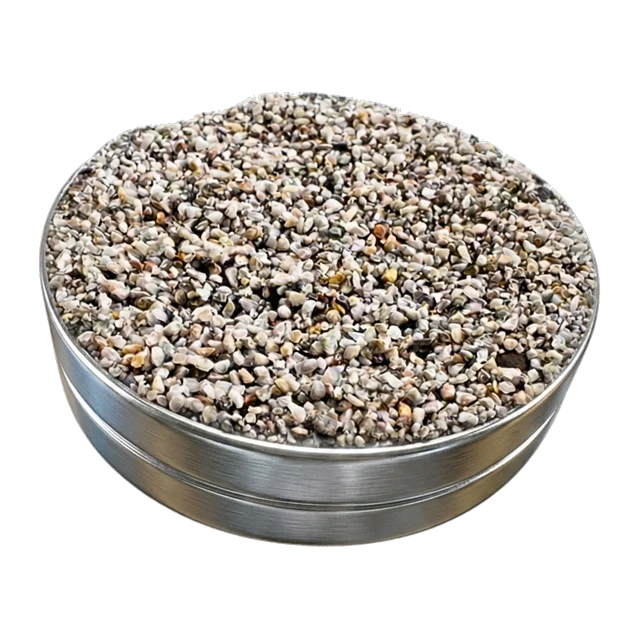 ProductsMoisture sensor CorroDec 2GPassive RFID sensor for moisture directly in concrete, energy-free and long-lasting.
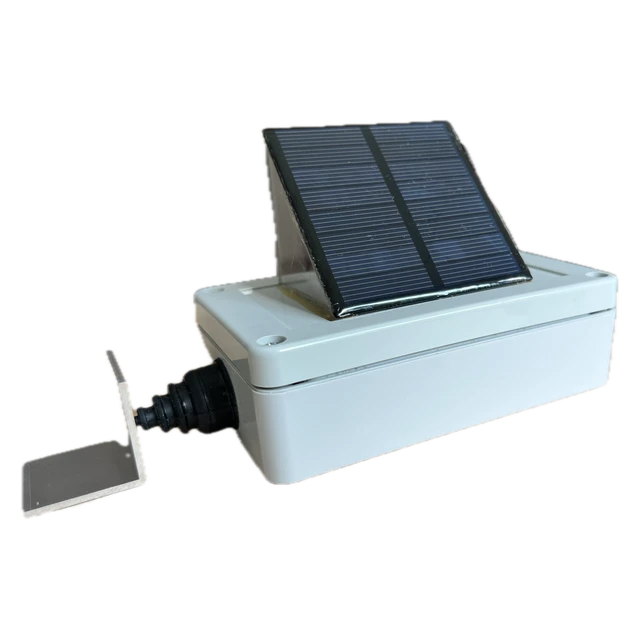 ProductsCrack sensorCrack width with 0.003 mm resolution, available as solar, long-life battery or mains-powered.
Stress corrosion cracking on your structure
Tell us about the bridge, the suspicion and the inspection history. We propose measuring points, thresholds and the right measuring setup.
 Christian Steffes
Data platform
All readings on one platform
The sensors transmit their readings wirelessly to the data platform, where they are evaluated, documented and continuously checked against your thresholds.
- AI-assisted data analysis
- User-focused reporting
- Continuous evaluation
- Warning and alarm thresholds
- Alerts by email and text message
- Remote access around the clock
- AI-assisted data analysis Condition within limits
- User-focused reporting Report ready
- Alerting Thresholds monitored
Case study
Project example as a PDF
What moisture and corrosion monitoring looks like in a real project: enter your name and email address and we will send you the case study.
Frequently asked questions about monitoring for stress corrosion cracking
Can stress corrosion cracking actually be measured directly?
How accurate is deflection monitoring?
Does the measurement require intervention in the structure?
How is the measurement powered?
Does the monitoring replace the structural inspection?
Where is the measurement taken?
Project inquiry
Let's talk about your structure
Tell us about the bridge and the question at hand. You will receive a solid first assessment shortly, including suitable measuring points and sensors.
+49 6742 8599600 DE +41 41 670 00 11 CH [email protected]