

Bridge bearing monitoring: see whether the bearing is still working
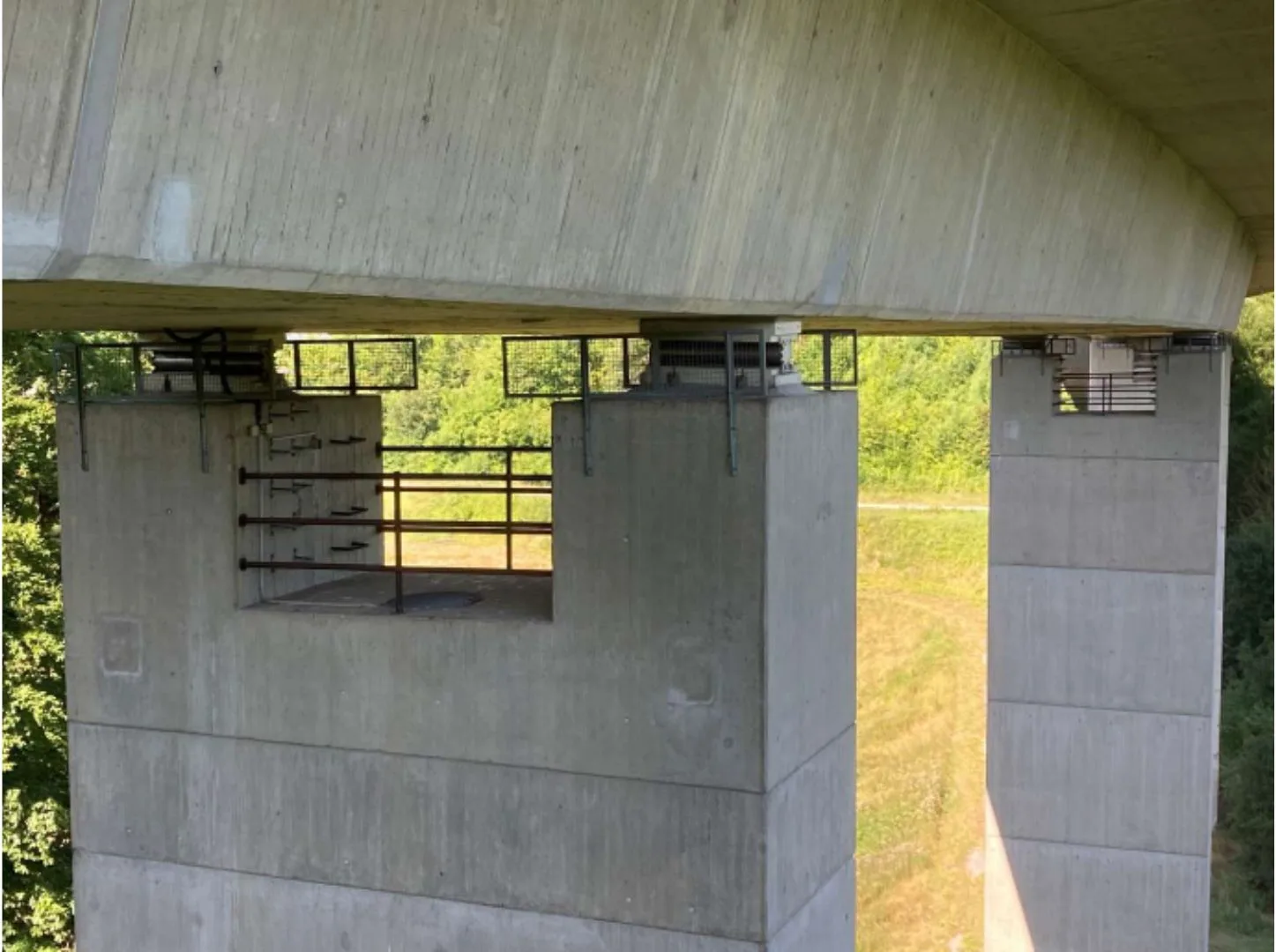
Permanently monitor roller, rocker, elastomeric and spherical bearings. Displacement at the bearing seat and structure temperature are tracked together, making it visible whether the superstructure is moving freely.
Your benefits
A bearing only shows its behaviour over time
During an inspection, the structure sits at a single temperature state. Whether the bearing moves over the annual cycle can only be estimated at that moment.
Request a quoteThe full temperature cycle, not a single inspection day
Whether a bearing is working shows over summer and winter. The data series runs continuously, while the main inspection under DIN 1076 captures a single day every six years.
Seizing becomes visible
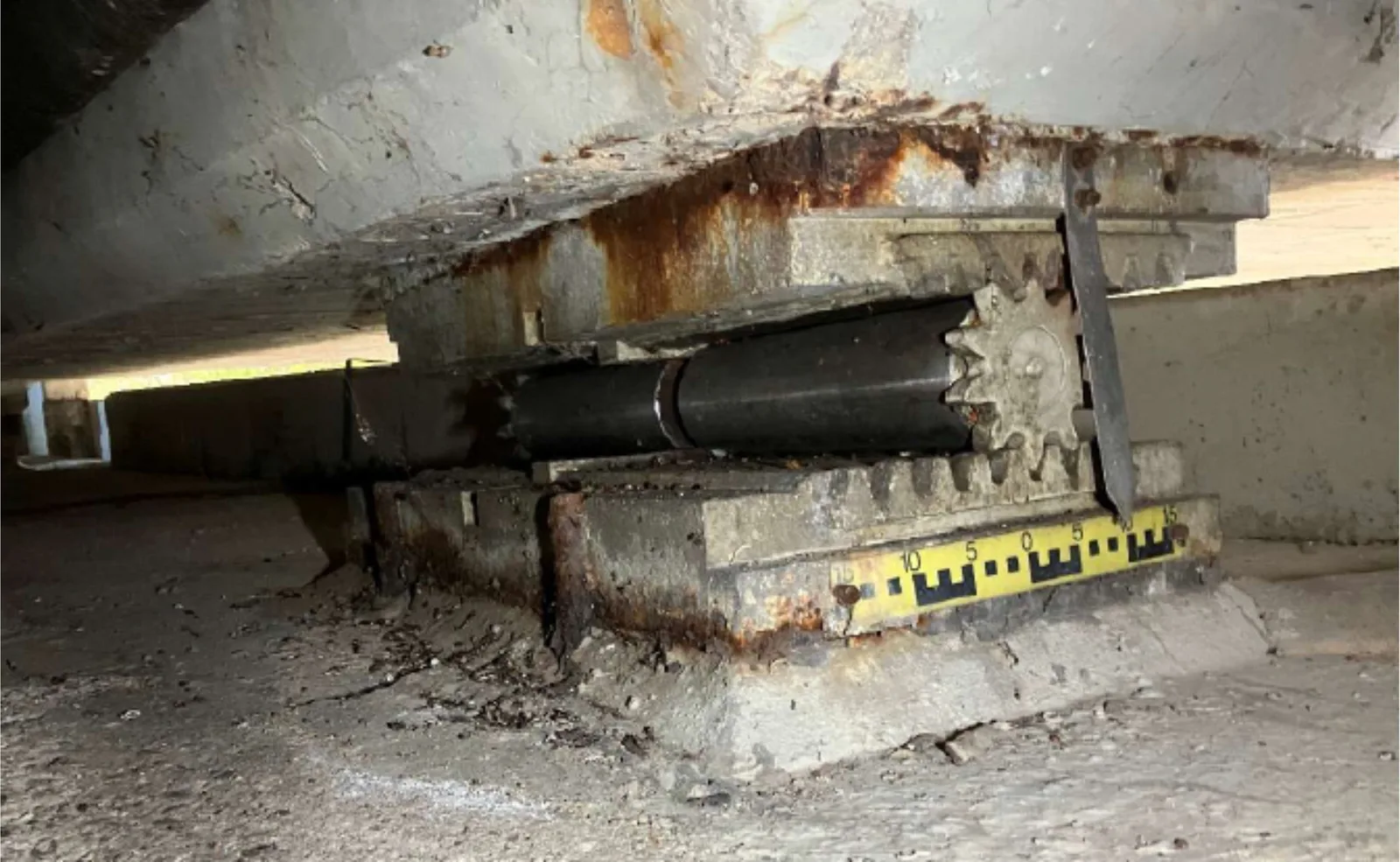
A jammed roller bearing does not report itself. If the measured displacement falls behind the expected value, this stands out before the restraint leaves marks on the bearing seat and superstructure.
Retrofittable on existing structures
The sensors are mounted in the bearing area and transmit their readings wirelessly. No intervention in the bearing itself and no cable trench are needed for this.
Remaining displacement capacity documented
How much travel the bearing has left in its summer and winter positions is established as a measured value. This is the basis for deciding on bearing replacement, remaining service life and refurbishment planning.
How it works
Four steps from expansion to insight
The movement at the bearing is unremarkable in itself, it belongs to the structure. It only becomes meaningful when compared against the temperature that causes it.
- 01
Assess the bearing seat
We inspect bearing type, expansion length and accessibility, determine which bearings are monitored and in which direction measurement takes place, and record the starting position.
- 02
Capture displacement and temperature together
Displacement at the bearing and the structure temperature run on the same timeline. Only both values together give a meaningful result, because the movement is driven by temperature.
- 03
Check the reading against the temperature cycle
From expansion length and temperature range, the expected movement of the superstructure can be calculated. This expected value is continuously compared with the measured displacement.
- 04
Report and document deviation
If a deviation persists, the alert goes out. In parallel, the data series keeps growing and documents from when the bearing’s behaviour changed.
Experience the principle
When the temperature rises and the superstructure stays put
As the superstructure warms, it has to displace at the movable bearing. Set the bearing to "blocked" and start the temperature cycle: the expected movement keeps going, the measured one falls behind.
Structure temperature
5°C
Expected
0.0mm
Measured
0.0mm
Structure
Steel superstructure, 30 m expansion length
Movement stays absent
Bearing not following the temperature cycle, operator alerted
What is monitored
Three bearing types, one question
However different the bearing types are, the question is the same for all of them: does the bearing still allow the movement it was installed for?
Steel bridges
Roller & rocker bearings
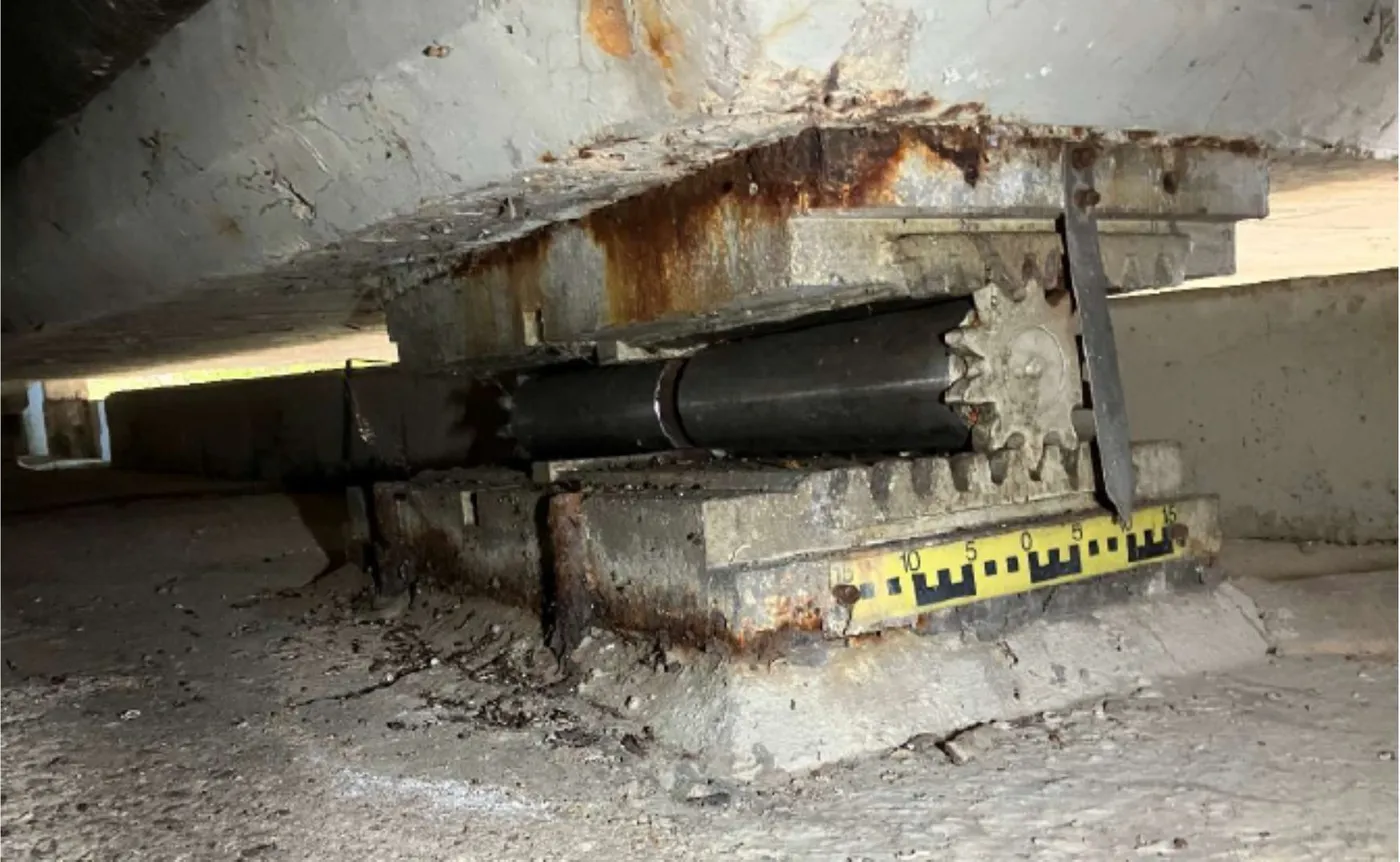
The roller must be able to rotate. Corrosion, contamination and lack of lubricant cause it to seize, and the expansion forces then transfer into the superstructure and abutment instead of into the movement.
Concrete bridges
Elastomeric & sliding bearings
Here the movement arises from shear deformation and from the sliding surface. Ageing of the elastomer, displaced bearings and damaged sliding pairings change the behaviour gradually.
Large spans
Spherical & pot bearings
High loads meet a sliding material that wears. What matters is the displacement path and rotation at the end positions, in other words how much reserve the bearing still has in summer and in winter.
What a seized bearing triggers is usually visible on the adjacent component. Crack formation at the bearing seat and chamber wall is captured by crack monitoring, tilting and settling of the substructure by tilt monitoring. In the concept we combine the measured variables that match the damage pattern.
Single source
One point of contact for the whole monitoring project
From assessing the bearing seat through installation to ongoing evaluation in the online portal, we support you through the entire project, as a complete solution, not individual parts.
- 01
Concept
We assess bearing type, expansion length and accessibility, define measured variables and thresholds, and plan the measuring points at the bearing seat.
Learn more - 02
Installation
On request, we mount the sensors in the bearing area, set them up and commission the monitoring system.
Learn more - 03
Maintenance and operation
We keep the sensors operational, check their function and update the expected values when usage or the structure changes.
Learn more - 04
Monitoring and alerting
We continuously observe displacement and temperature and report a persistent deviation to the responsible party.
Learn more
Typical applications
Where the bearing is the open question
Bearing condition is a key factor in remaining service life, refurbishment scope and cost. A data series answers the question that would otherwise rely on an assessment based on assumptions.
- Riveted steel bridges with existing roller or rocker bearings
- Structures whose bearings were flagged at the last main inspection
- Bridges facing a decision on bearing replacement or reconstruction
- Cracks at the bearing seat, chamber wall or abutment with unclear cause
- Structures under ongoing traffic where every closure is costly
Maintenance
Bearing replacement, justified by the measurement
A bearing replacement is costly, often involving lifting the superstructure and traffic restrictions. The data series shows whether and how urgently it is needed, and fits it into the refurbishment planning.
Structural inspection
The years between two main inspections
The inspection under DIN 1076 remains in place. The monitoring provides the years in between as a data series and gives the inspecting engineer data that a single snapshot at the bearing seat cannot provide.
To the Bridge Monitoring industryMatching sensors
The devices behind bearing monitoring
Displacement and temperature at the bearing are complemented by tilt and crack width on the adjacent component.
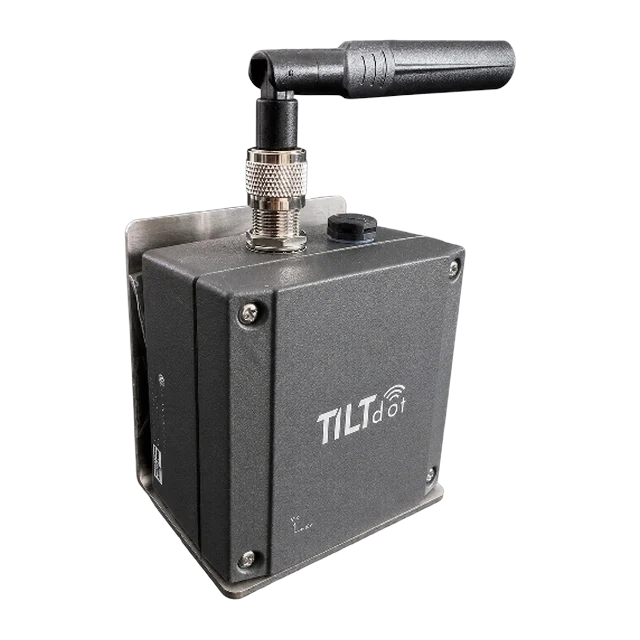 ProductsTilt sensorTilt and settlement of load-bearing components from 0.001°, gateway integrated.
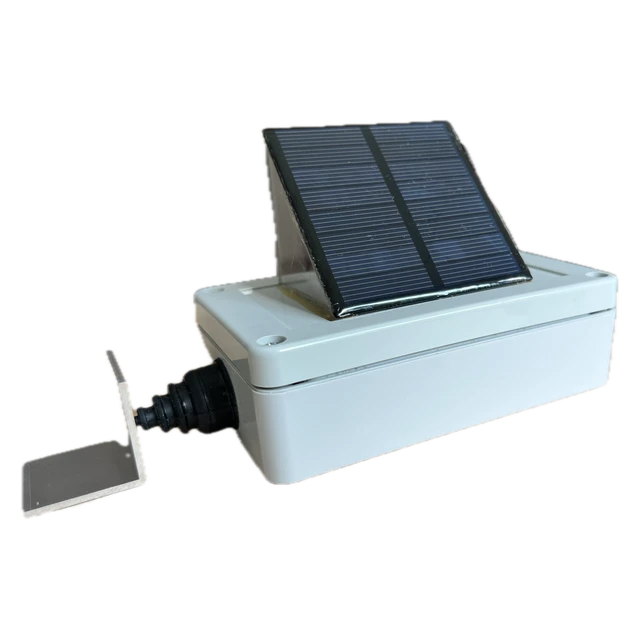 ProductsCrack sensorCrack width with 0.003 mm resolution, available with solar, long-life battery or mains power.
Bridge bearing monitoring for your structure
Whether an existing roller bearing or a spherical bearing on a major bridge, we inspect the bearing seat and align measured variables, measuring points and thresholds with the structure and the question at hand.
 Christian Steffes
Data platform
All readings on one platform
The sensors transmit their readings wirelessly to the data platform, where they are evaluated, documented and continuously checked against your thresholds.
- AI-assisted data analysis
- User-focused reporting
- Continuous evaluation
- Warning and alarm thresholds
- Alerts by email and text message
- Remote access around the clock
- AI-assisted data analysis Condition within limits
- User-focused reporting Report ready
- Alerting Thresholds monitored
Frequently asked questions about bridge bearing monitoring
What is bridge bearing monitoring?
How do you recognise a seized roller bearing?
Which measured variables are captured at the bearing?
Does the bridge need to be closed for installation?
Does the monitoring replace the inspection under DIN 1076?
What happens to the measurement data?
Project inquiry
Let's talk about your structure
Tell us about the structure, bearing type and findings from the last inspection. You will receive a reliable initial assessment at short notice, including suitable measured variables and sensors.
+49 6742 8599600 DE +41 41 670 00 11 CH [email protected]