

Crack Monitoring in a Roof Structure: Five Cracks, Measured Continuously
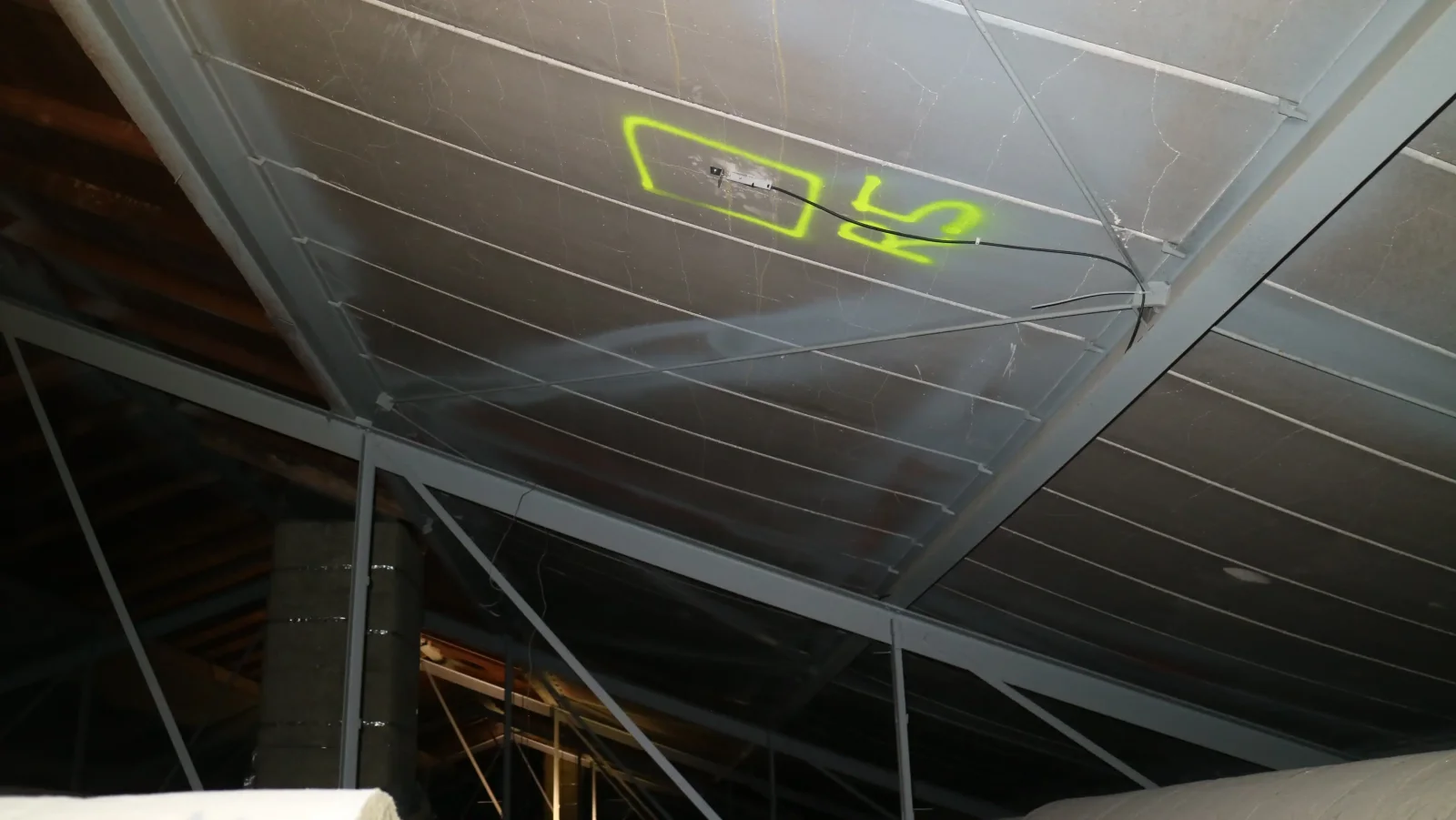
Project facts
- Structure type
- Buildings, roof structure of precast concrete slabs
- Project partner
- Ingenieurberatung Bröggelhoff GmbH, Oldenburg
- Task
- Continuous measurement of crack widths at five structurally representative cracks
- Sensors installed
- Five linear displacement transducers, cabled to a gateway
Installed sensors
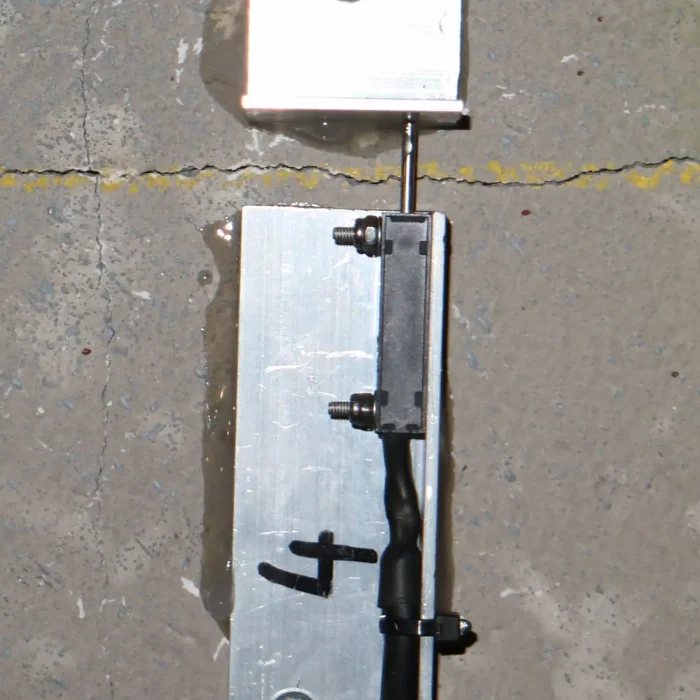 Displacement transducer
 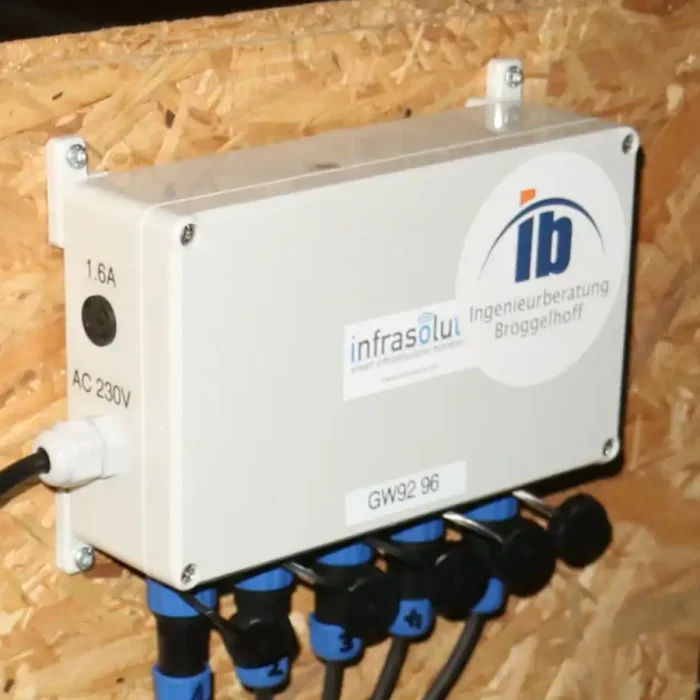 Gateway
 Challenge
Cracks in the precast concrete slabs of a supermarket roof
In recent years, supermarket roofs across Germany have repeatedly collapsed partially or completely, usually after extreme weather, under heavy snow loads or due to structural weaknesses in older buildings. A roof gives warning signs beforehand, you just need to be able to measure them.
In this project, a structural diagnostic survey by the Ingenieurberatung Bröggelhoff consultancy revealed noticeable cracking in the precast concrete slabs of the roof structure. The engineering firm mapped the crack paths and selected five structurally representative cracks for continuous monitoring of the crack widths. On this basis, a monitoring concept was developed that captures crack opening widths continuously and at high resolution.
Solution
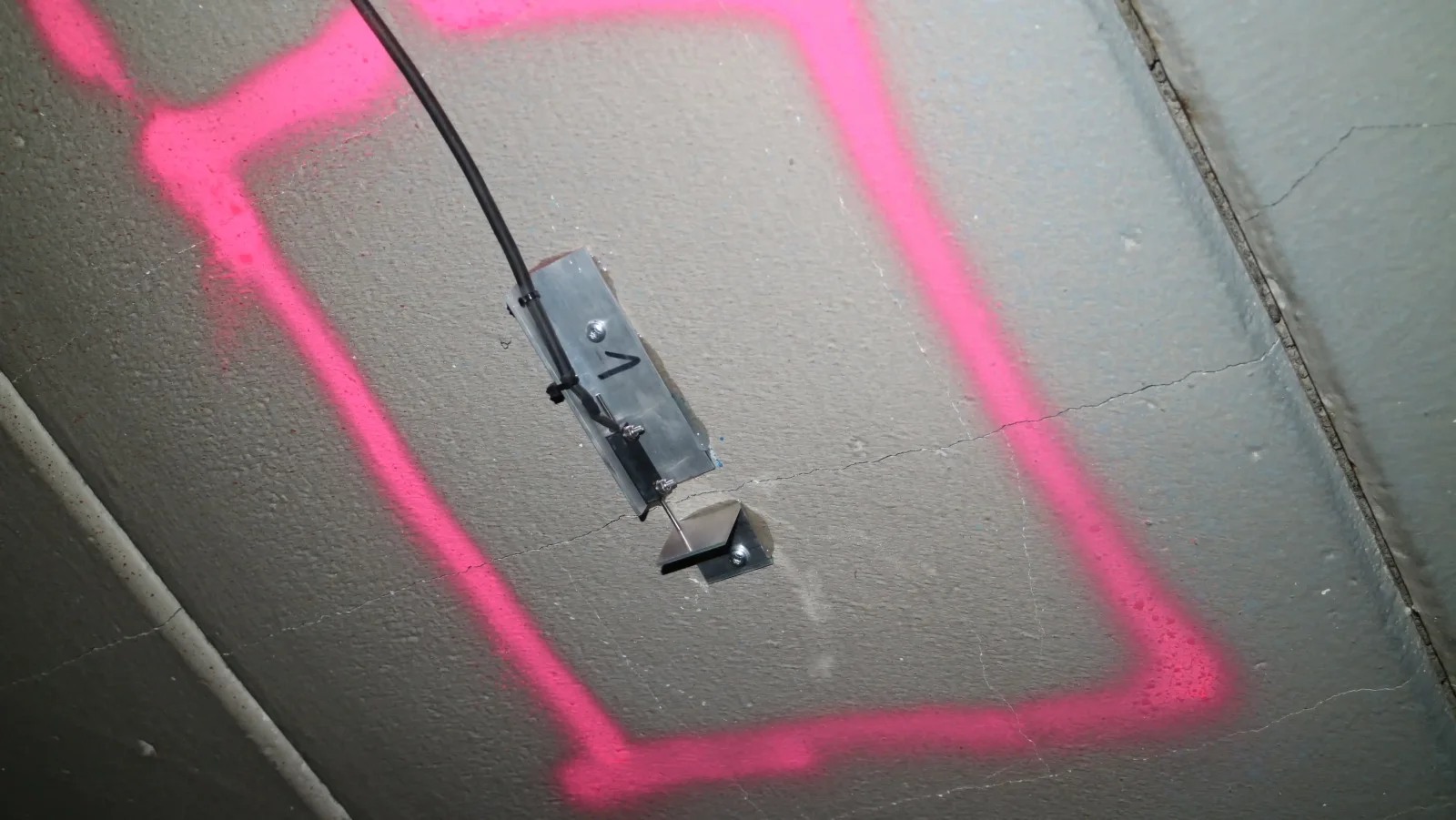
Five displacement transducers along the mapped crack paths
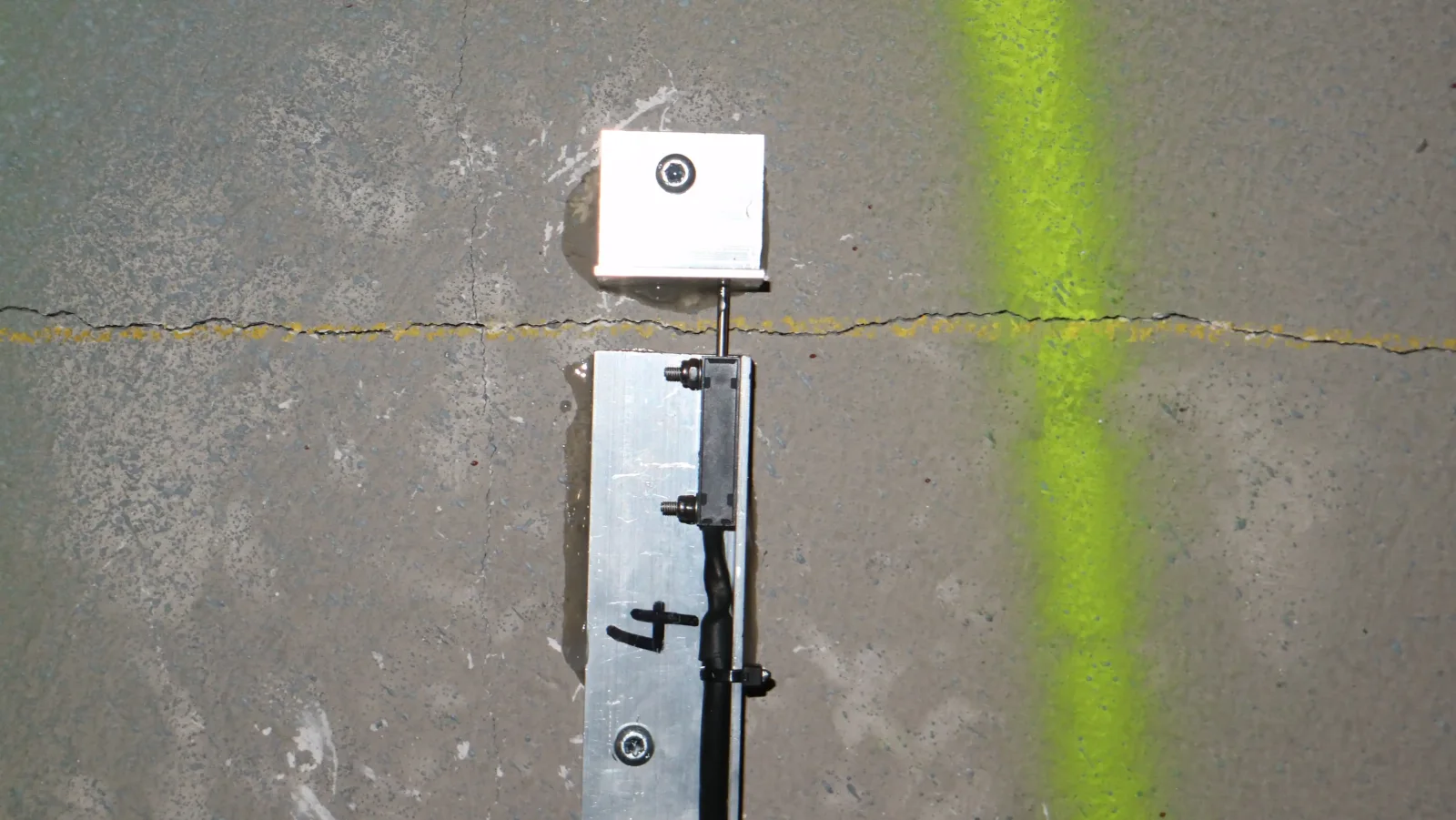
Linear displacement transducers on an inductive basis were used, with a 10 mm measuring range and a resolution of 0.003 mm. This resolution is the key point: it makes even microstructural movements in the concrete visible, so thermally induced expansion and slow, quasi-static crack opening are equally measurable. The sensors were arranged specifically along the structurally relevant crack paths, not on a grid.
The Ingenieurberatung Bröggelhoff installed the sensors, mechanically screwed with counter brackets and additionally bonded to the concrete surface. This double fixing secures the long-term stability of the measuring position: if the bracket moves, the reading moves with it, and the measurement series would be worthless. After installation, a zero-point calibration followed, so every subsequent value can be read relative to the as-installed condition. The mounting system is reusable.
Data route
From the crack to the platform, every 15 minutes
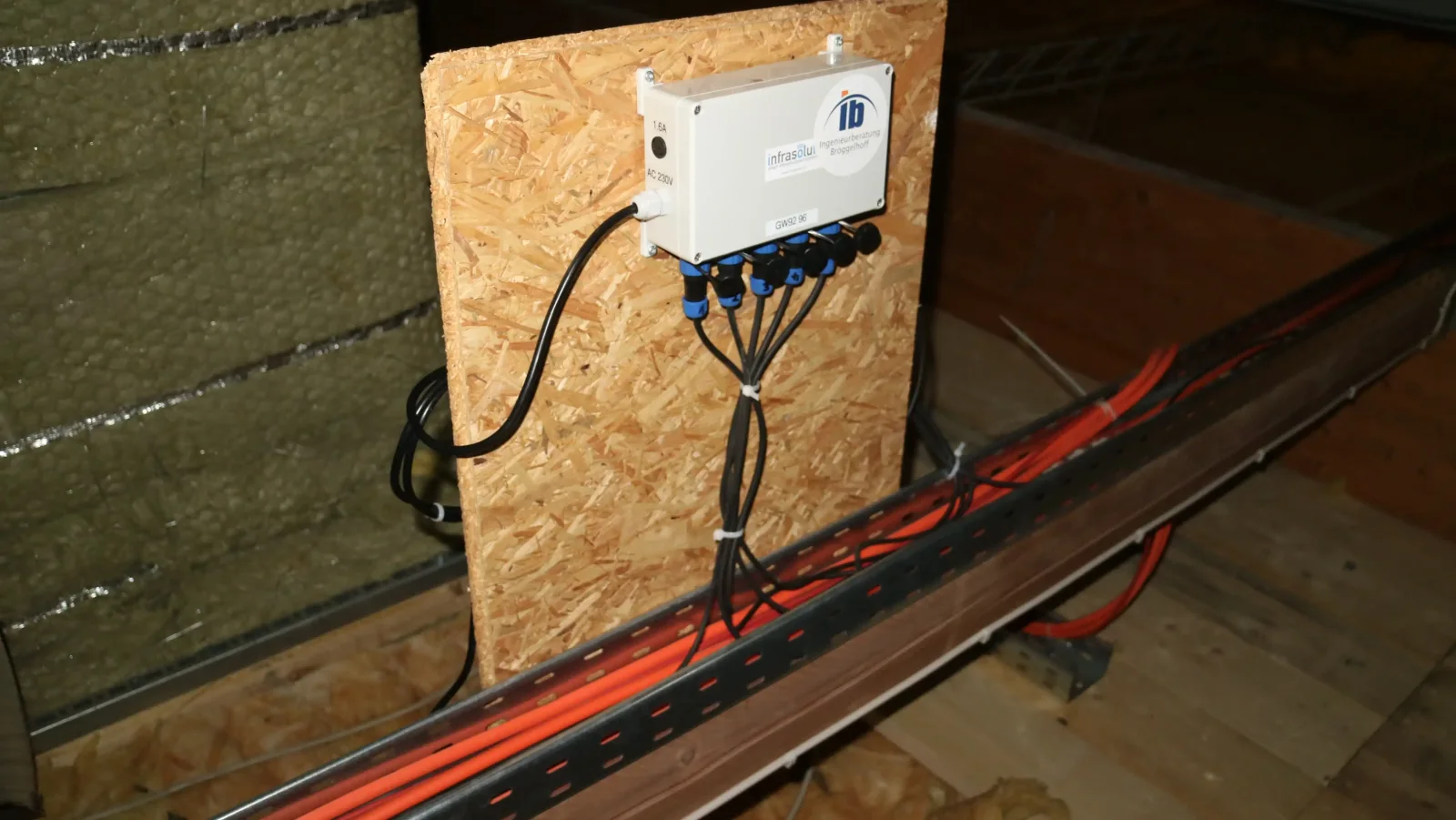
The five sensors are cabled to a central gateway. The cable lengths were configured for the project individually and laid by the engineering firm along the planned sensor positions. The connection uses IP68-protected plug connectors in a plug-and-play procedure.
The gateway runs on mains power at 230 V AC. Because the electronics sit on a low-power microcontroller, power consumption stays low. The data go via NB-IoT or alternatively LTE-CAT-M to the Infrasolute platform. Narrowband is the right choice here because it penetrates buildings well and is designed for a stationary measuring point. For this project, a 15-minute measurement interval was chosen. Every data record consists of a UTC timestamp, the displacement transducer reading in millimetres, and the ambient temperature at the gateway.
Reading the results
Why temperature is measured too
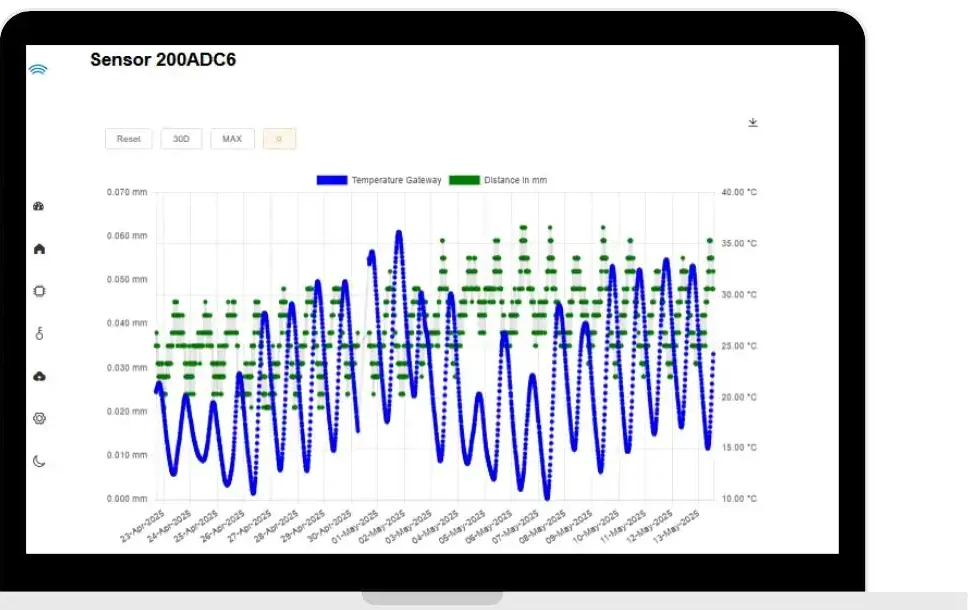
Concrete expands in the heat and contracts in the cold, with a thermal expansion coefficient of about 8 to 12 · 10⁻⁶ per kelvin. A separation crack between two building elements therefore becomes wider in the cold and narrower in the heat, without anything having changed at the structure. Anyone looking only at the crack width will see a movement that on its own carries no statement about the condition. That is exactly why the gateway delivers a temperature value with every reading, used to interpret the thermal influencing factors.
In the period shown, the temperature runs through a daily cycle, the crack width moves in a narrow band. Such a series only becomes informative over a longer period, and the assessment belongs in the hands of the engineering team who know the structure. What the measurement delivers is the reliable basis for that: a gapless series with timestamps, at defined cracks, without anyone needing to climb onto the roof.
Project partner
Assessment and installation by Bröggelhoff

The Ingenieurberatung Bröggelhoff GmbH, based in Oldenburg, works with a focus on structural design, structural inspection and building physics. The firm has over 30 years of experience, an interdisciplinary team of structural engineers and surveyors, and advises on new builds and existing structures across Germany.
On this project, Bröggelhoff took on the structural assessment of the roof structure, identified the critical and representative crack locations, positioned and installed the sensors, and coordinated with Infrasolute. The split of work was clear: the engineering team decided where to measure, Infrasolute supplied the measuring technology and the platform behind it.
The project shows how crack monitoring in balconies and buildings replaces crack observation that would otherwise jump from appointment to appointment. If you have cracks in a ceiling, a roof or a wall that you need to keep in view, describe your structure to us through our project inquiry.
Specifics
- Measuring points
- Five structurally representative cracks, documented along the previously mapped crack paths
- Measuring technology
- Linear displacement transducers on an inductive basis, 10 mm measuring range, resolution 0.003 mm
- Measurement interval
- Every 15 minutes, each reading with a timestamp and ambient temperature
- Specifics
- Reusable mounting system, screwed and bonded, with zero-point calibration after installation
Related solutions & industry
Solutions matching this project
Data platform
All readings on one platform
The sensors transmit their readings wirelessly to the data platform, where they are evaluated, documented and continuously checked against your thresholds.
- AI-assisted data analysis
- User-focused reporting
- Continuous evaluation
- Warning and alarm thresholds
- Alerts by email and text message
- Remote access around the clock
- AI-assisted data analysis Condition within limits
- User-focused reporting Report ready
- Alerting Thresholds monitored
Project inquiry
A comparable structure to monitor?
Describe your structure and your question. We recommend the right measuring points and suitable sensors.
 Christian Steffes
More projects
More references in civil & building construction
Project inquiry
Tell us about your structure
Structure type, location and your question are enough to start. We recommend suitable measuring points and sensors.
+49 6742 8599600 DE +41 41 670 00 11 CH [email protected]