

Railway bridge: live crack monitoring with an alarm chain
Project facts
- Structure
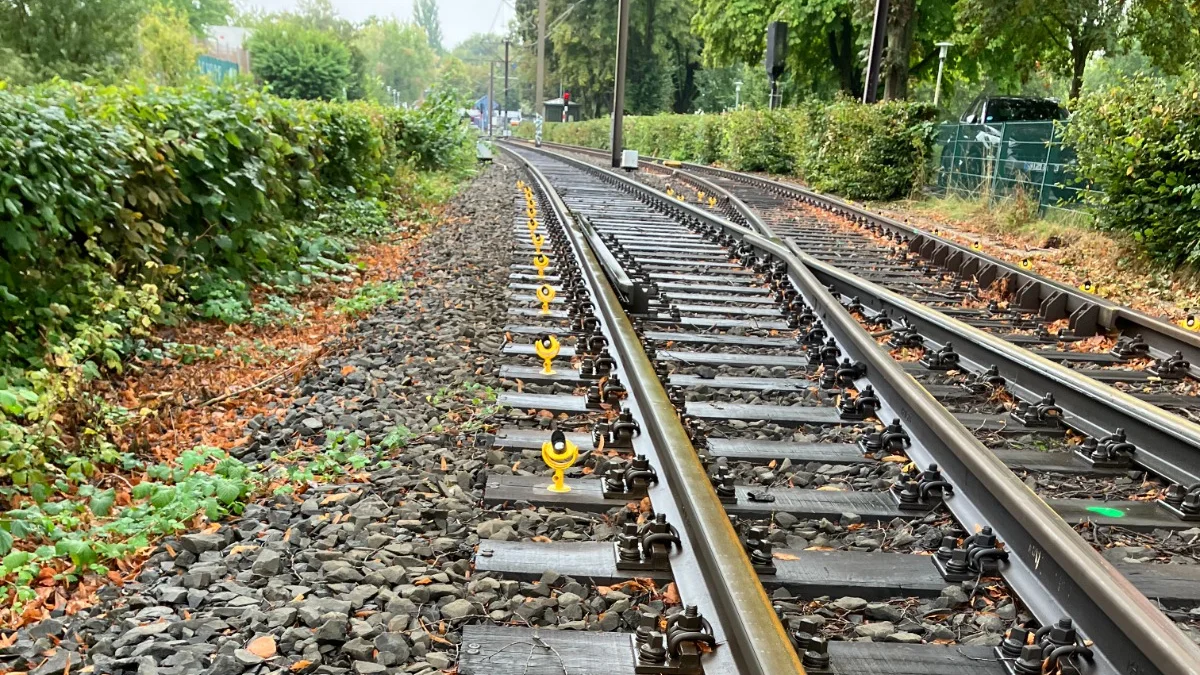
- Railway bridge with a vaulted masonry culvert in the area of the drainage system
- Client
- Deutsche Bahn
- Reason
- Very large cracks in the masonry, continued operation and structural stability have to be assessed
- Task
- Monitor the cracks live and trigger the alarm chain immediately when a threshold is exceeded
- Installed sensors
- Crack Sensor Live with four displacement transducers, live gateway with solar module
Installed sensors
At a glance

- Structure: railway bridge with a vaulted masonry culvert in the area of the drainage system
- Client: Deutsche Bahn
- Reason: very large cracks in the masonry, continued operation and structural stability have to be assessed
- Solution: live crack monitoring with the Crack Sensor Live: four displacement transducers, readings at 10 Hz, alarm chain when a threshold is exceeded
- Power supply: self-sufficient, live gateway with solar module, no mains connection
Challenge
Very large cracks in a railway bridge
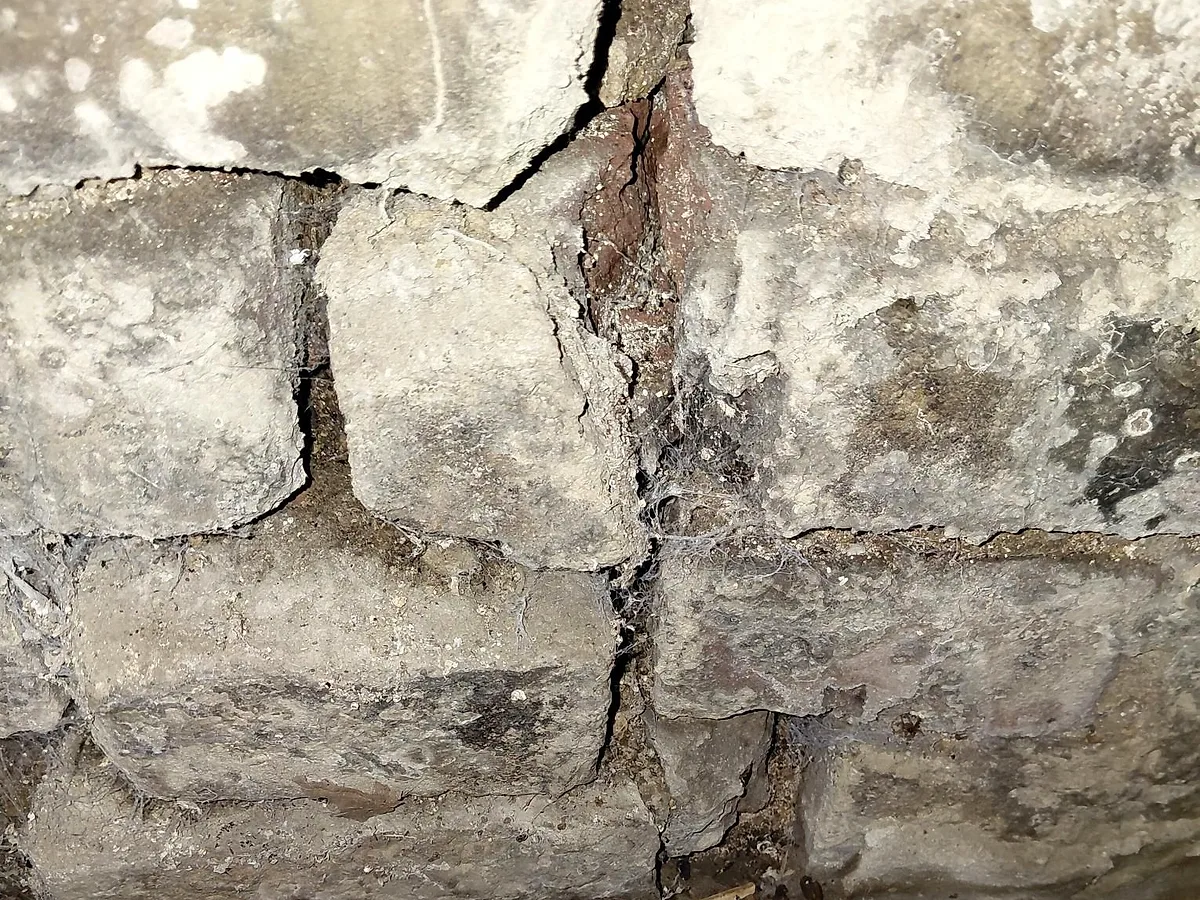
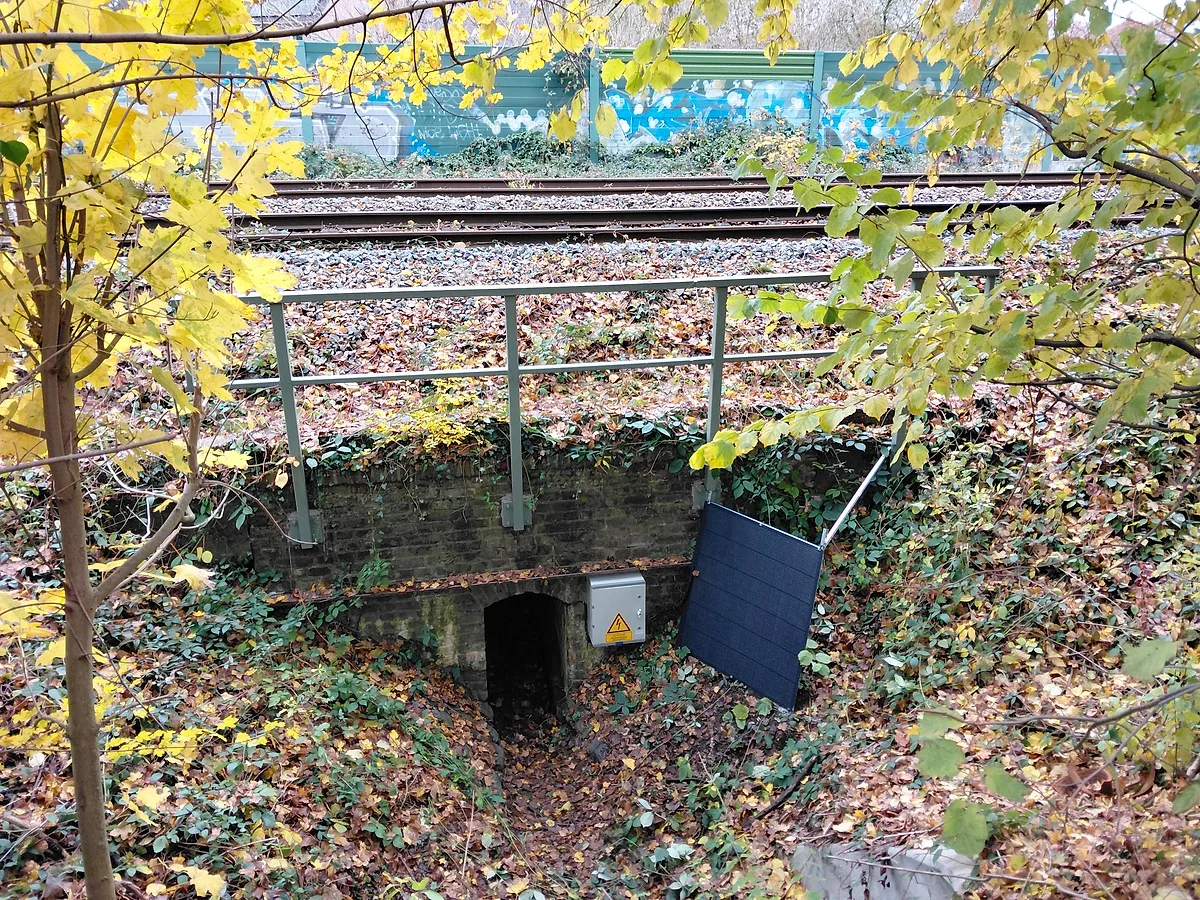
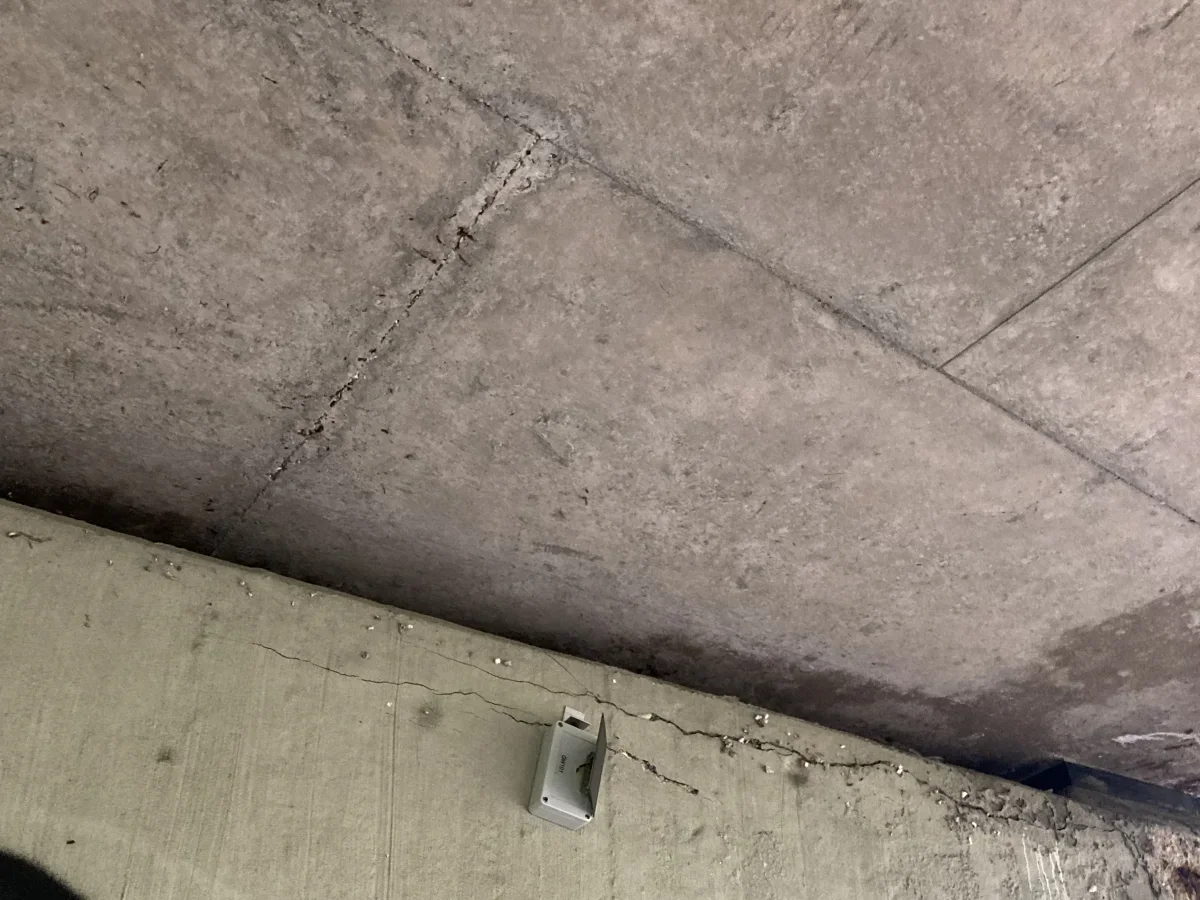
A vaulted masonry culvert runs beneath the railway line as part of the drainage system. Very large cracks have appeared in its walls. They run across several courses of stone and have opened up considerably in places. Rail traffic continues on top of the structure.
For Deutsche Bahn, this raised two questions: can the line remain in operation, and is the structure still stable? Individual readings taken at long intervals are not enough to assess this and to be able to initiate emergency measures immediately if needed. What is needed is crack monitoring that shows what is happening at the crack right now.
Solution
Live crack monitoring at 10 Hz
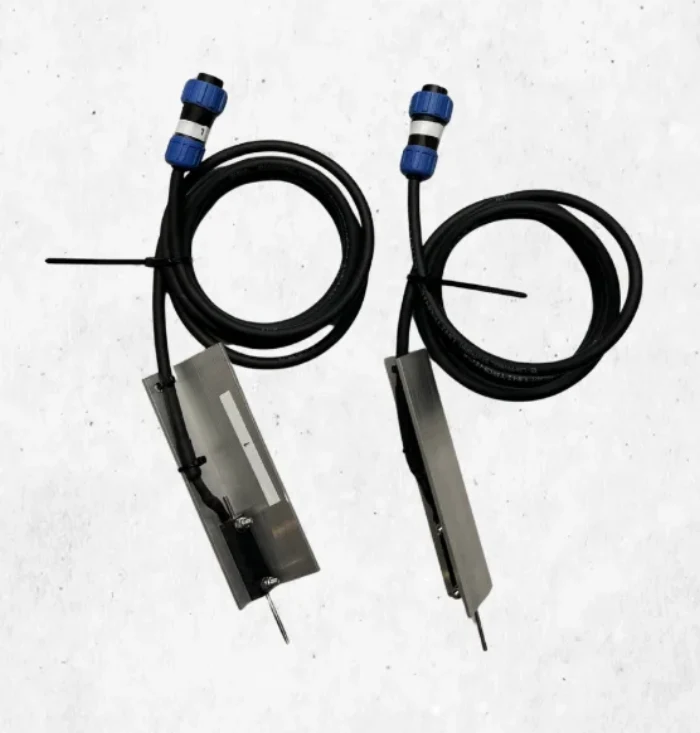
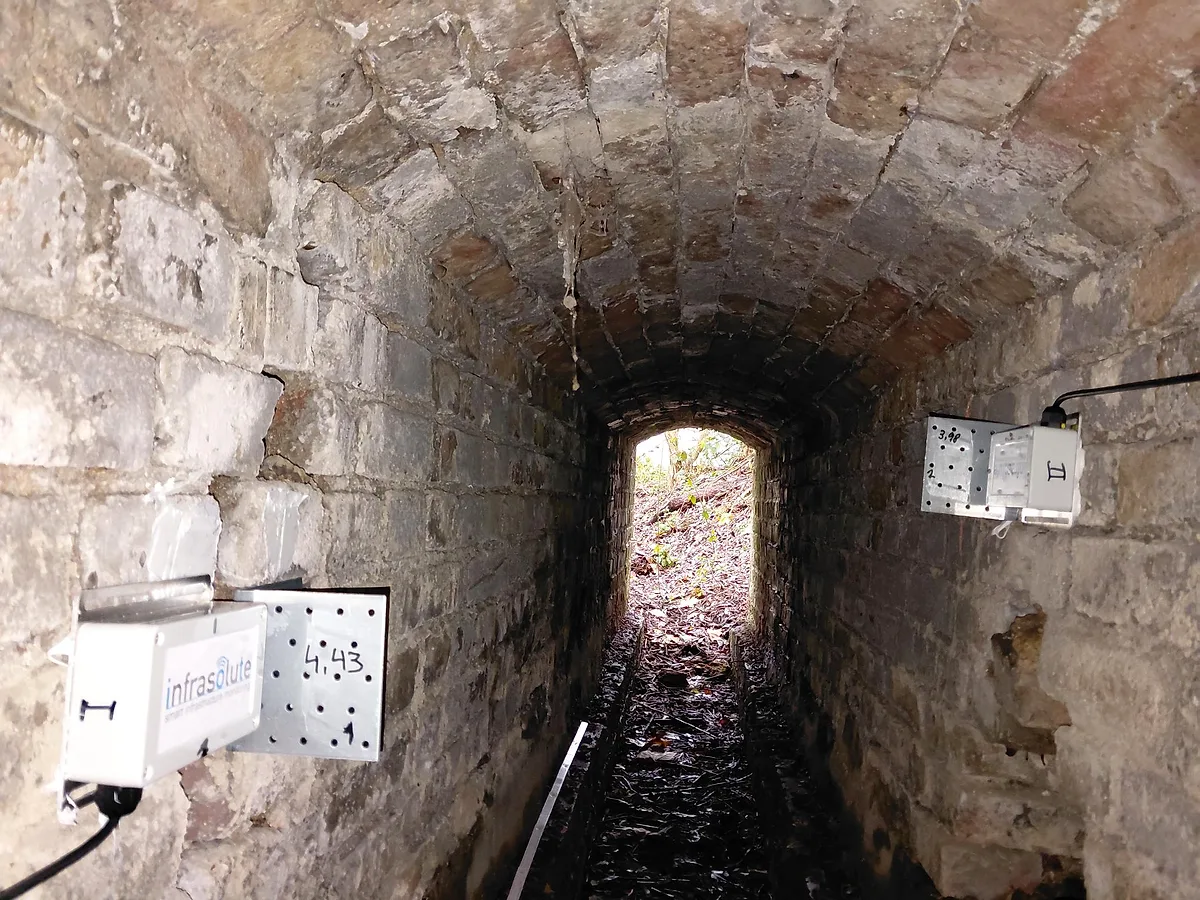
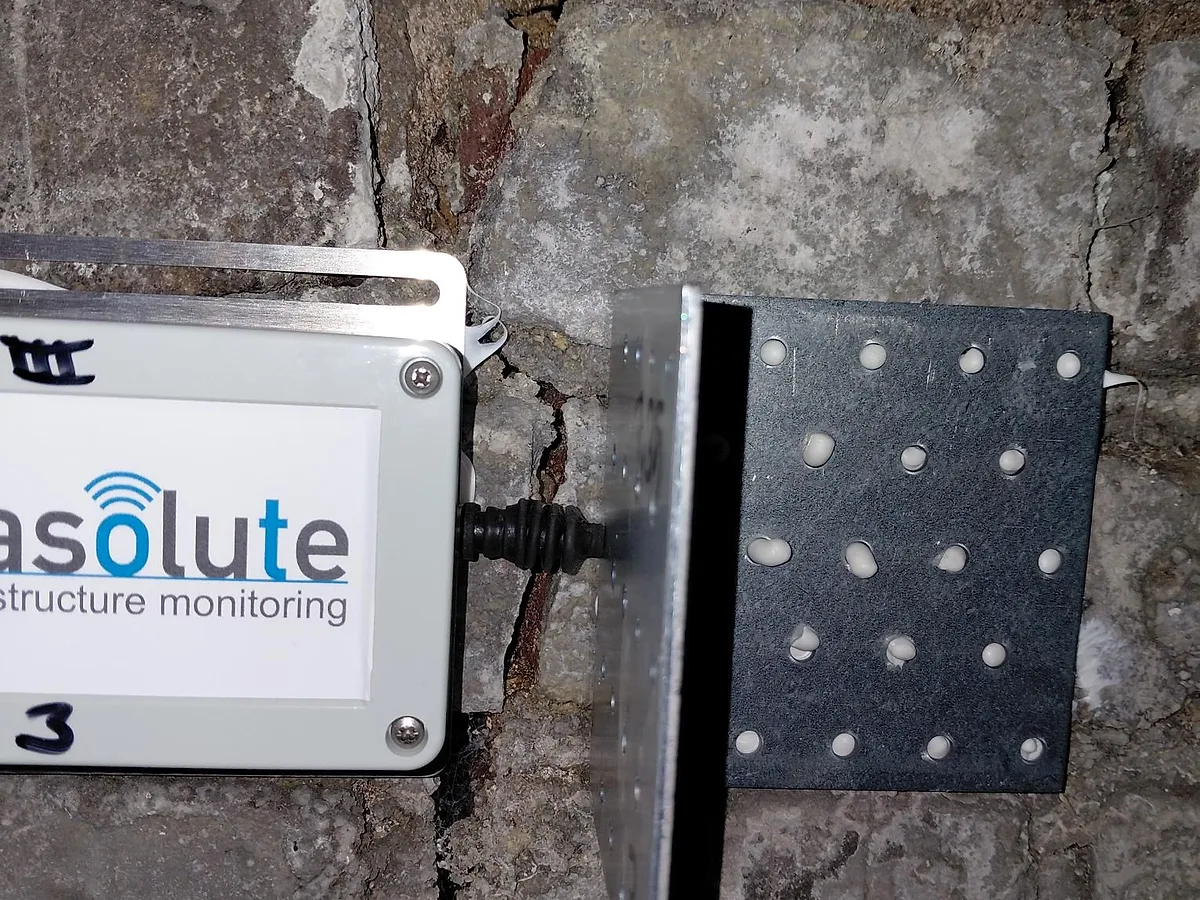
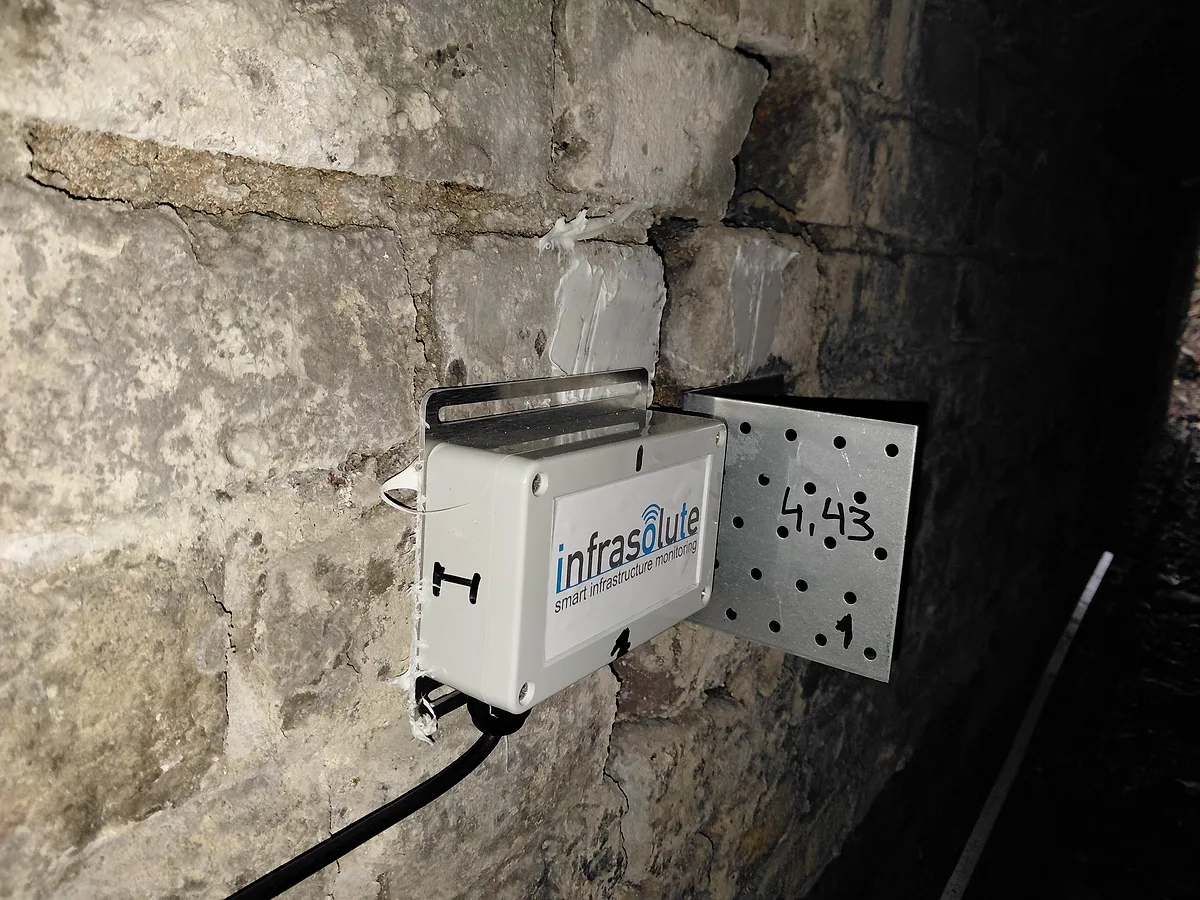
Infrasolute installed four displacement transducers of the Crack Sensor Live across the critical cracks in the culvert. All four are connected by cable to one live gateway. Readings are taken at 10 Hz, ten times per second. The transducers record the change in crack width with a resolution of 0.001 mm, the highest accuracy in Infrasolute’s crack monitoring range. The gateway transmits the readings over LTE to the Infrasolute platform, where every movement of the cracks can be followed live, including changes that last only a fraction of a second.
4
displacement transducers on one live gateway
10 Hz
sampling rate, ten readings per second
0.001 mm
resolution of the displacement transducers
Solar
self-sufficient power supply, no mains connection
Thresholds and alarm chain
Thresholds are set for the displacement transducers. If the change in a crack width exceeds a threshold, the system triggers the alarm chain immediately. Who is notified, and in what order, has been agreed with the client. This allows the operator to react at once and initiate emergency measures, rather than learning of a change at the next inspection.
AI monitoring: spotting anomalies in the data
A threshold shows when a limit has been reached. The Infrasolute platform also offers AI analytics. It evaluates the time series continuously, separates influences such as temperature from the residual signal and flags anomalies in the trend. It does not replace the threshold alarm; it complements it.
Implementation
Self-sufficient with solar power: no mains connection required
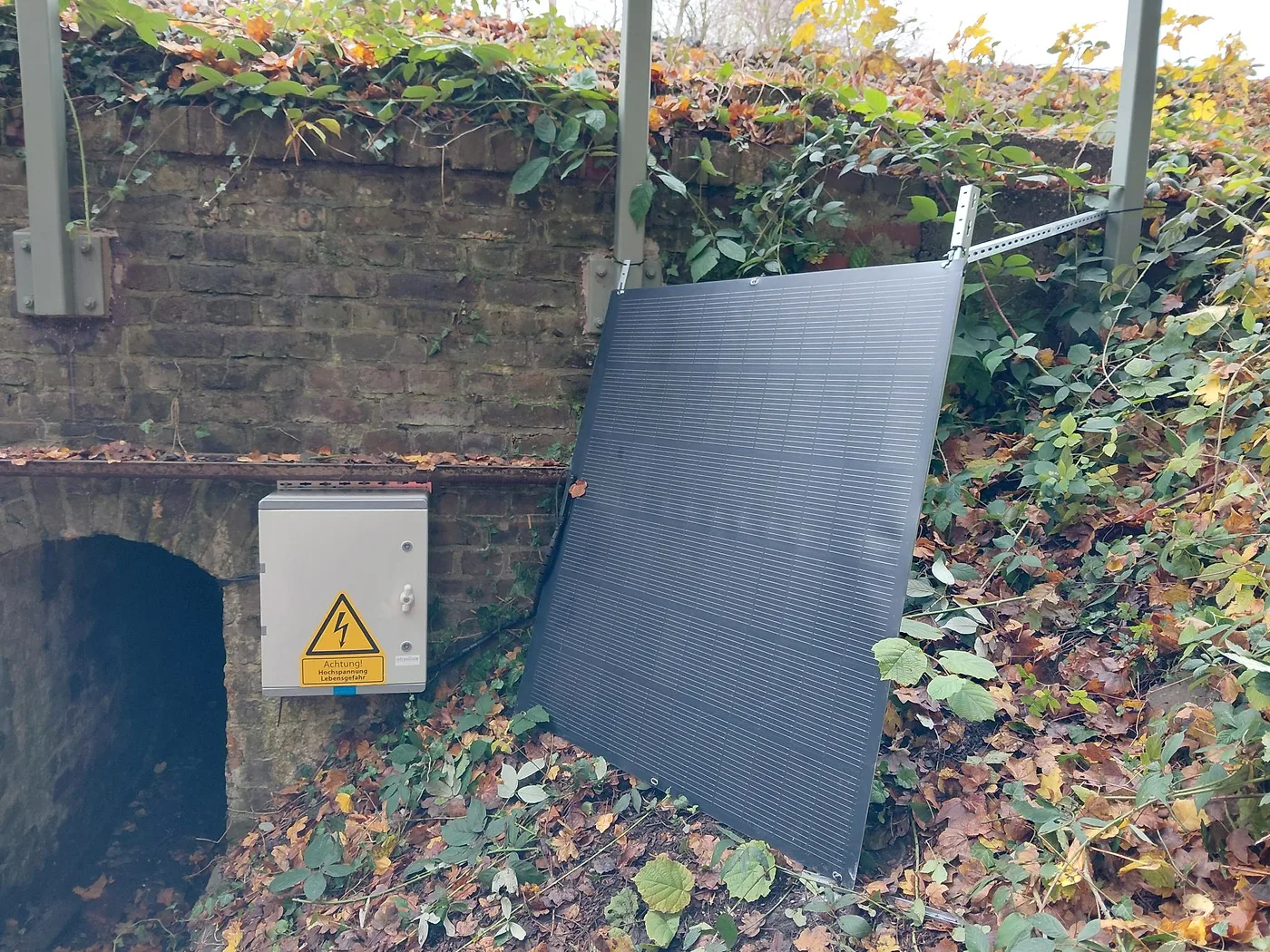
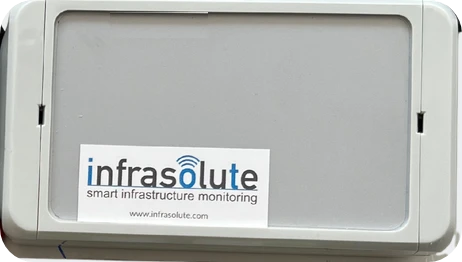
The monitoring system is self-sufficient. The live gateway sits in an enclosure at the culvert portal, powered by a solar module next to it. No mains connection is needed, and the data are sent over the mobile network. This means the system can also be used on structures along the line that have neither power nor a data line.
The displacement transducers are bolted on both sides of the crack, and the cables run along the wall to the gateway.
Benefit for the client
A reliable basis for continued operation
Deutsche Bahn receives readings of the cracks at 10 Hz, with automatic alerting. If the cracks remain stable, this supports the decision to keep the line in operation. If they change, this is visible immediately and the alarm chain is triggered. The assessment of structural stability is therefore based on a continuous data record rather than individual readings.
More on the technology: crack monitoring in live and long-term variants, the Crack Sensor Live, the platform’s AI analytics and bridge monitoring.
Specifics
- Sampling rate
- 10 Hz, ten readings per second, data live on the platform
- Resolution
- 0.001 mm change in crack width
- Alerting
- alarm chain starts immediately when a threshold is exceeded
- Power
- self-sufficient with a solar module, no mains connection required
Products in use
Sensors installed here
Related solutions & industry
Solutions matching this project
Infrasolute platform
How the readings from this project are evaluated
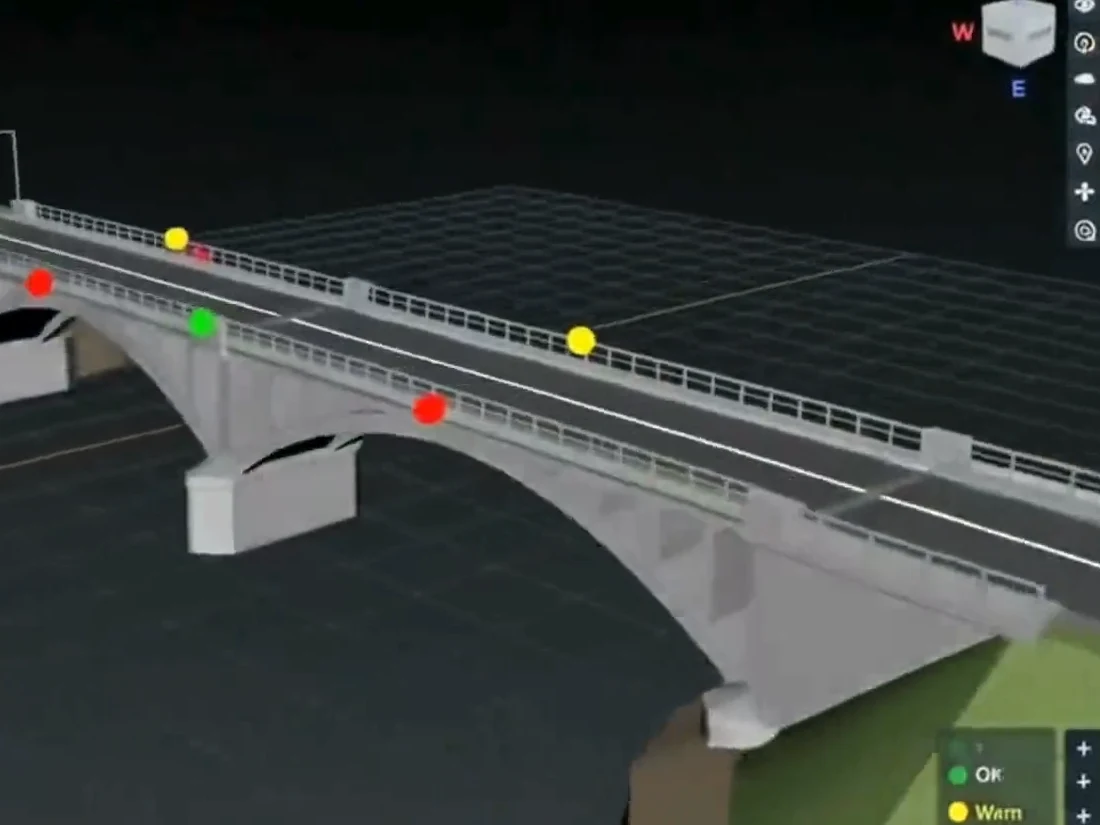
The readings from this project come together on the Infrasolute platform. There they are checked against the defined limits, shown as trends and interpreted with AI.
Platform modules
Frequently asked questions: Live crack monitoring railway bridge
Why live crack monitoring rather than long-term monitoring?
How accurate is the Crack Sensor Live?
How does the alarm chain work?
How does the system run without a power connection?
What role does AI play in crack monitoring?
Project inquiry
A comparable structure to monitor?
Describe your structure and your question. We recommend the right measuring points and suitable sensors.
 Roman Koch

More projects
More references in bridges
Project inquiry
Tell us about your structure
Structure type, location and your question are enough to start. We recommend suitable measuring points and sensors.
[email protected]