

Motorway bridge: roller bearing monitoring where a roller may fracture
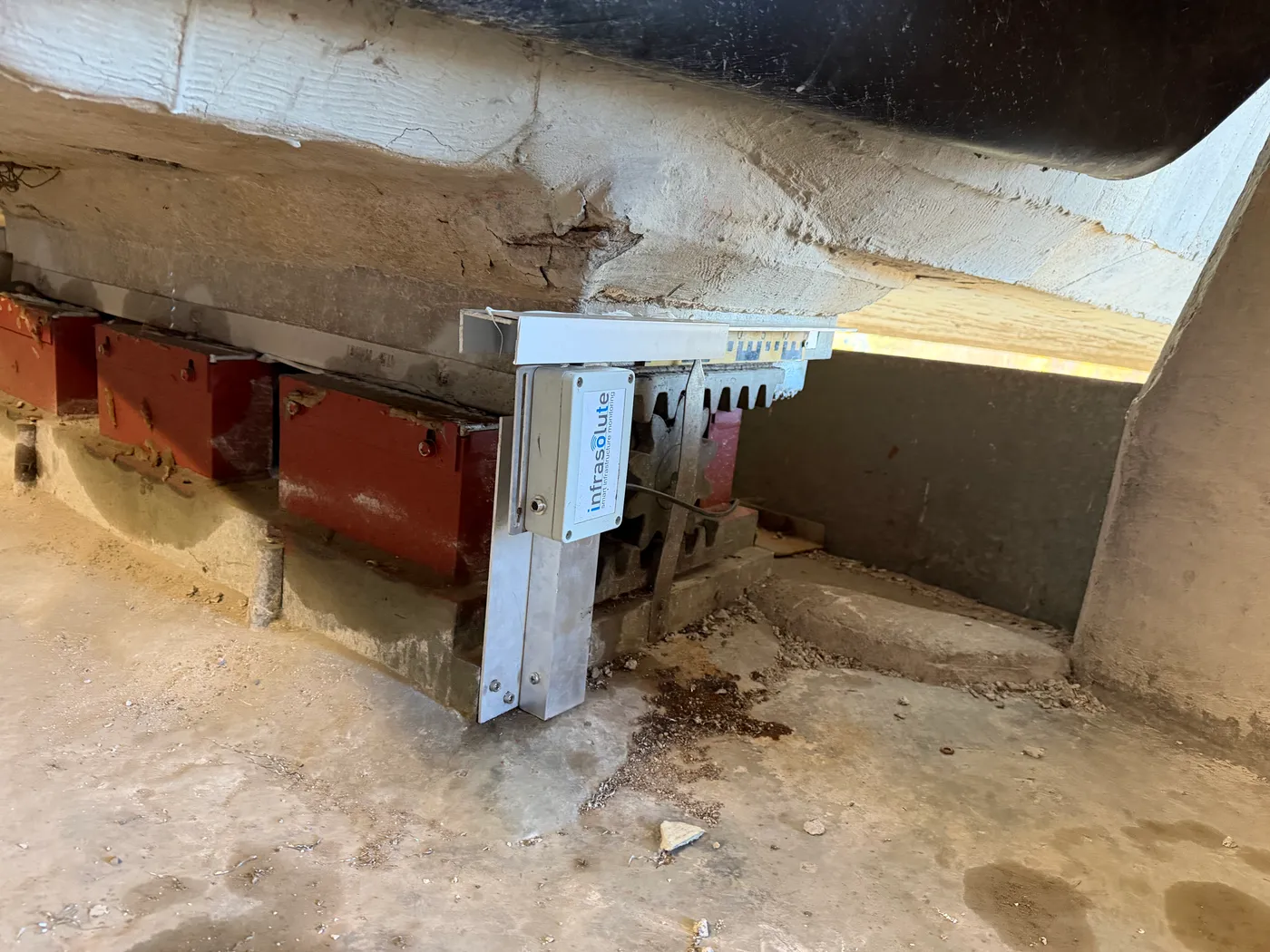
Project facts
- Structure
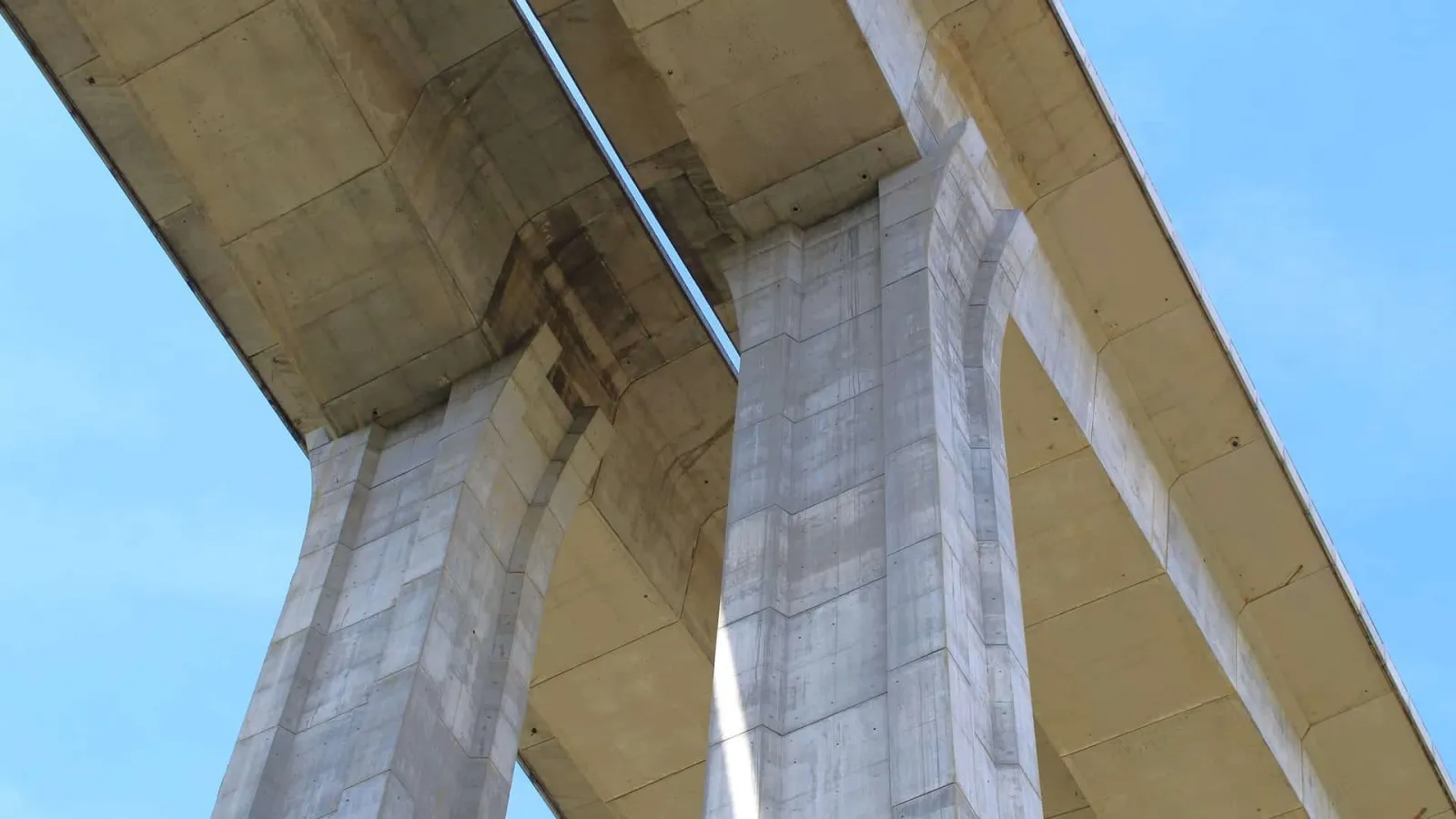
- Curved prestressed concrete box girder motorway bridge, some 500 m, 1970s, southern Germany
- Client
- Die Autobahn GmbH des Bundes
- Task
- Monitor roller bearings with emergency supports and detect any drop of the superstructure after a roller fracture immediately
- Sensors installed
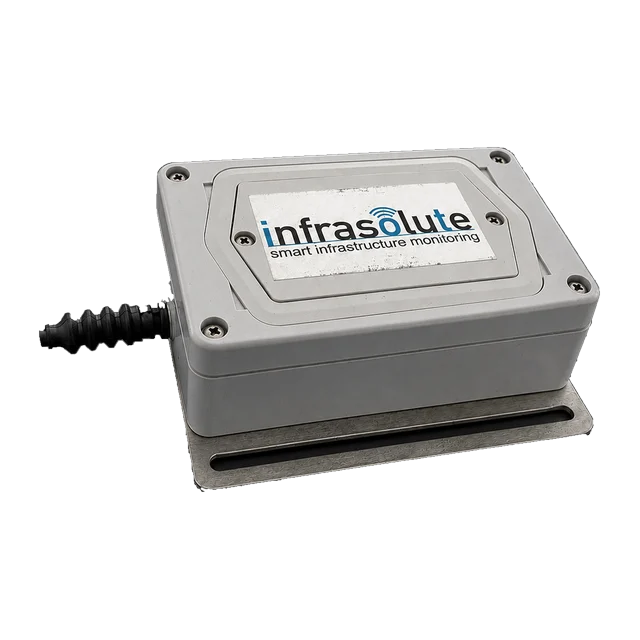
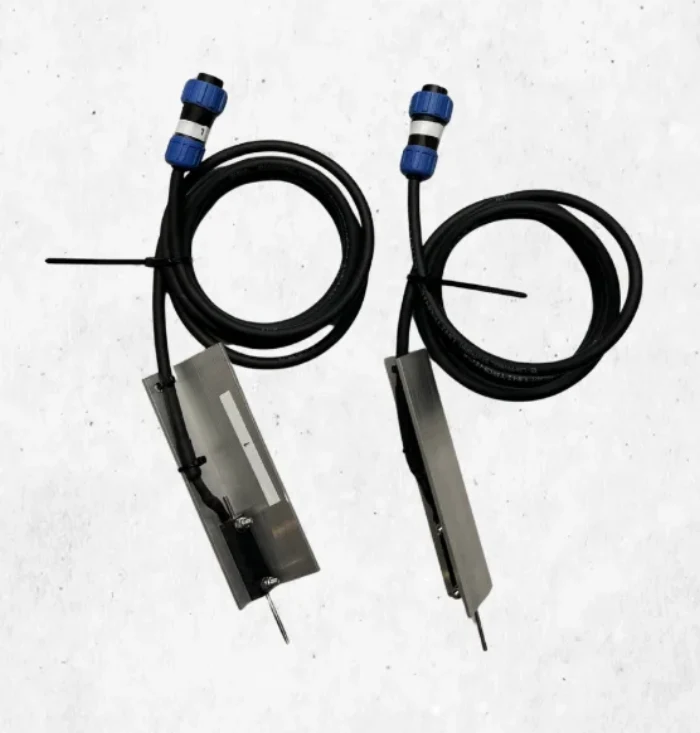
- Infrasolute crack sensor as displacement transducer, one per roller bearing, hourly transmission
Installed sensors
At a glance

- Structure: Prestressed concrete box girder motorway bridge, some 500 m, 1970s, southern Germany
- Client: Die Autobahn GmbH des Bundes
- Reason: Roller bearings at risk of roller fracture, secured with emergency supports until the bridge is replaced
- Solution: One displacement transducer per roller bearing measures the distance to the superstructure, hourly and with alerts
Challenge
If a roller fractures, the superstructure drops
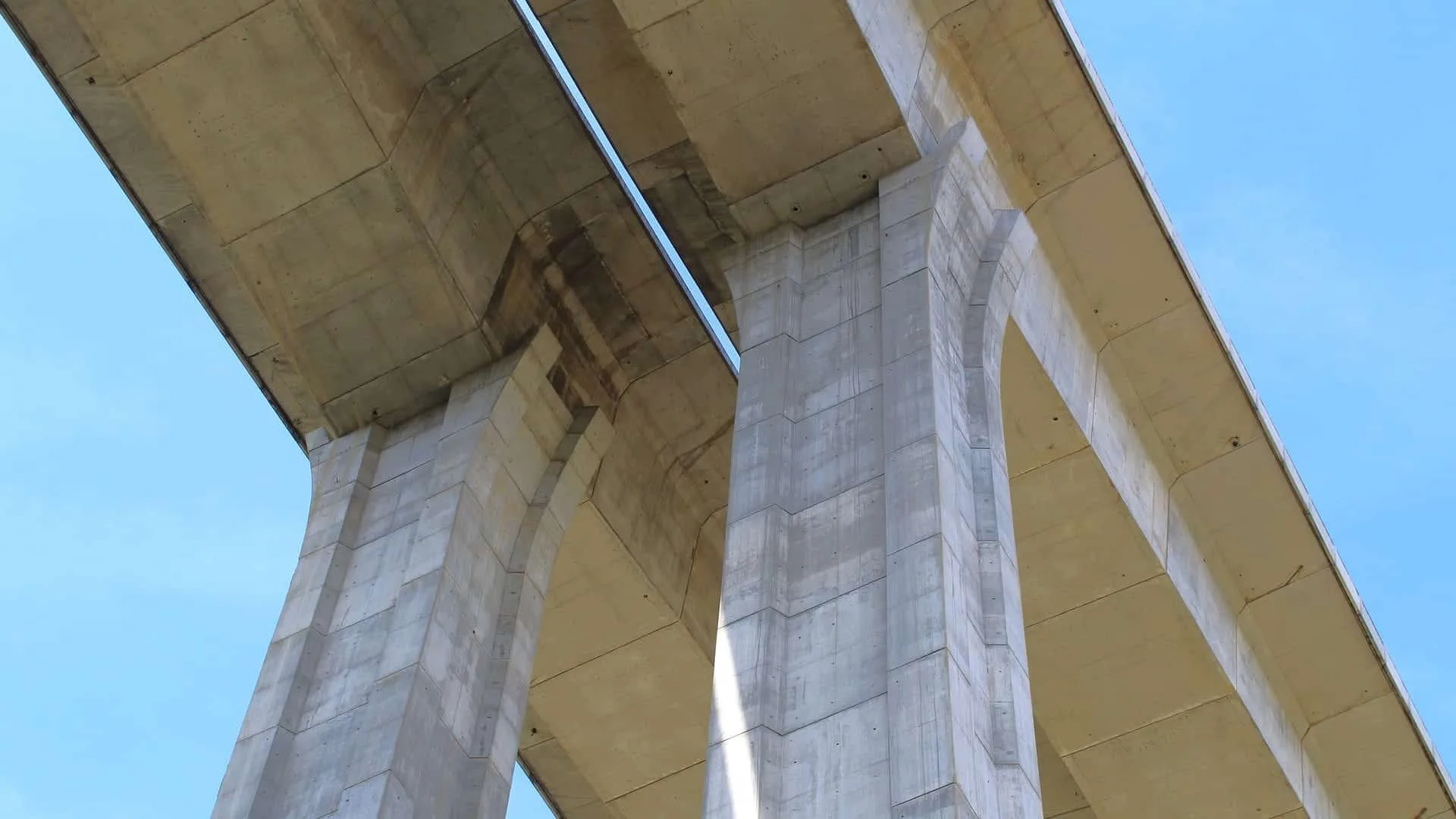
The bridge is a curved prestressed concrete box girder, some 500 m long and built in the 1970s. It sits on roller bearings dating from its construction, at the abutments as well as on the piers. In roller bearings of this age, a roller can fracture. The bearing then no longer carries the load as designed, and the superstructure drops at that point.
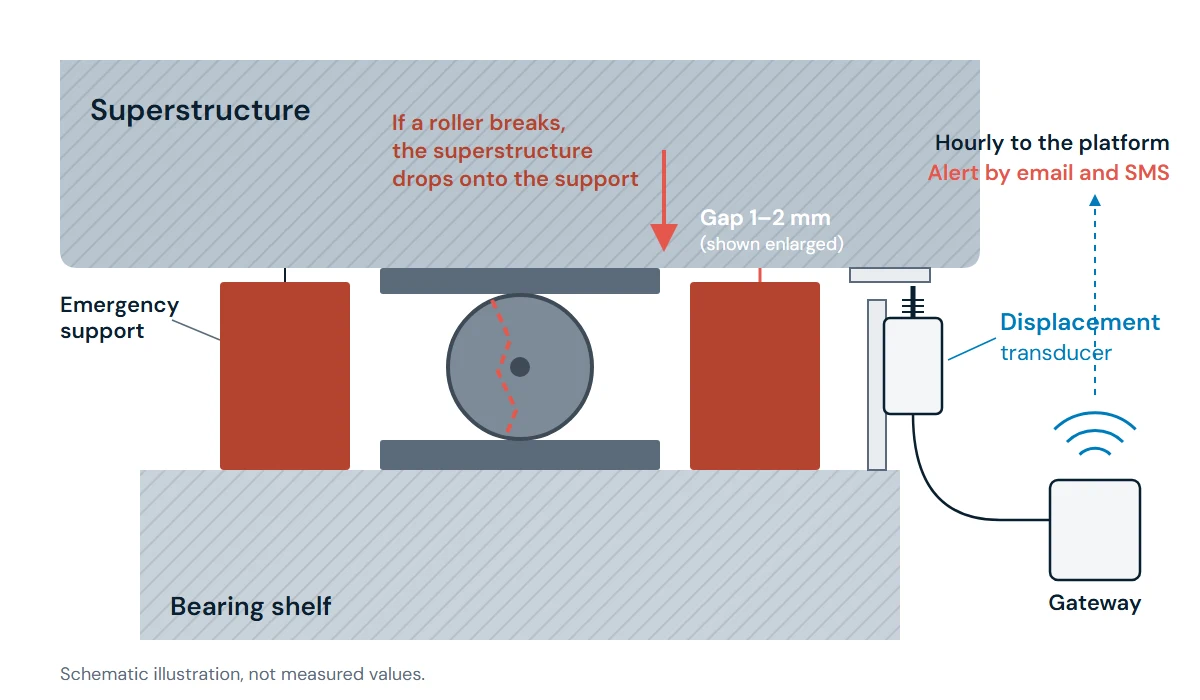
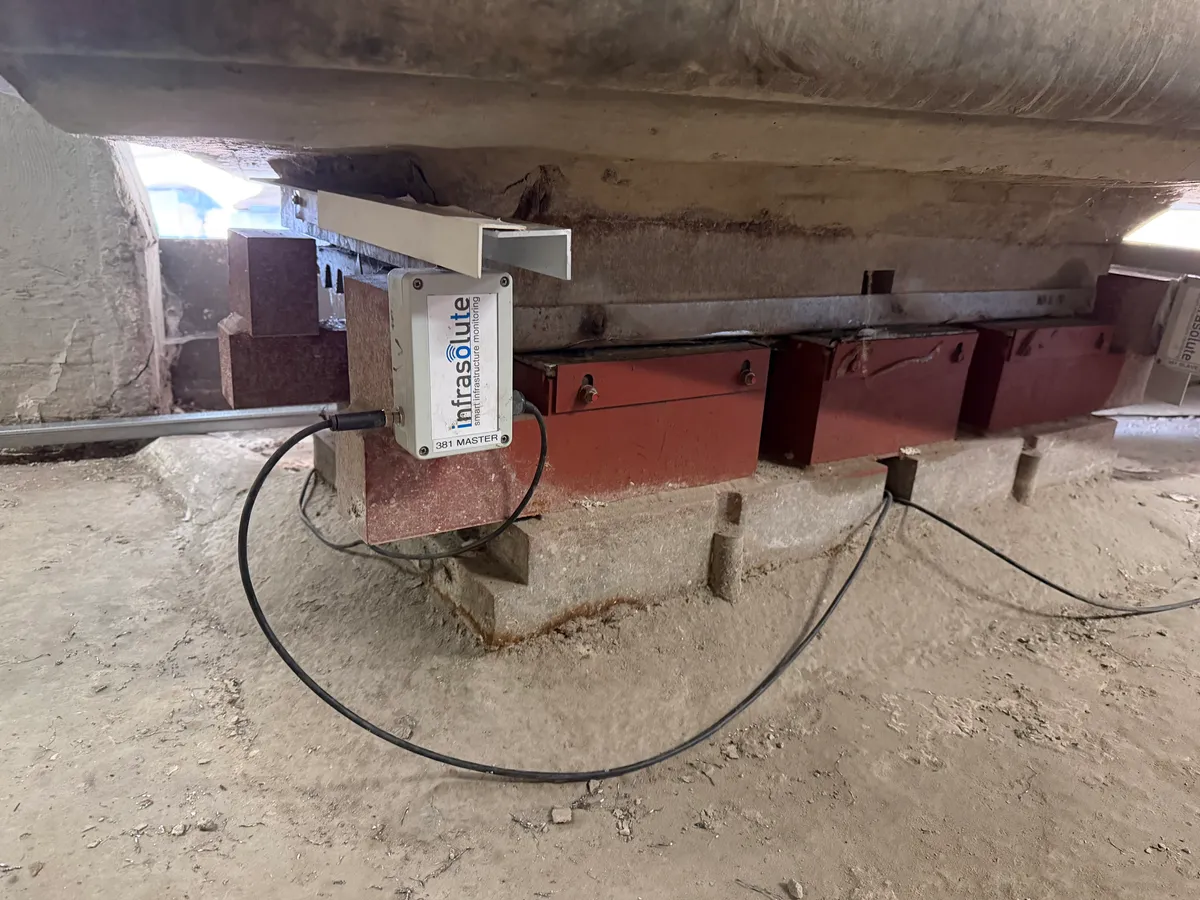
Until the bridge is replaced, emergency supports therefore secure the bearings. They stand next to each roller bearing, leaving a gap of only 1–2 mm between their top and the underside of the superstructure. If a roller fractures, the superstructure comes to rest on the emergency support. The structure remains supported, but the bearing arrangement no longer matches the system it was designed for.
Die Autobahn GmbH wanted to detect such critical movements immediately in order to take targeted safety measures. The bearings sit in the bearing chambers of the abutments and on the pier heads, in places that are rarely entered.
Solution
One displacement transducer per roller bearing
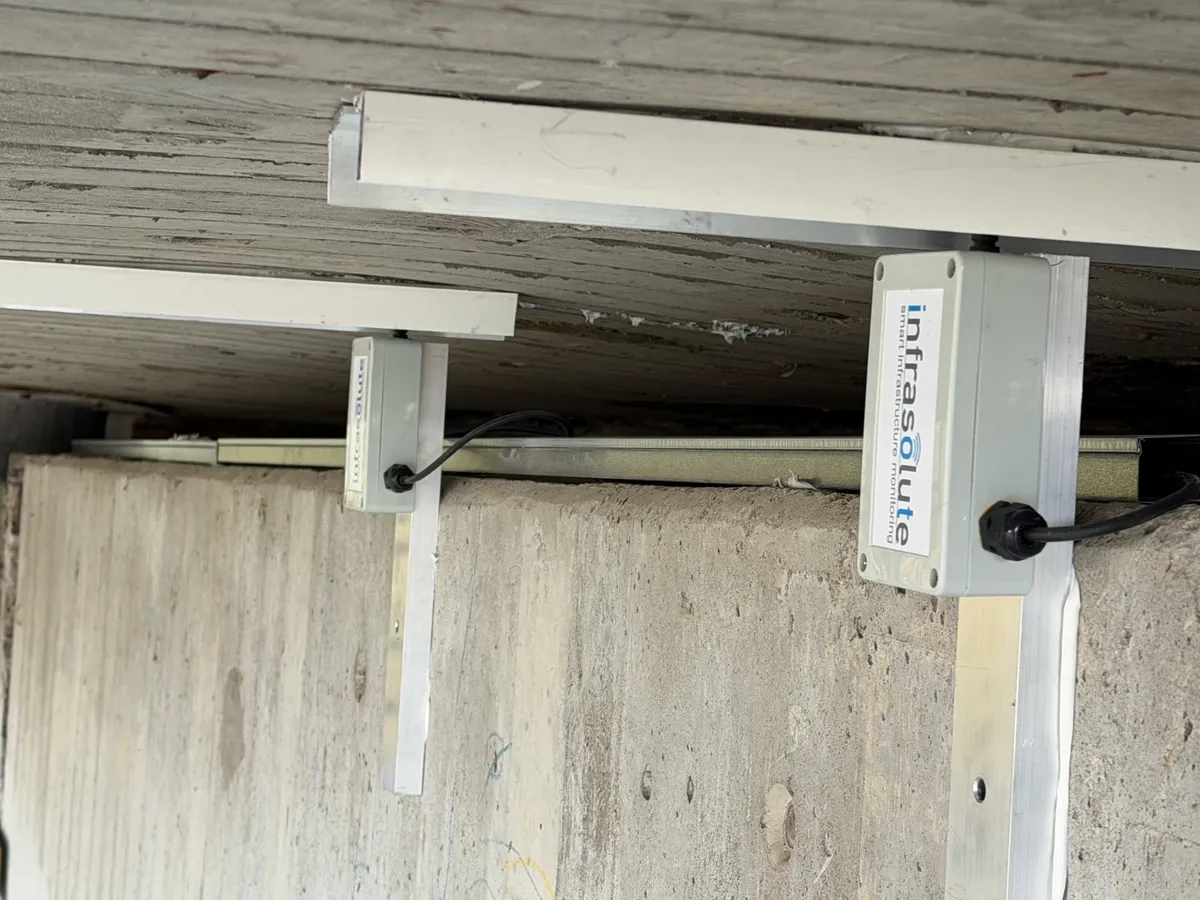
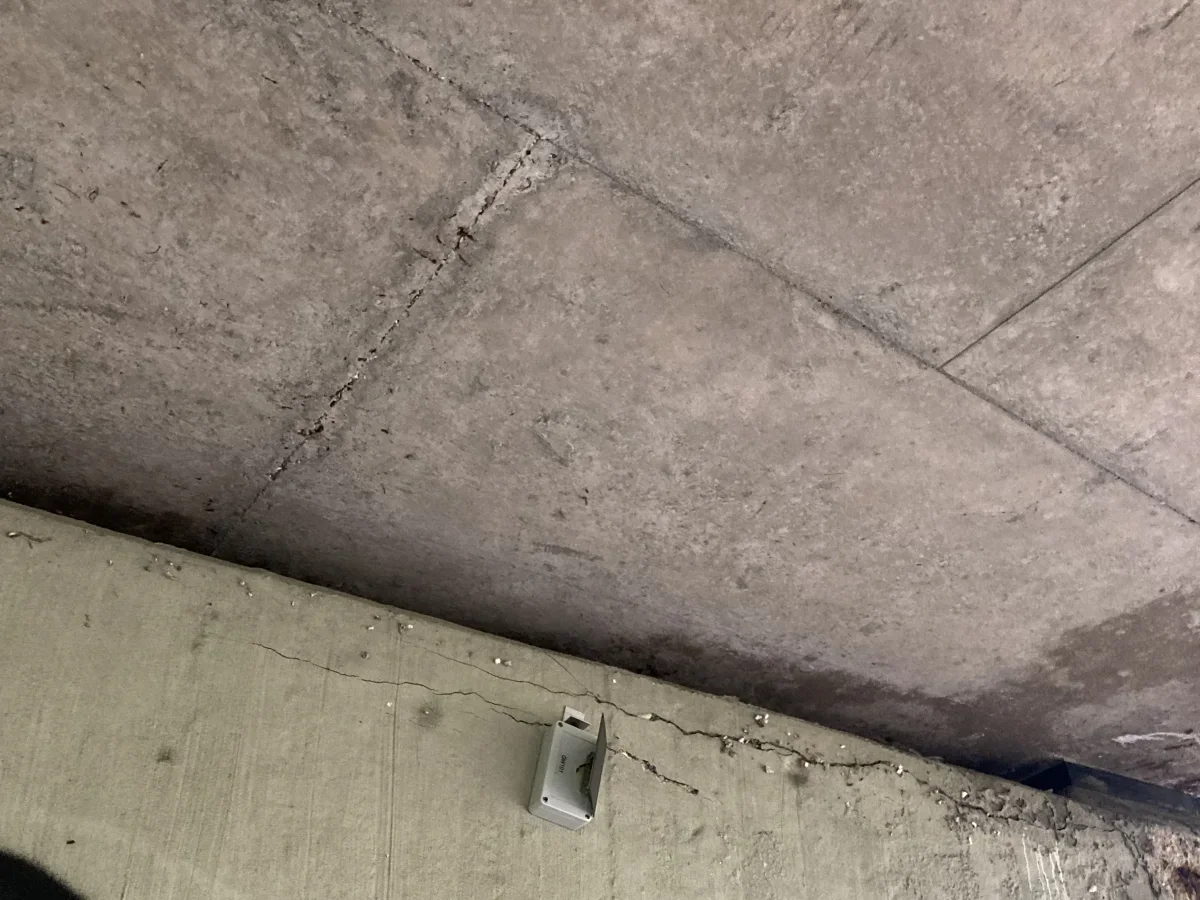
Infrasolute fits a displacement transducer to each monitored roller bearing. It sits on a bracket on the substructure and measures vertically against an angle fixed to the underside of the superstructure. It thus records directly the quantity that matters: the distance between substructure and superstructure. If the superstructure drops, this distance becomes smaller.
The technology is the Infrasolute crack sensor, the same sensor that otherwise measures crack widths. Its displacement transducer resolves 0.003 mm. Against a gap of 1–2 mm, a drop can therefore be clearly distinguished from the temperature cycle and measurement noise. Two displacement transducers connect to each gateway, and the gateways are mounted on the chamber wall. The readings are sent hourly over the mobile network to the Infrasolute platform.
On the main bridge, both abutments and five piers with two roller bearings each are monitored, plus one abutment of a neighbouring bridge.
Installation
Installed with an under-bridge inspection unit and by ladder
The roller bearings on the pier heads are reached from the carriageway using an under-bridge inspection unit, with traffic management provided by the motorway maintenance depot. Ladders lead into the bearing chambers of the abutments.
At one abutment of the neighbouring bridge, the displacement transducers could not be fixed directly to the bearing. Construction work was under way above, and dirty water was running down continuously. There, the transducers sit on the top edge of the abutment next to the bearing zone and measure against the superstructure.
Typical movements
A roller fracture moves the superstructure by around 2 mm
If a roller fractures, the superstructure drops by around 2 mm until it rests on the emergency support. With a transducer resolution of 0.003 mm, such a movement is clearly visible. Warning and alarm thresholds are set below this movement after the baseline measurement, so that a drop is reliably reported. The assessment of the bearing movement lies with the checking engineer.
2 mm
Movement in a roller bearing fracture, until the superstructure rests on the emergency support
1–2 mm
Gap between emergency support and superstructure
0.003 mm
Resolution of the displacement transducer
Structure not named.
Benefit for the operator
Safe operation until the bridge is replaced
The emergency supports hold the superstructure; the monitoring shows whether they already have to. On the platform, Die Autobahn GmbH sees the distance to the superstructure at every monitored bearing, without entering the bearing chambers and without an under-bridge inspection unit. After the baseline measurement, warning and alarm thresholds are set. If a bearing exceeds a threshold, the platform sends an alert by email and SMS, at the latest with the next hourly reading. Safety measures can then be targeted at the bearing concerned.
More on monitoring bridge bearings: bridge bearing monitoring.
Specifics
- Gap
- 1–2 mm between emergency support and underside of the superstructure
- Resolution
- 0.003 mm, a drop across the gap is clearly visible
- Measuring axes
- Both abutments and five piers of the main bridge, two roller bearings each
- Movement in a roller fracture
- around 2 mm, until the superstructure rests on the emergency support
Products in use
Sensors installed here
Related solutions & industry
Solutions matching this project
Infrasolute platform
How the readings from this project are evaluated
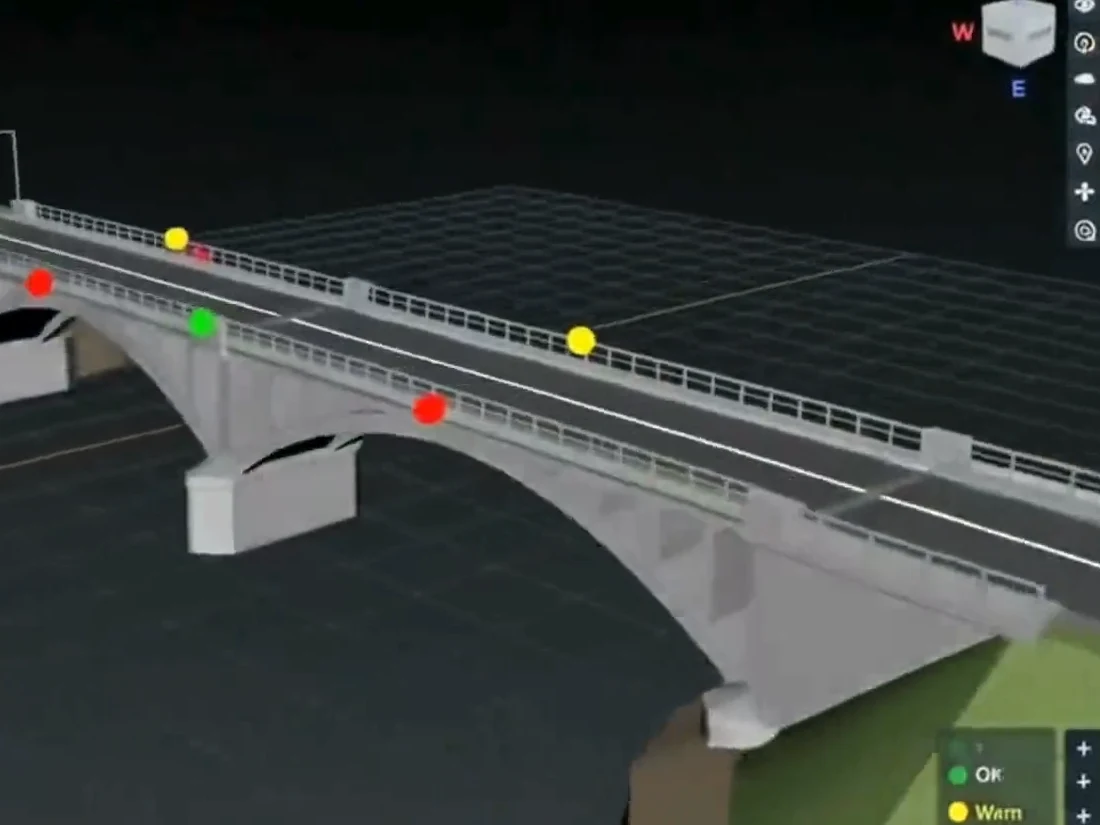
The readings from this project come together on the Infrasolute platform. There they are checked against the defined limits, shown as trends and interpreted with AI.
Platform modules
Frequently asked questions: Roller bearings, motorway bridge
What happens when a roller in a roller bearing fractures?
Why are the emergency supports alone not enough?
Why is a crack sensor used on a bridge bearing?
How are the roller bearings reached?
Project inquiry
A comparable structure to monitor?
Describe your structure and your question. We recommend the right measuring points and suitable sensors.
 Roman Koch

More projects
More references in bridges
Project inquiry
Tell us about your structure
Structure type, location and your question are enough to start. We recommend suitable measuring points and sensors.
[email protected]