

Excavation monitoring: struts, retaining wall and surroundings safely in view.
Sensors for excavation pits: vibrating wire strain gauges measure the forces in the struts, tilt sensors the tilting of the retaining wall, vibration sensors the vibration at neighbouring buildings and water level sensors the water. Everything comes together on one platform, with thresholds and alerts.
Benefits for clients and contractors
Your advantage in excavation monitoring
Whether client, contractor, structural engineer or geotechnical engineer: you see continuously how struts, retaining wall, water and neighbouring buildings respond to construction progress, and decide on the basis of measured data.
Request a quoteStrut loads instead of assumptions
Measured forces show whether the struts carry the load assumed in the design, level by level and over every excavation stage.
Warn early, act in time
Warning and alarm levels from the structural design are stored in the system. If one is exceeded, notifications go immediately to the designated people.
Neighbours documented
Vibration at neighbouring buildings is recorded according to DIN 4150-3. This protects against unjustified damage claims.
Water under control
Water level in the excavation and groundwater outside run on the same platform. A failure of the dewatering system shows up immediately.
One platform for everything
Struts, retaining wall, vibration and water in one view, with history, construction progress and reports for client, checking engineer and authority.
No cables across the site
Tilt, vibration and water level sensors transmit directly or via a gateway. Only the vibrating wire strain gauges run a cable to the data logger at the edge.
Measuring system
How excavation monitoring works
Five measuring points answer the key questions: do the struts carry the load, does the retaining wall stand, do the neighbouring buildings stay undamaged, and is the water under control? The vibrating wire strain gauges are cabled to the data logger, the other sensors transmit wirelessly. A gateway brings everything to the platform.
- 1 Vibrating wire strain gauge
On the struts: strain in the steel, from which the strut force is calculated, with temperature.
- 2 Tilt sensor
At the head of the retaining wall: tilting of the wall towards the pit.
- 3 Vibration sensor
On the neighbouring building: vibration velocity from piling, sheet piling and excavation.
- 4 Water level sensor
In the pump sump: water level in the pit in 10 cm steps.
- 5 Groundwater sensor
In a borehole outside the pit: groundwater level and pore water pressure.
Measured quantities
What is monitored in the excavation
Four questions determine the safety of an excavation. Each has its matching sensors, brought together in one monitoring concept.
Struts
Strut monitoring with vibrating wire strain gauges
Vibrating wire strain gauges on the struts measure the strain in the steel. On pipe struts, three gauges sit at 120° around the circumference, on rolled sections at least four. The mean gives the axial force, and the temperature is measured at every gauge.
To the vibrating wire strain gaugeRetaining wall
Tilt of the retaining wall with tilt sensors
Tilt sensors at the head of sheet pile walls, soldier pile walls or bored pile walls show whether the wall is tilting towards the excavation. They detect angle changes from 0.001° and transmit wirelessly to the platform.
To the tilt sensorVibration
Vibration monitoring
Piling, vibratory driving, drilling and excavation cause vibration. Vibration sensors on neighbouring buildings measure the vibration velocity on three axes and assess it according to DIN 4150-3. They run self-sufficiently on battery and transmit via LTE-M or NB-IoT.
To the vibration sensorWater
Water level and groundwater
A water level sensor in the pump sump shows the water level in the excavation in 10 cm steps and reports rising water, for example when the dewatering fails. Groundwater sensors in boreholes outside record groundwater level and pore water pressure.
To the water level sensorStrut monitoring
Why strut loads are measured
Struts support the retaining wall against earth and water pressure. How much load they actually take depends on the ground, the excavation sequence, preloading and temperature. The measurement shows whether the forces stay within the design.
- 01
Zero reading before loading
The gauges are installed and read before the strut is put in place or preloaded. Every later change refers to this initial state.
- 02
Force at each excavation stage
With every excavation stage, the load on the struts increases. The trend shows whether the forces develop as the design expects.
- 03
Put temperature into context
Sunlight heats struts during the day and makes the forces fluctuate. With the temperature at each gauge, it becomes clear which share comes from earth pressure and which from heating.
- 04
Support the removal
When a strut level is removed, the load is redistributed to the remaining struts. The measurement shows how the remaining levels respond.
Matching sensors
These sensors monitor the excavation
Design, installation and the documented specifications are on the product pages.
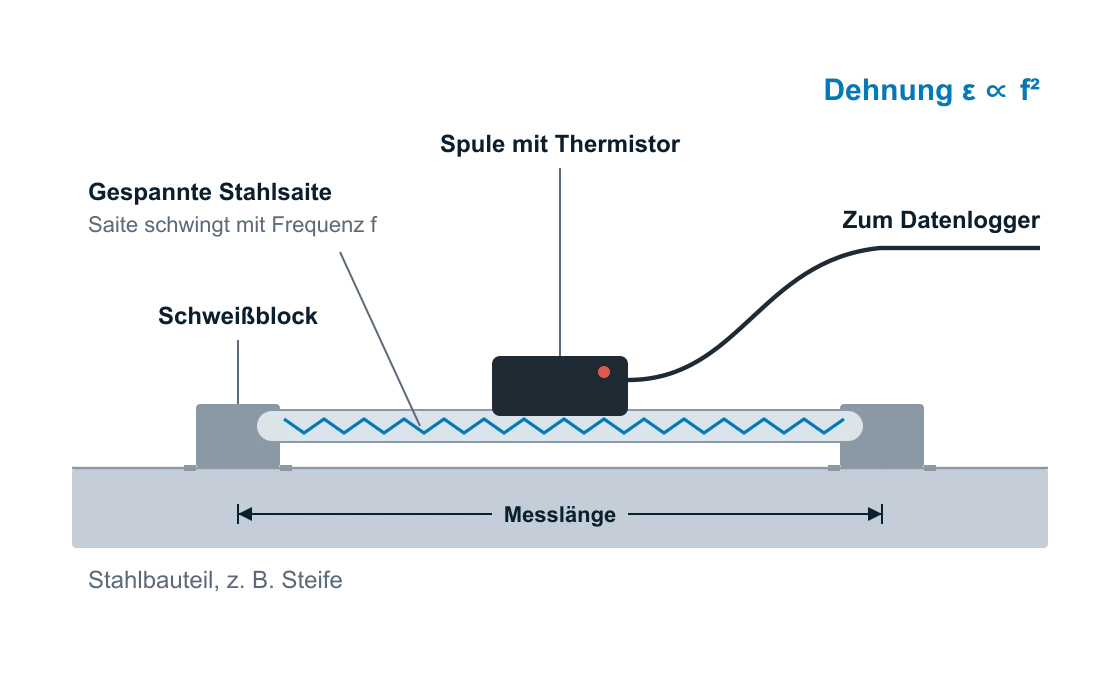 ProductsVibrating wire strain gaugeStrain and force in struts, resolution below 1 µε, with temperature.
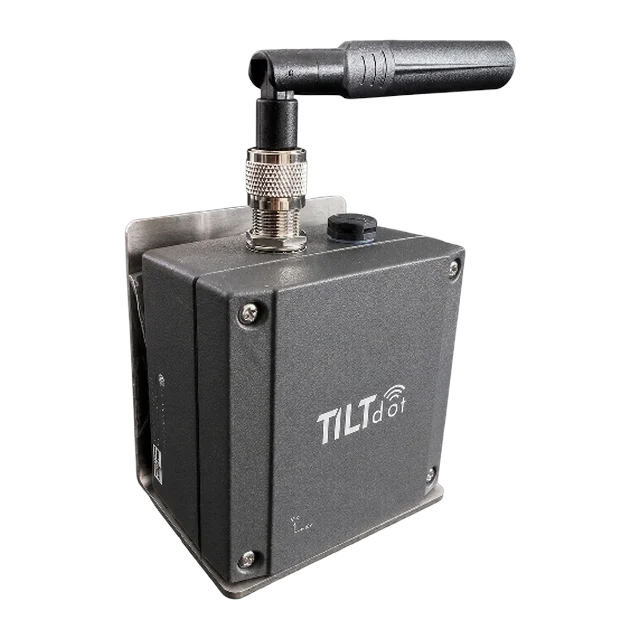 ProductsTilt sensorTilting of the retaining wall from 0.001°, wireless.
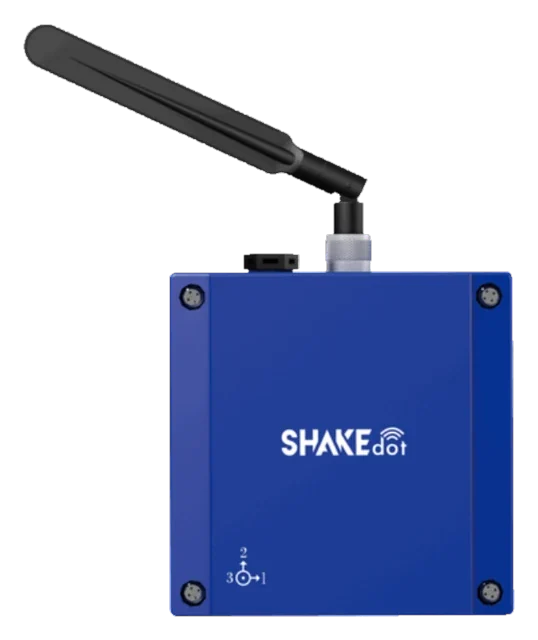 ProductsVibration sensorVibration at neighbouring buildings, assessed according to DIN 4150-3.
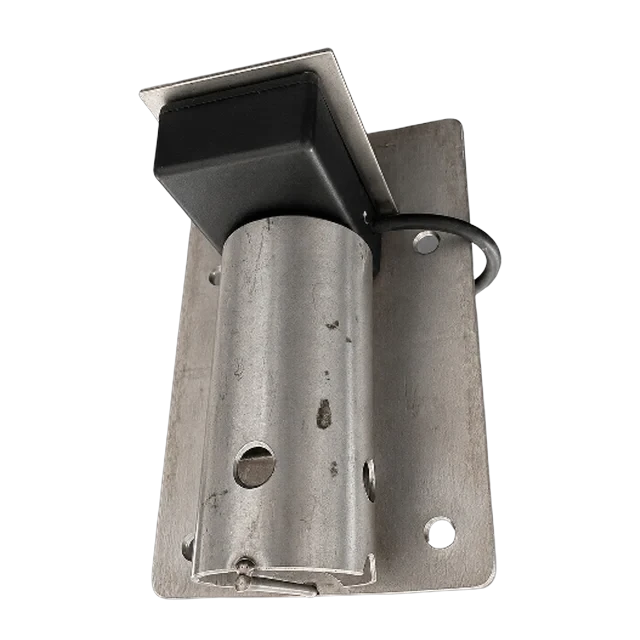 ProductsWater level sensorWater level in the pump sump in 10 cm steps.
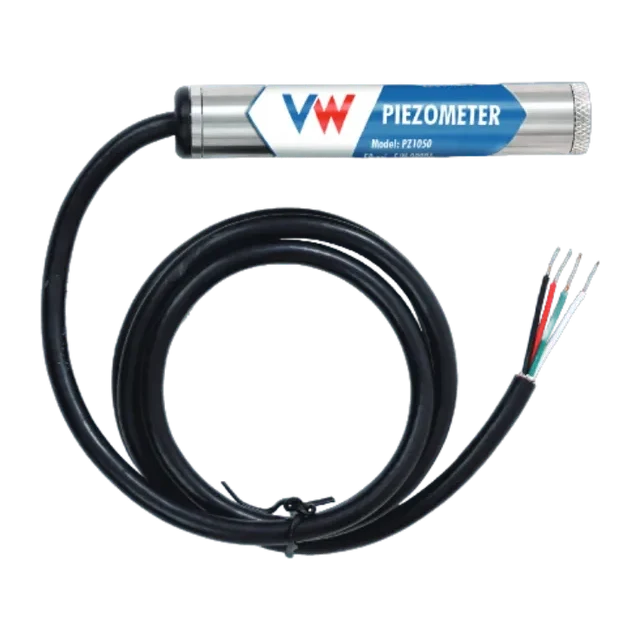 ProductsGroundwater sensorGroundwater level and pore water pressure in the borehole.
Everything from a single source
From the monitoring concept to backfilling
You get complete excavation monitoring from a single contact: designed, installed, operated and monitored around the clock.
Concept
Together with the structural and geotechnical engineers, we define measuring points, intervals and warning and alarm levels.
Learn moreInstallation
Sensors installed in step with the site, zero reading before loading, set-up of data logger and gateway.
Learn moreMaintenance & operation
We keep the system ready for operation throughout construction and add measuring points when new strut levels are installed.
Learn moreMonitoring & alerts
Continuous monitoring with alarm chain, reports and documentation until the excavation is backfilled.
Learn moreIn practice
Project: Hans-Böckler-Platz light rail station, Cologne
Cologne: excavation support next to a railway bridge monitored
During construction work at the Hans-Böckler-Platz light rail station, an automatic total station monitors the Venloer Straße railway bridge and the excavation support next to it.
It measures 27 prisms on the two abutments every 30 minutes. The values are checked in the cloud, and an alert is raised if a threshold is exceeded.
- prisms on the abutments
- 27
- measuring interval
- 30 min
- displacement of bridge and support
- 3D
- checking and alerts
- Cloud
Infrasolute platform
All readings on the Infrasolute platform
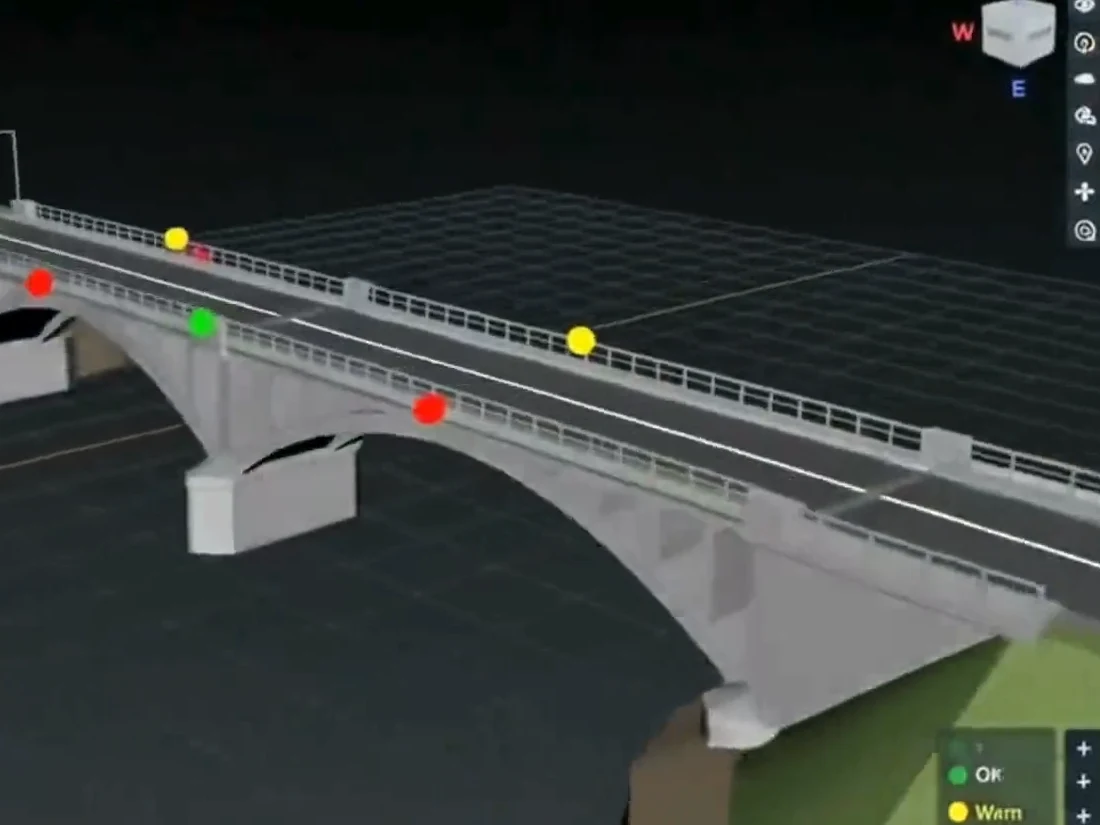
The sensors transmit their readings to the platform. There they are continuously checked against your limit values, evaluated with AI and documented, accessible in the browser around the clock.
Platform modules
Instrument your excavation from the start
Send us the support plan, strut levels and surroundings. We will propose measuring points, thresholds and alert routes and get back to you promptly.
 Peter Nater

Entscheidungsgrundlage
What you can decide at the excavation
In an excavation, every decision follows construction progress. Measured data makes it reliable.
- 01
Release the next excavation stage
If the strut loads stay within the expected range after the last stage, excavation can continue. The measurement provides the basis for this.
- 02
Install an additional strut level
If the forces rise faster than calculated, you can react early, before an alarm level is reached.
- 03
Adjust piling and vibratory driving
If vibration at the neighbouring building approaches the threshold, method, energy or distance can be changed.
- 04
Check the dewatering
If the water level in the pump sump or the groundwater outside rises, the notification shows that pumps or wells need to be checked.
- 05
Remove struts
When a level is removed, the measurement shows how the load is redistributed to the remaining struts and the retaining wall.
Frequently asked questions about excavation monitoring
What is excavation monitoring?
How are struts in an excavation monitored?
Which sensors does excavation monitoring need?
How is vibration at neighbouring buildings assessed?
Where do the thresholds come from?
How quickly are the readings available?
Who operates the monitoring during construction?
Project inquiry
Monitor your excavation safely
Describe the excavation, support and surroundings. You will promptly receive an initial assessment with measured quantities, sensors and a threshold concept.
[email protected]