

Lauterbrunnen: preventive monitoring of three bridges
Project facts
- Structures
- Three small timber and concrete road bridges over mountain streams
- Location
- Municipality of Lauterbrunnen, Bernese Oberland, Switzerland
- Task
- Monitor structural behaviour as a precaution and detect changes early
- Installed sensors
- Vibrating wire gauges, tilt sensors at the quarter points, Distance Laser Live at mid-span
- Installation
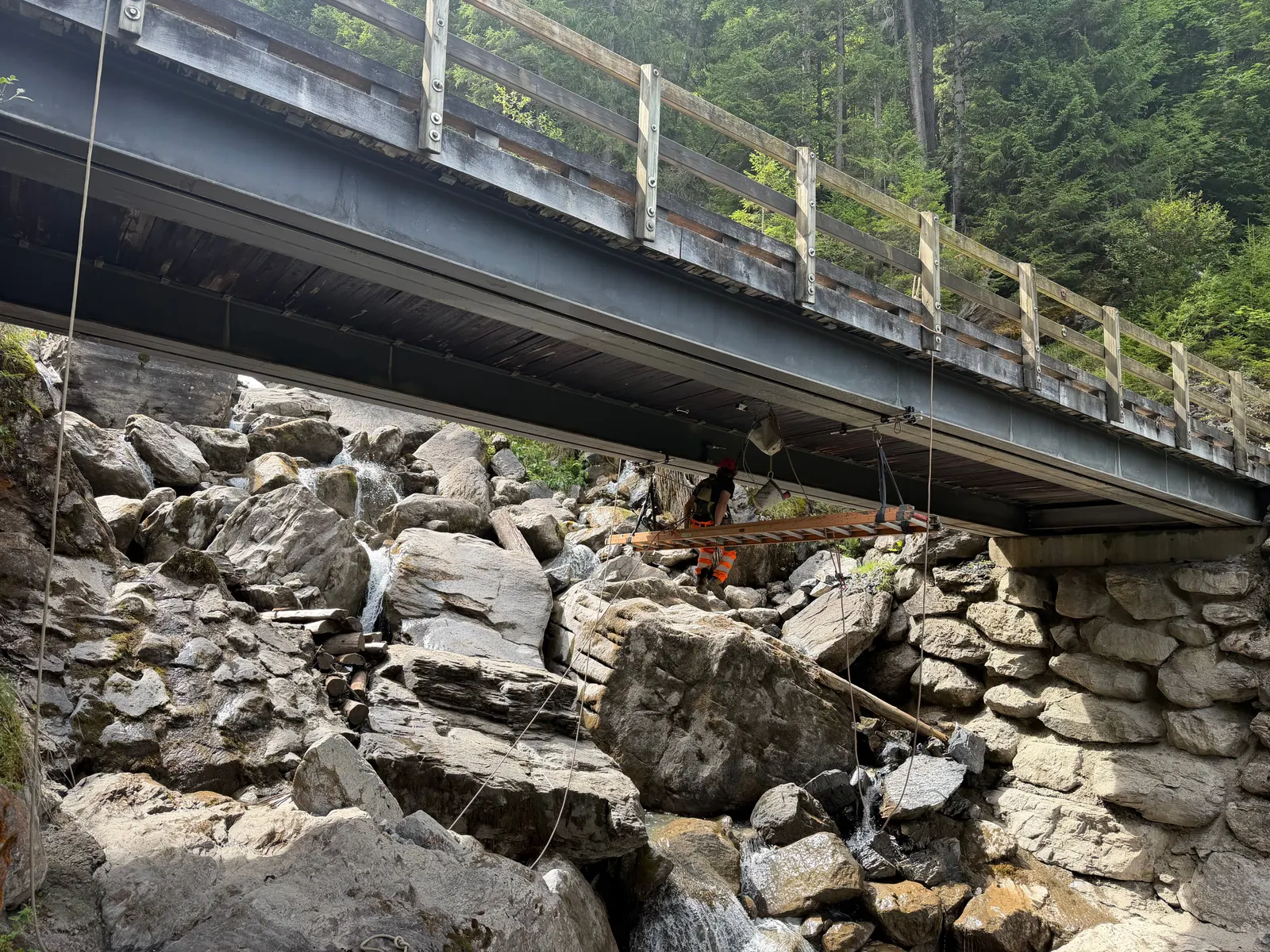
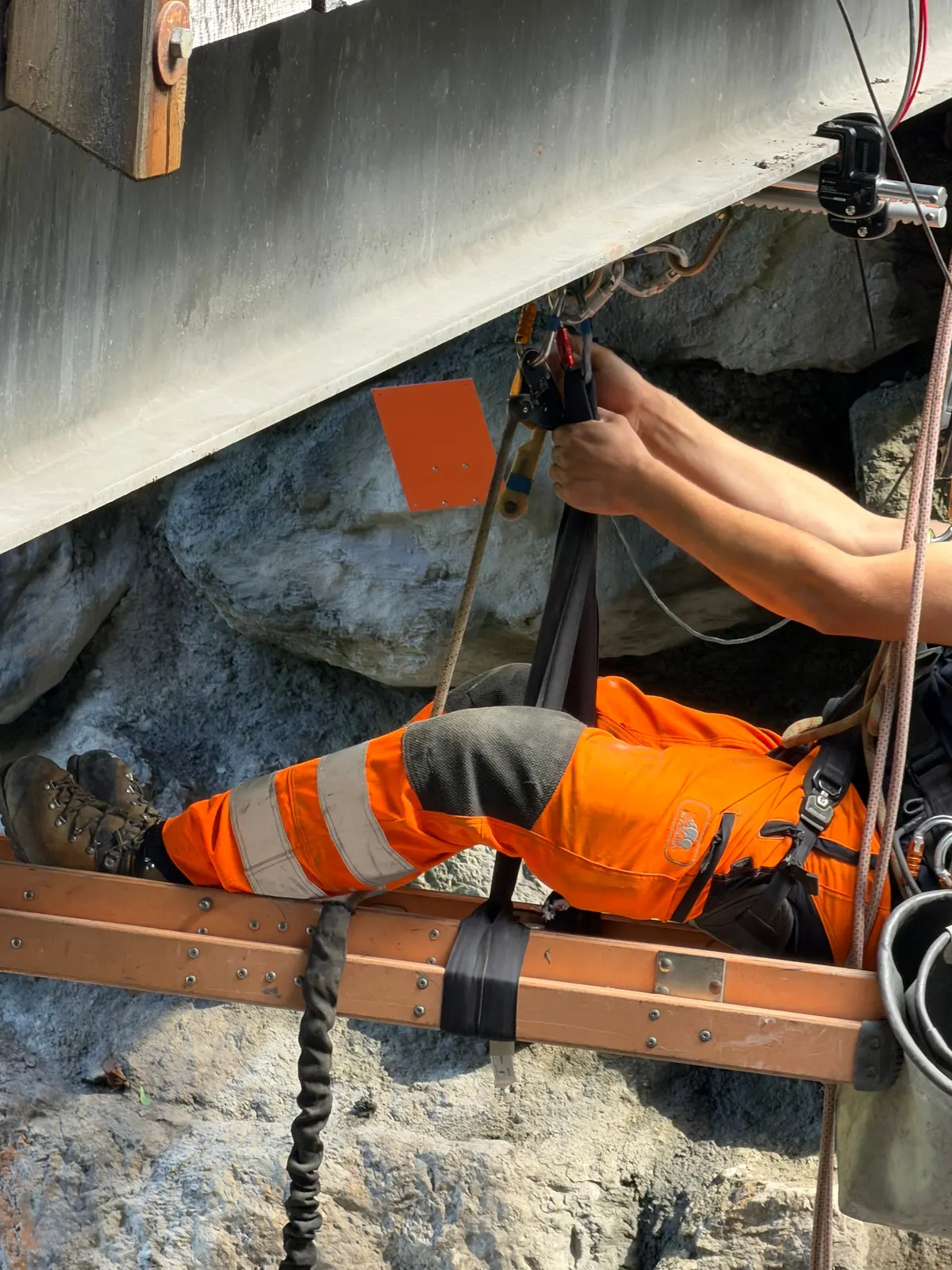
- August 2026, installed beneath the bridges using rope access
Installed sensors
At a glance
- Location: Municipality of Lauterbrunnen, Bernese Oberland, Switzerland
- Structures: three small timber and concrete road bridges over mountain streams
- Task: preventive monitoring, meaning the structural behaviour is monitored before any damage becomes visible
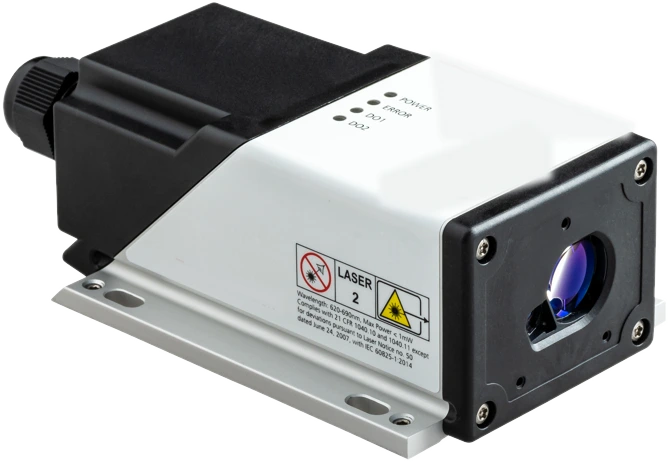
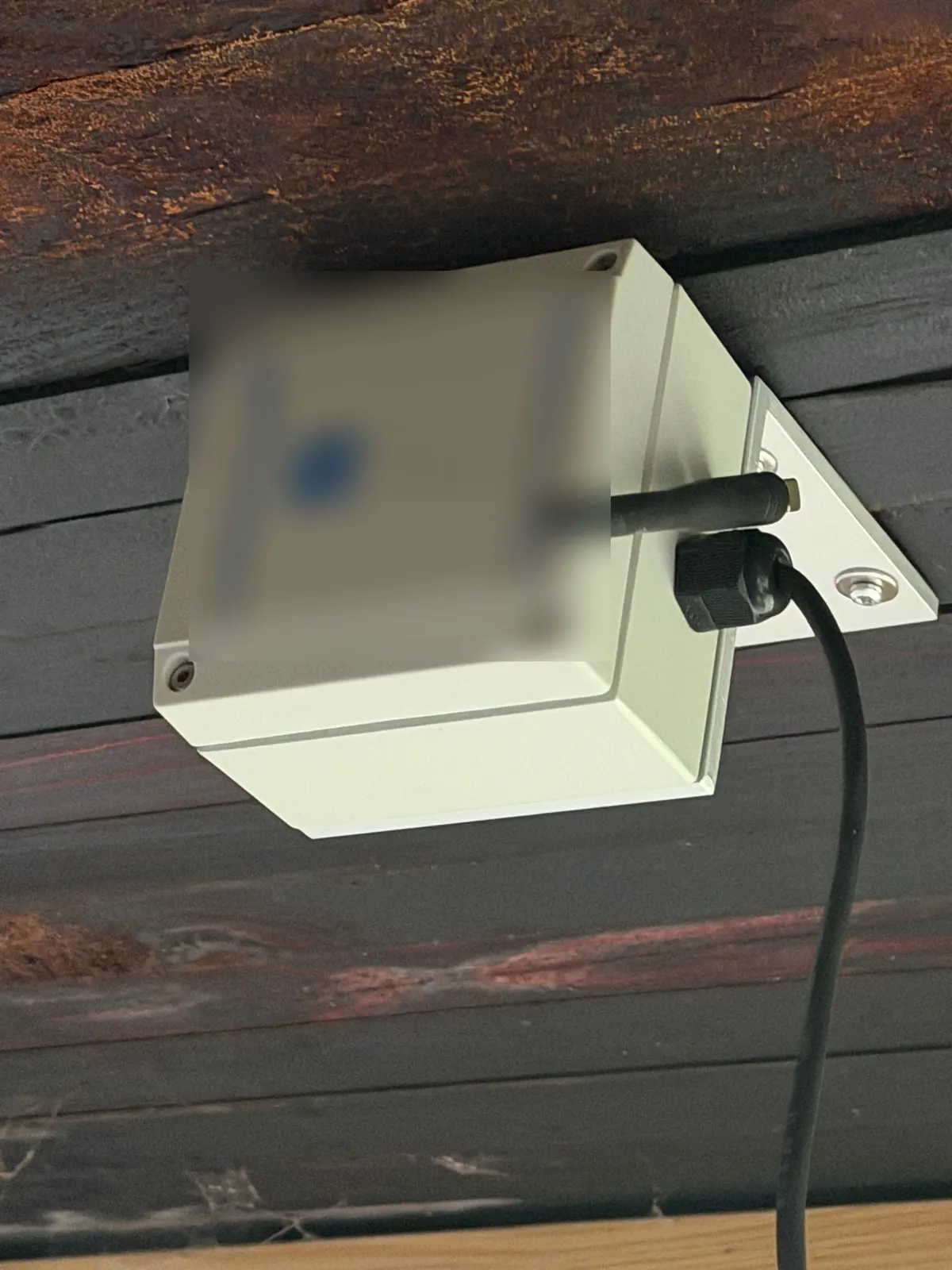
- Sensors: vibrating wire strain gauges for strain, tilt sensors at the quarter points, Distance Laser Live at mid-span for absolute deflection
- Installation: August 2026, installed beneath the bridges using rope access
Challenge
Small bridges over mountain streams, hard to reach
In the Lauterbrunnen valley, roads cross numerous mountain streams. The bridges are short, built of timber or concrete, and span stream beds of rock and scree. There is hardly any room beneath them, and anyone who needs to reach the structure has to be secured above the stream.
A bridge inspection shows what is visible on the surface. It cannot capture how a structure behaves under traffic and across the seasons. Three of these bridges are therefore monitored permanently as a precaution. The aim is to know the normal behaviour of each bridge and to detect a change before it turns into damage.
Measuring system
Three measured values, one picture of structural behaviour
On the bridges, three types of sensor record the structural behaviour from different angles. Together they give a picture that no single measured value can provide.
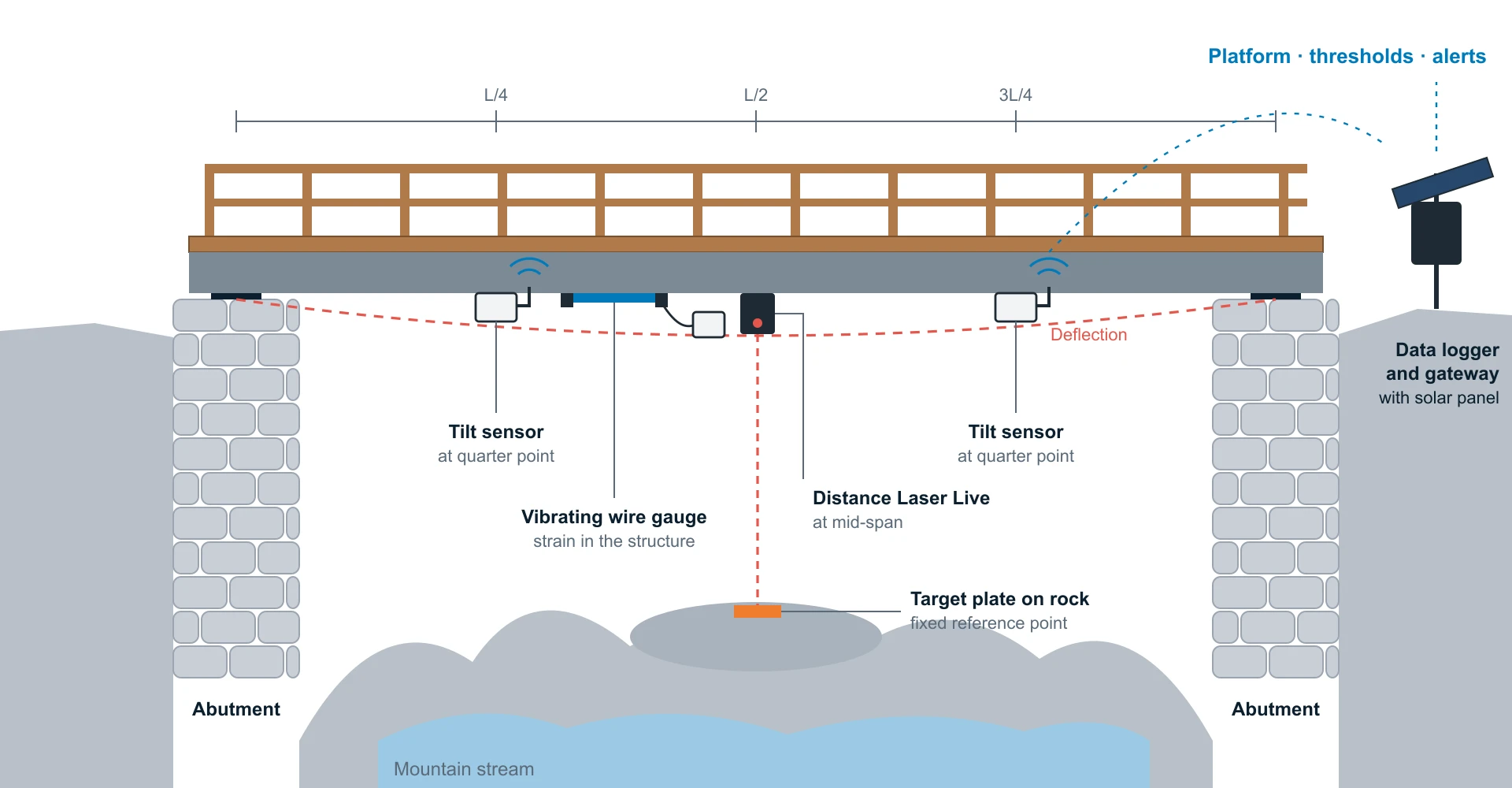
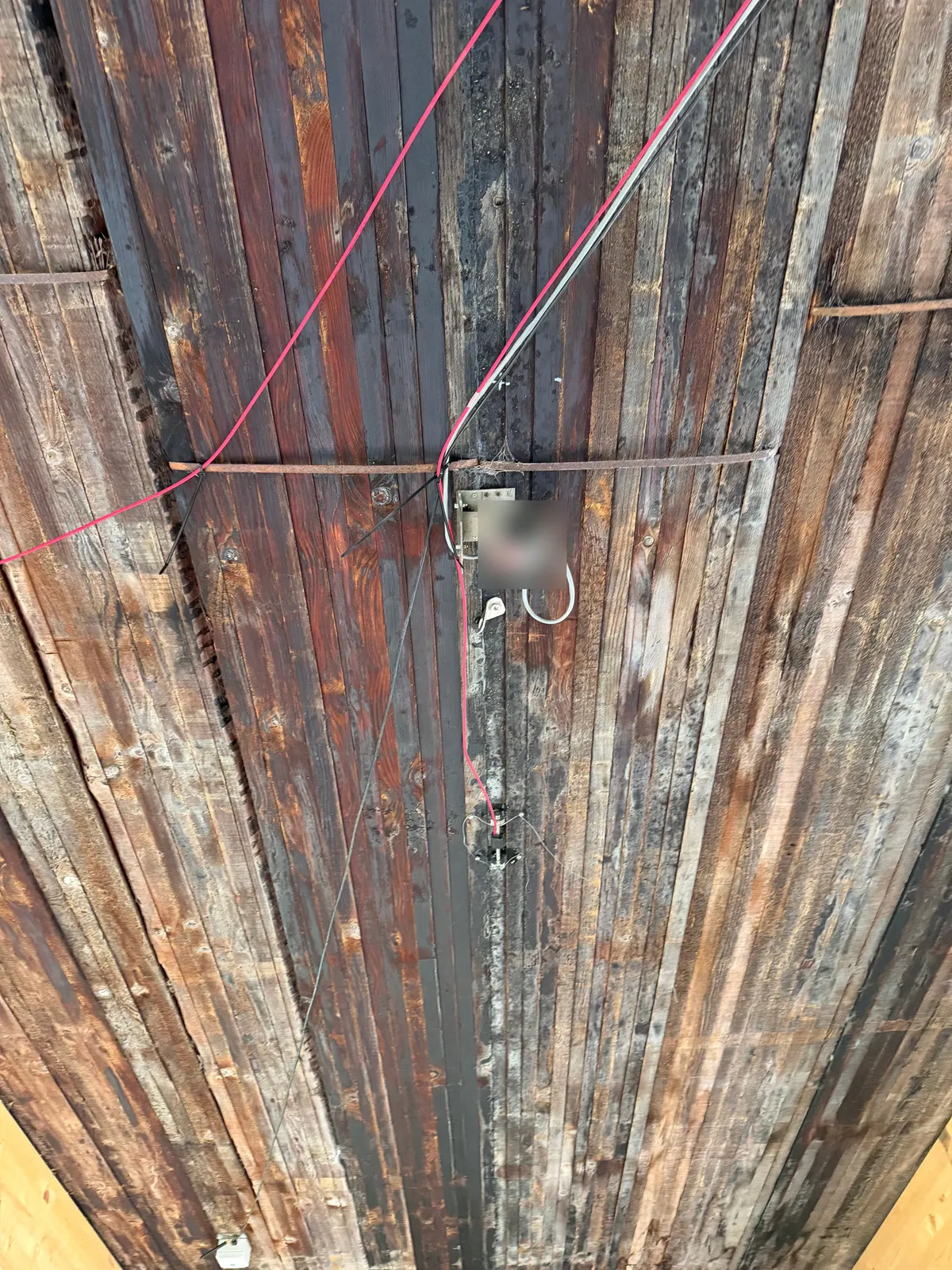
- Strain in the structure: vibrating wire strain gauges measure the change in length between two fixing points. If the stress in the structure increases, the strain changes. A thermistor in the gauge records the temperature so that thermal effects can be separated from load effects.
- Tilt at the quarter points: tilt sensors sit at one quarter and three quarters of the span. When the bridge deflects, both points rotate in opposite directions.
- Absolute deflection at mid-span: a Distance Laser Live hangs at mid-span beneath the structure and measures the distance to a target plate on the rock in the stream bed. The rock is not part of the bridge and is therefore a fixed reference point.
- Transmission: a data logger and gateway with solar panel at the end of the bridge send the readings to the Infrasolute platform.
Why measure in absolute terms
A reference point outside the bridge
Many sensors on a bridge measure in relative terms: a tilt sensor only knows its own rotation, a strain gauge only the change in length between its two points. How far the bridge actually moves downwards can only be derived from these by calculation.
The distance laser measures this movement directly. It aims from the bridge at a point that does not move with it: a target plate on the rock beneath the bridge. If the structure deflects, the distance becomes shorter. Because tilt and strain are recorded at the same time, the three measured values can be checked against one another. A single outlier is therefore noticed straight away.
Benefits
What preventive monitoring gives the bridge owner
- Knowing normal behaviour: the data show how each bridge behaves by day and night, in summer and winter. This is the basis for detecting a deviation.
- Seeing changes early: if deflection increases under comparable conditions or the quarter points develop differently, this is visible in the data before any damage can be seen from outside.
- Alerts instead of surprises: thresholds are stored on the platform. If one is exceeded, a notification goes to the people responsible.
- No mains connection: the data logger and gateway run on a solar panel. Even remote bridges need no infrastructure.
Monitoring bridges
More solutions and products for bridges
- Vibrating wire strain gauge: strain on steel, concrete and timber, with temperature measurement
- Tilt sensor: rotation and settlement with a resolution from 0.001°
- Distance Laser Live: contactless, absolute distance measurement
- Deformation monitoring: deflection and deformation of structures
- Bridge monitoring: monitoring for bridge owners and engineering consultancies
Specifics
- Measured values
- Strain in the structure, tilt at the quarter points, absolute deflection at mid-span
- Reference point
- Target plate on the rock beneath the bridge, independent of the structure
- Power
- Data logger and gateway with solar panel, transmission via mobile network
- Analysis
- All readings on one platform, with thresholds and alerts
Products in use
Sensors installed here
Related solutions & industry
Solutions matching this project
Infrasolute platform
How the readings from this project are evaluated
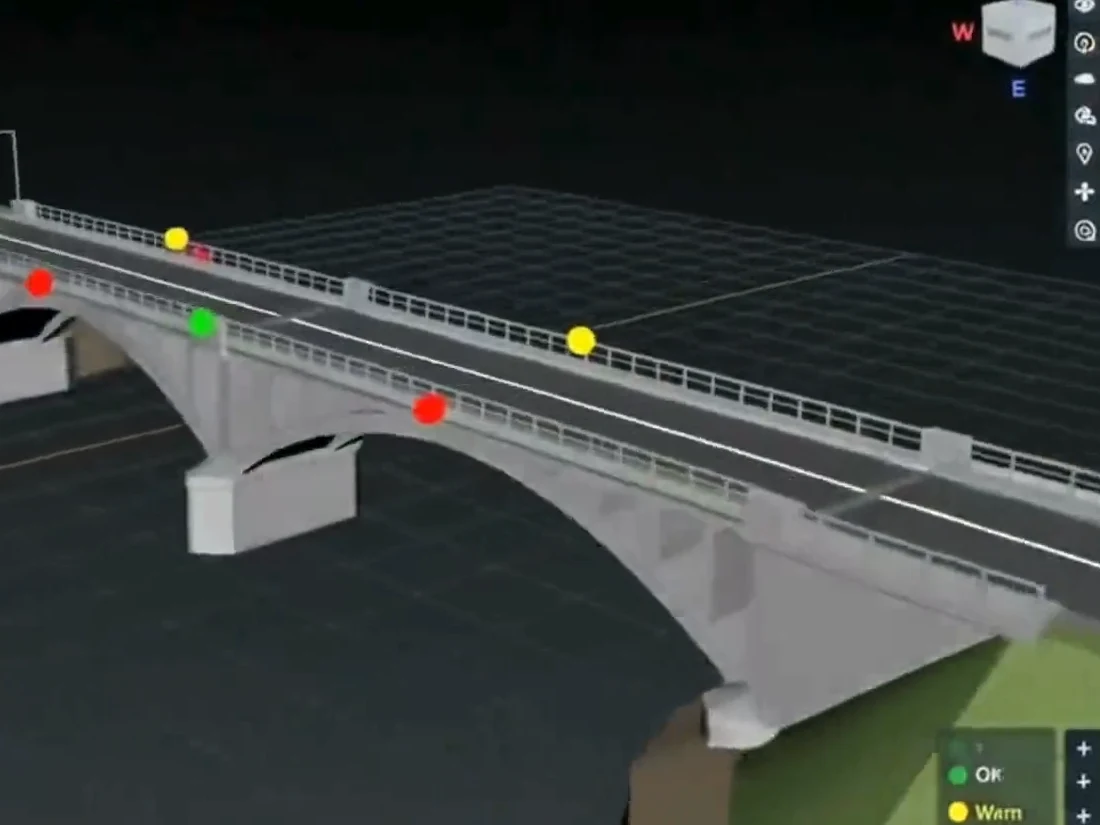
The readings from this project come together on the Infrasolute platform. There they are checked against the defined limits, shown as trends and interpreted with AI.
Platform modules
Frequently asked questions: Preventive bridge monitoring Lauterbrunnen
What is preventive bridge monitoring?
Why does a distance laser measure deflection in absolute terms?
What are tilt sensors at the quarter points for?
Do vibrating wire gauges work on timber and concrete?
How do the readings get from the valley to the platform?
Project inquiry
A comparable structure to monitor?
Describe your structure and your question. We recommend the right measuring points and suitable sensors.
 Christian Steffes

More projects
More references in bridges
Project inquiry
Tell us about your structure
Structure type, location and your question are enough to start. We recommend suitable measuring points and sensors.
[email protected]